@napi-rs/image
v1.12.0TypeScript
Image processing library
0/weekUpdated 2 months agoMITUnpacked: 67.3 KB
Published by LongYinan
npm install @napi-rs/image@napi-rs/image
Transform and optimize images library.
See Examples for usage.


Transformer:
This library support encode/decode these formats:
| Format | Input | Output |
| --------- | ----------------------------------------- | --------------------------------------- |
| RawPixels | RGBA 8 bits pixels | |
| JPEG | Baseline and progressive | Baseline JPEG |
| PNG | All supported color types | Same as decoding |
| BMP | ✅ | Rgb8, Rgba8, Gray8, GrayA8 |
| ICO | ✅ | ✅ |
| TIFF | Baseline(no fax support) + LZW + PackBits | Rgb8, Rgba8, Gray8 |
| WebP | ✅ | ✅ |
| AVIF | ✅ | ✅ |
| PNM | PBM, PGM, PPM, standard PAM | ✅ |
| DDS | DXT1, DXT3, DXT5 | No |
| TGA | ✅ | Rgb8, Rgba8, Bgr8, Bgra8, Gray8, GrayA8 |
| OpenEXR | Rgb32F, Rgba32F (no dwa compression) | Rgb32F, Rgba32F (no dwa compression) |
| farbfeld | ✅ | ✅ |
See index.d.ts for API reference.
$3
``ts
import { Transformer } from '@napi-rs/image'
const transformer = new Transformer(input)
`
$3
`ts
import { Transformer } from '@napi-rs/image'
import { decode } from 'blurhash'
// Uint8ClampedArray
const pixels = decode('LEHV6nWB2yk8pyo0adR*.7kCMdnj', 32, 32)
const transformer = Transformer.fromRgbaPixels(pixels, 32, 32)
`
$3
`ts
metadata(withExif?: boolean | undefined | null, signal?: AbortSignal | undefined | null): Promise
export interface Metadata {
width: number
height: number
exif?: Record
orientation?: number | undefined | null
format: string
colorType: JsColorType
}
export enum JsColorType {
/* Pixel is 8-bit luminance /
L8 = 0,
/* Pixel is 8-bit luminance with an alpha channel /
La8 = 1,
/* Pixel contains 8-bit R, G and B channels /
Rgb8 = 2,
/* Pixel is 8-bit RGB with an alpha channel /
Rgba8 = 3,
/* Pixel is 16-bit luminance /
L16 = 4,
/* Pixel is 16-bit luminance with an alpha channel /
La16 = 5,
/* Pixel is 16-bit RGB /
Rgb16 = 6,
/* Pixel is 16-bit RGBA /
Rgba16 = 7,
/* Pixel is 32-bit float RGB /
Rgb32F = 8,
/* Pixel is 32-bit float RGBA /
Rgba32F = 9
}
`
Example:
`ts
import { promises as fs } from 'fs'
import { Transformer } from '@napi-rs/image'
const WITH_EXIF_JPG = await fs.readFile('with-exif.jpg')
const decoder = new Transformer(WITH_EXIF_JPG)
const metadata = await decoder.metadata(true)
`
The metadata will be
`js`
{
colorType: 2,
exif: {
Orientation: 'Unknown (5)',
'Resolution Unit': 'in',
'This image has an Exif SubIFD': '90',
'X Resolution': '72 pixels per in',
'Y Resolution': '72 pixels per in',
},
format: 'jpeg',
height: 450,
orientation: 5,
width: 600,
}
$3
`ts
import { promises as fs } from 'fs'
import { Transformer } from '@napi-rs/image'
const PNG = await fs.readFile('./un-optimized.png')
const webp = await new Transformer(PNG).webp()
await fs.writeFile('optimized.webp)
`
#### webp
> The quality factor quality_factor ranges from 0 to 100 and controls the loss and quality during compression.
>
> The value 0 corresponds to low quality and small output sizes, whereas 100 is the highest quality and largest output size.
>
> https://developers.google.com/speed/webp/docs/api#simple_encoding_api
>
> Default is 90
`ts`
webp(qualityFactor: number, signal?: AbortSignal | undefined | null): Promise
webpSync(qualityFactor: number): Buffer
/// Encode lossless webp image
webpLossless(signal?: AbortSignal | undefined | null): Promise
webpLosslessSync(): Buffer
#### AVIF
Config:
`ts
export interface AvifConfig {
/* 0-100 scale 100 is lossless /
quality?: number | undefined | null
/* 0-100 scale /
alphaQuality?: number | undefined | null
/* rav1e preset 1 (slow) 10 (fast but crappy), default is 4 /
speed?: number | undefined | null
/* How many threads should be used (0 = match core count) /
threads?: number | undefined | null
/* set to '4:2:0' to use chroma subsampling, default '4:4:4' /
chromaSubsampling?: ChromaSubsampling | undefined | null
}
/**
* https://en.wikipedia.org/wiki/Chroma_subsampling#Types_of_sampling_and_subsampling
* https://developer.mozilla.org/en-US/docs/Web/Media/Formats/Video_concepts
*/
export enum ChromaSubsampling {
/**
* Each of the three Y'CbCr components has the same sample rate, thus there is no chroma subsampling. This scheme is sometimes used in high-end film scanners and cinematic post-production.
* Note that "4:4:4" may instead be wrongly referring to R'G'B' color space, which implicitly also does not have any chroma subsampling (except in JPEG R'G'B' can be subsampled).
* Formats such as HDCAM SR can record 4:4:4 R'G'B' over dual-link HD-SDI.
*/
Yuv444 = 0,
/**
* The two chroma components are sampled at half the horizontal sample rate of luma: the horizontal chroma resolution is halved. This reduces the bandwidth of an uncompressed video signal by one-third.
* Many high-end digital video formats and interfaces use this scheme:
* - AVC-Intra 100
* - Digital Betacam
* - Betacam SX
* - DVCPRO50 and DVCPRO HD
* - Digital-S
* - CCIR 601 / Serial Digital Interface / D1)
* - ProRes (HQ, 422, LT, and Proxy)
* - XDCAM HD422
* - Canon MXF HD422
*/
Yuv422 = 1,
/**
* n 4:2:0, the horizontal sampling is doubled compared to 4:1:1,
* but as the Cb and Cr channels are only sampled on each alternate line in this scheme, the vertical resolution is halved.
* The data rate is thus the same.
* This fits reasonably well with the PAL color encoding system, since this has only half the vertical chrominance resolution of NTSC.
* It would also fit extremely well with the SECAM color encoding system,
* since like that format, 4:2:0 only stores and transmits one color channel per line (the other channel being recovered from the previous line).
* However, little equipment has actually been produced that outputs a SECAM analogue video signal.
* In general, SECAM territories either have to use a PAL-capable display or a transcoder to convert the PAL signal to SECAM for display.
*/
Yuv420 = 2,
/**
* What if the chroma subsampling model is 4:0:0?
* That says to use every pixel of luma data, but that each row has 0 chroma samples applied to it. The resulting image, then, is comprised solely of the luminance data—a greyscale image.
*/
Yuv400 = 3,
}
`
`ts`
avif(options?: AvifConfig | undefined | null, signal?: AbortSignal | undefined | null): Promise
avifSync(options?: AvifConfig | undefined | null): Buffer
#### PNG
PngEncodeOptions:
`tsCompressionType::Default
export interface PngEncodeOptions {
/* Default is /FilterType::NoFilter
compressionType?: CompressionType | undefined | null
/* Default is /`
filterType?: FilterType | undefined | null
}
export enum CompressionType {
/* Default compression level /
Default = 0,
/* Fast, minimal compression /
Fast = 1,
/* High compression level /
Best = 2,
/* Huffman coding compression /
Huffman = 3,
/* Run-length encoding compression /
Rle = 4,
}
export enum FilterType {
/**
* No processing done, best used for low bit depth greyscale or data with a
* low color count
*/
NoFilter = 0,
/* Filters based on previous pixel in the same scanline /
Sub = 1,
/* Filters based on the scanline above /
Up = 2,
/* Filters based on the average of left and right neighbor pixels /
Avg = 3,
/* Algorithm that takes into account the left, upper left, and above pixels /
Paeth = 4,
/**
* Uses a heuristic to select one of the preceding filters for each
* scanline rather than one filter for the entire image
*/
Adaptive = 5,
}
`ts`
png(options?: PngEncodeOptions | undefined | null, signal?: AbortSignal | undefined | null): Promise
pngSync(options?: PngEncodeOptions | undefined | null): Buffer
#### JPEG
`tsquality
/* default is 90 /quality
jpeg(quality?: number | undefined | null, signal?: AbortSignal | undefined | null): Promise
/* default is 90 /`
jpegSync(quality?: number | undefined | null): Buffer
#### BMP
`ts`
bmp(signal?: AbortSignal | undefined | null): Promise
bmpSync(): Buffer
#### ICO
`ts`
ico(signal?: AbortSignal | undefined | null): Promise
icoSync(): Buffer
#### TIFF
`ts`
tiff(signal?: AbortSignal | undefined | null): Promise
tiffSync(): Buffer
#### PNM
`ts`
pnm(signal?: AbortSignal | undefined | null): Promise
pnmSync(): Buffer
#### TGA
`ts`
tga(signal?: AbortSignal | undefined | null): Promise
tgaSync(): Buffer
#### Farbfeld
`ts`
farbfeld(signal?: AbortSignal | undefined | null): Promise
farbfeldSync(): Buffer
$3
#### rotate
> Rotate the image with exif orientation, if the input image contains no exif information, this API will have no effect.
`ts`
/**
* Rotate with exif orientation
* If the orientation param is not null,
* the new orientation value will override the exif orientation value
*/
rotate(): this
Example:
This image has orientation value 5 in exif:

Without rotate:
`ts
import { promises as fs } from 'fs'
import { Transformer } from '@napi-rs/image'
const WITH_EXIF_JPG = await fs.readFile('with-exif.jpg')
const imageOutputWithoutRotateWebp = await new Transformer(WITH_EXIF).resize(450 / 2).webp(75)
writeFileSync('output-exif.no-rotate.image.webp', imageOutputWithoutRotateWebp)
`

With rotate:
`ts
import { promises as fs } from 'fs'
import { Transformer } from '@napi-rs/image'
const WITH_EXIF_JPG = await fs.readFile('with-exif.jpg')
const imageOutputWebp = await new Transformer(WITH_EXIF)
.rotate()
.resize(450 / 2)
.webp(75)
console.timeEnd('@napi-rs/image webp')
writeFileSync('output-exif.image.webp', imageOutputWebp)
`

#### grayscale
`tsLuma
/**
* Return a grayscale version of this image.
* Returns images in most cases. However, for f32 images,Rgb/Rgba
* this will return a greyscale image instead.`
*/
grayscale(): this
#### invert
> Invert the colors of this image.
`ts`
invert(): this
#### resize
`tswidth
/**
* Resize this image using the specified filter algorithm.
* The image is scaled to the maximum possible size that fits
* within the bounds specified by and height.
*/
resize(width: number, height?: number | undefined | null, filterType?: ResizeFilterType | undefined | null): this
export enum ResizeFilterType {
/* Nearest Neighbor /
Nearest = 0,
/* Linear Filter /
Triangle = 1,
/* Cubic Filter /
CatmullRom = 2,
/* Gaussian Filter /
Gaussian = 3,
/* Lanczos with window 3 /
Lanczos3 = 4
}
`
#### overlay
`ts`
/**
* Overlay an image at a given coordinate (x, y)
*/
overlay(onTop: Buffer, x: number, y: number): this
`ts
import { writeFileSync } from 'fs'
import { Transformer } from '@napi-rs/image'
const imageOutputPng = await new Transformer(PNG).overlay(PNG, 200, 200).png()
writeFileSync('output-overlay-png.png', imageOutputPng)
`
ResizeFilterType:
To test the different sampling filters on a real example, you can find two
examples called
scaledown
and
scaleup
in the examples directory of the crate source code.
Here is a 3.58 MiB
test image
that has been scaled down to 300x225 px:
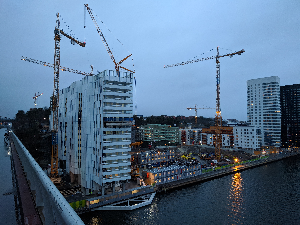
Nearest Neighbor
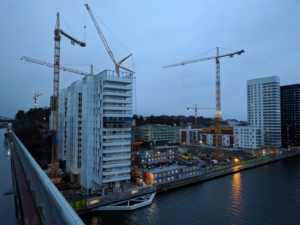
Linear: Triangle
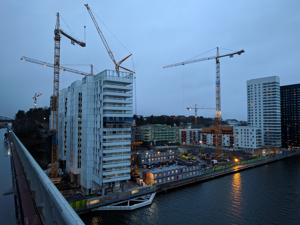
Cubic: Catmull-Rom
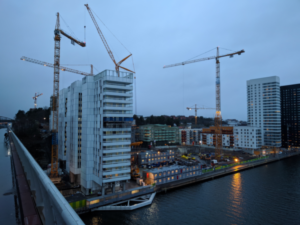
Gaussian
Lanczos with window 3
Speed
Time required to create each of the examples above, tested on an Intel
i7-4770 CPU with Rust 1.37 in release mode:
| Nearest | 31 ms |
|---|---|
| Triangle | 414 ms |
| CatmullRom | 817 ms |
| Gaussian | 1180 ms |
| Lanczos3 | 1170 ms |
#### blur
> Performs a Gaussian blur on this image.
> sigma is a measure of how much to blur by.
``ts`
blur(sigma: number): this
#### unsharpen
> Performs an unsharpen mask on this image.
sigma is the amount to blur the image by. threshold
 is a control of how much to sharpen.
>
> See
`ts`
unsharpen(sigma: number, threshold: number): this
#### filter3x3
Filters this image with the specified 3x3 kernel. Error will thrown if the kernel length is not 9.
`ts`
filter3x3(kernel: Array
#### adjustContrast
> Adjust the contrast of this image.
contrast is the amount to adjust the contrast by.
> Negative values decrease the contrast and positive values increase the contrast.
`ts`
adjustContrast(contrast: number): this
#### brighten
> Brighten the pixels of this image.
value is the amount to brighten each pixel by.
> Negative values decrease the brightness and positive values increase it.
`ts`
brighten(brightness: number): this
#### huerotate
> Hue rotate the supplied image.
value is the degrees to rotate each pixel by.
> 0 and 360 do nothing, the rest rotates by the given degree value.
> just like the css webkit filter hue-rotate(180)
`ts`
huerotate(hue: number): this
Optimize PNG
$3
Lossless optimize PNG powered by oxipng.
PNGLosslessOptions
`tsfalse
export interface PNGLosslessOptions {
/**
* Attempt to fix errors when decoding the input file rather than returning an Err.
* Default:
   */
  fixErrors?: boolean | undefined | null
  /**
   * Write to output even if there was no improvement in compression.
   * Default:
*/
force?: boolean | undefined | null
/* Which filters to try on the file (0-5) /
filter?: Array
/**
* Whether to attempt bit depth reduction
* Default:
   */
  bitDepthReduction?: boolean | undefined | null
  /**
   * Whether to attempt color type reduction
   * Default:
   */
  colorTypeReduction?: boolean | undefined | null
  /**
   * Whether to attempt palette reduction
   * Default:
   */
  paletteReduction?: boolean | undefined | null
  /**
   * Whether to attempt grayscale reduction
   * Default:
   */
  grayscaleReduction?: boolean | undefined | null
  /**
   * Whether to perform IDAT recoding
   * If any type of reduction is performed, IDAT recoding will be performed regardless of this setting
   * Default:
   */
  idatRecoding?: boolean | undefined | null
  / Whether to remove All non-critical headers* on PNG /
  strip?: boolean | undefined | null
  /* Whether to use heuristics to pick the best filter and compression /
  useHeuristics?: boolean | undefined | null
}
`ts`
export function losslessCompressPng(
input: Buffer,
options?: PNGLosslessOptions | undefined | null,
signal?: AbortSignal | undefined | null,
): Promise
export function losslessCompressPngSync(input: Buffer, options?: PNGLosslessOptions | undefined | null): Buffer
$3
Powered by pngquant, converts RGBA images to palette-based 8-bit indexed images, _including_ alpha component.
PngQuantOptions:
`ts`
export interface PngQuantOptions {
/* default is 70 /
minQuality?: number | undefined | null
/* default is 99 /
maxQuality?: number | undefined | null
/**
* 1- 10
* Faster speeds generate images of lower quality, but may be useful for real-time generation of images.
* default: 5
*/
speed?: number | undefined | null
/**
* Number of least significant bits to ignore.
* Useful for generating palettes for VGA, 15-bit textures, or other retro platforms.
*/
posterization?: number | undefined | null
}
`ts`
export function pngQuantize(
input: Buffer,
options?: PngQuantOptions | undefined | null,
signal?: AbortSignal | undefined | null,
): Promise
export function pngQuantizeSync(input: Buffer, options?: PngQuantOptions | undefined | null): Buffer
Optimize JPEG
Lossy and Lossless JPEG compression powered by mozjpeg.
JpegCompressOptions:
`tstrue
export interface JpegCompressOptions {
/* Output quality, default is 100 (lossless) /
quality?: number | undefined | null
/**
* If true, it will use MozJPEG’s scan optimization. Makes progressive image files smaller.
* Default is
   */
  optimizeScans?: boolean | undefined | null
}
`ts``
export function compressJpeg(
input: Buffer,
options?: JpegCompressOptions | undefined | null,
signal?: AbortSignal | undefined | null,
): Promise
export function compressJpegSync(input: Buffer, options?: JpegCompressOptions | undefined | null): Buffer
Credits
See Credits