@stdlib/stdlib
v0.3.2TypeScript
Standard library.
0/weekUpdated 1 years agoApache-2.0 AND BSL-1.0Unpacked: 209.2 KB
Published by The Stdlib Authors
npm install @stdlib/stdlib

*
We believe in a future in which the web is a preferred environment for numerical computation. To help realize this future, we've built stdlib.
stdlib ([/ˈstændərd lɪb/][ipa-english] "standard lib") is a standard library with an emphasis on numerical and scientific computation, written in JavaScript (and C) for execution in browsers and in Node.js. The library provides a collection of robust, high performance libraries for mathematics, statistics, data processing, streams, and more and includes many of the utilities you would expect from a standard library.
What sets stdlib apart is its fully decomposable architecture, which allows you to swap out and mix and match APIs and functionality to cater to your exact preferences and use cases.
When you use stdlib, you can be confident that you are using the most thorough, rigorous, well-written, studied, documented, tested, measured, and high-quality code available.
Want to join us in bringing numerical computing to the web? Start by starring the project. :star2:
Explore this GitHub repository for stdlib's source code and documentation. For guidance on developing stdlib, refer to the [development guide][stdlib-development].
Thank you for being a part of our community! Your support is invaluable to us!
Resources
- Installation
- [Homepage][stdlib-homepage]
- [Documentation][stdlib-documentation]
- [Source code][stdlib-source]
- [Code coverage][stdlib-code-coverage]
- [FAQ][stdlib-faq]
$3
- [Open Collective][open-collective-stdlib]
- [Twitter][stdlib-twitter]
- [Gitter][stdlib-gitter]
Features
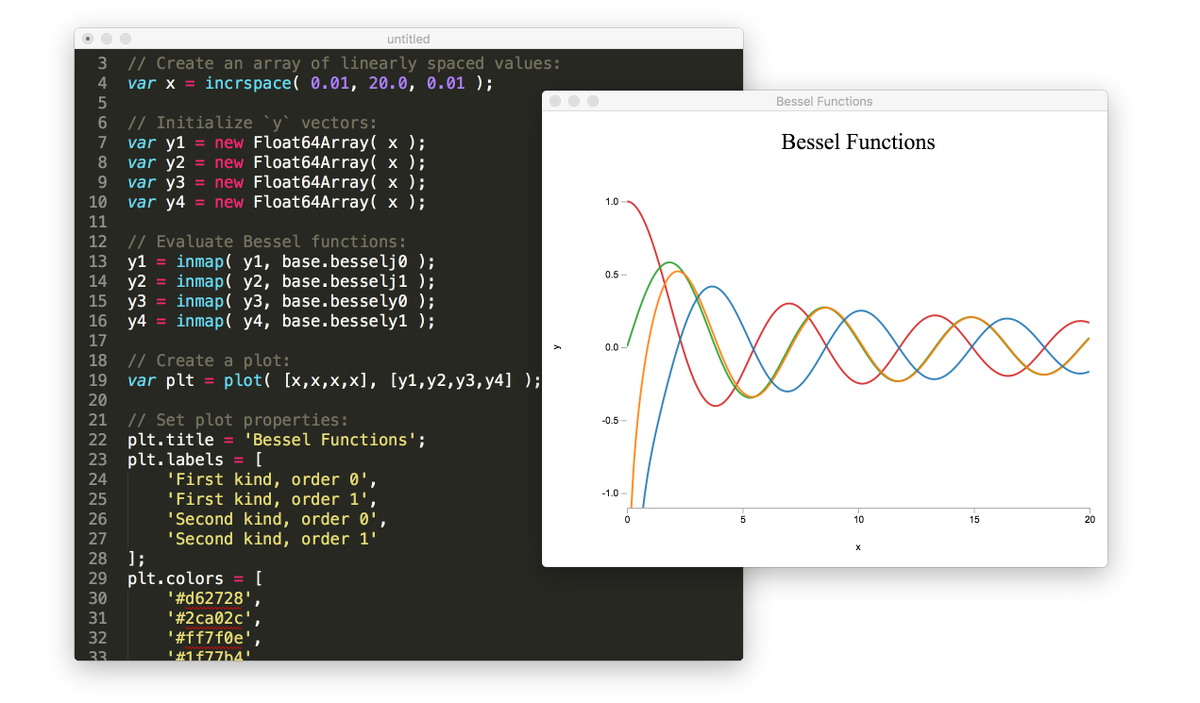
- 150+ [special math functions][@stdlib/math/base/special].
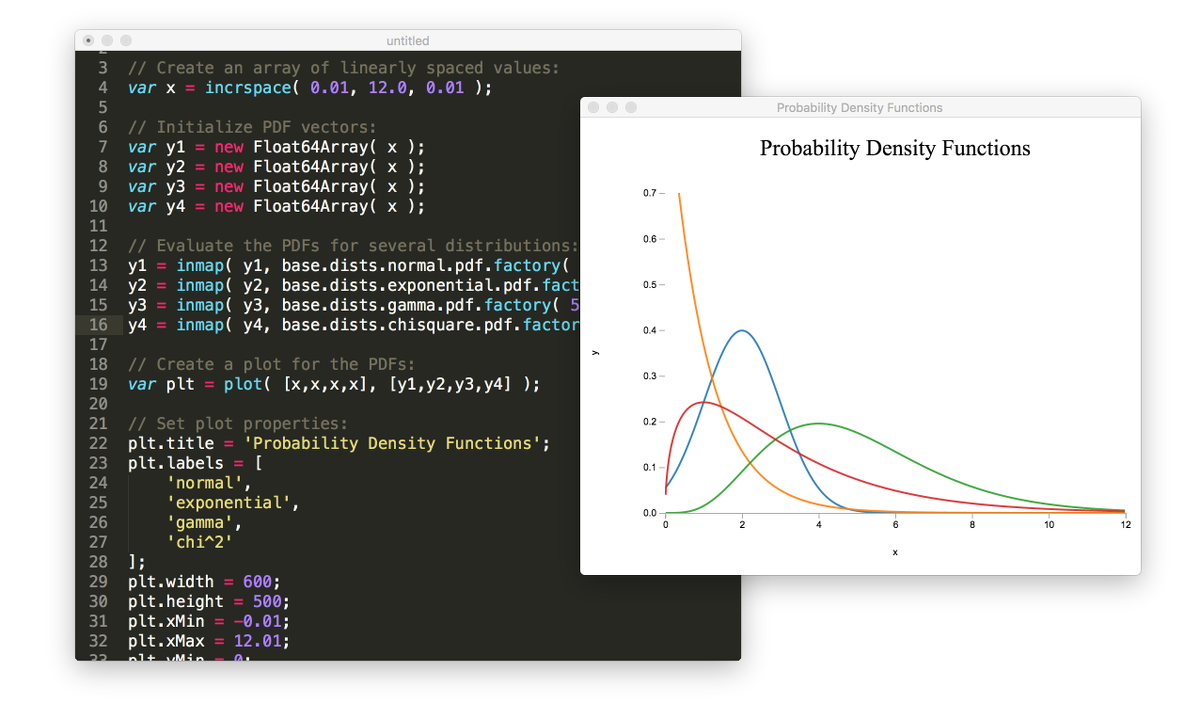
- 35+ [probability distributions][@stdlib/stats/base/dists], with support for evaluating probability density functions (PDFs), cumulative distribution functions (CDFs), quantiles, moments, and more.
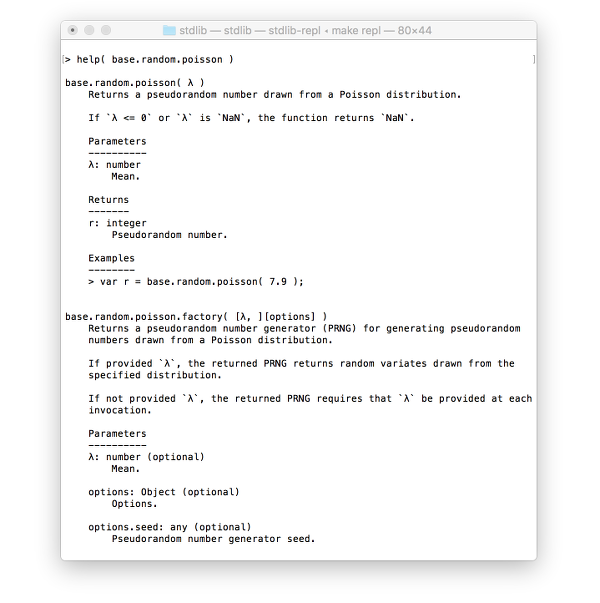
- 40+ [seedable pseudorandom number generators][@stdlib/random/base] (PRNGs).
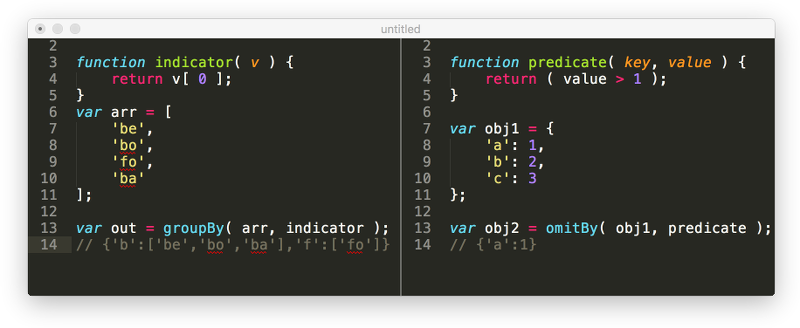
- 200+ general [utilities][@stdlib/utils] for data transformation, functional programming, and asynchronous control flow.
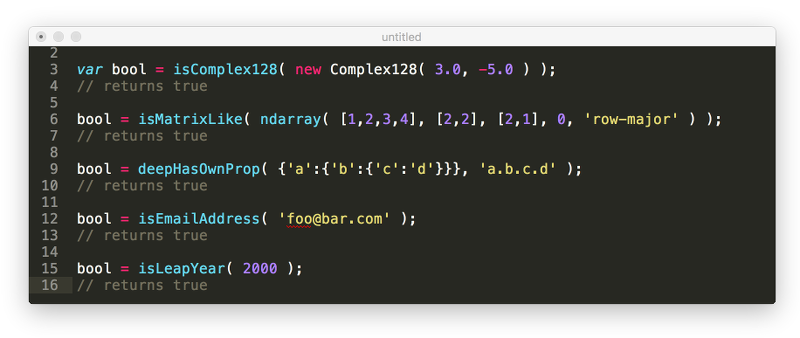
- 200+ [assertion utilities][@stdlib/assert] for data validation and feature detection.
- 50+ [sample datasets][@stdlib/datasets] for testing and development.
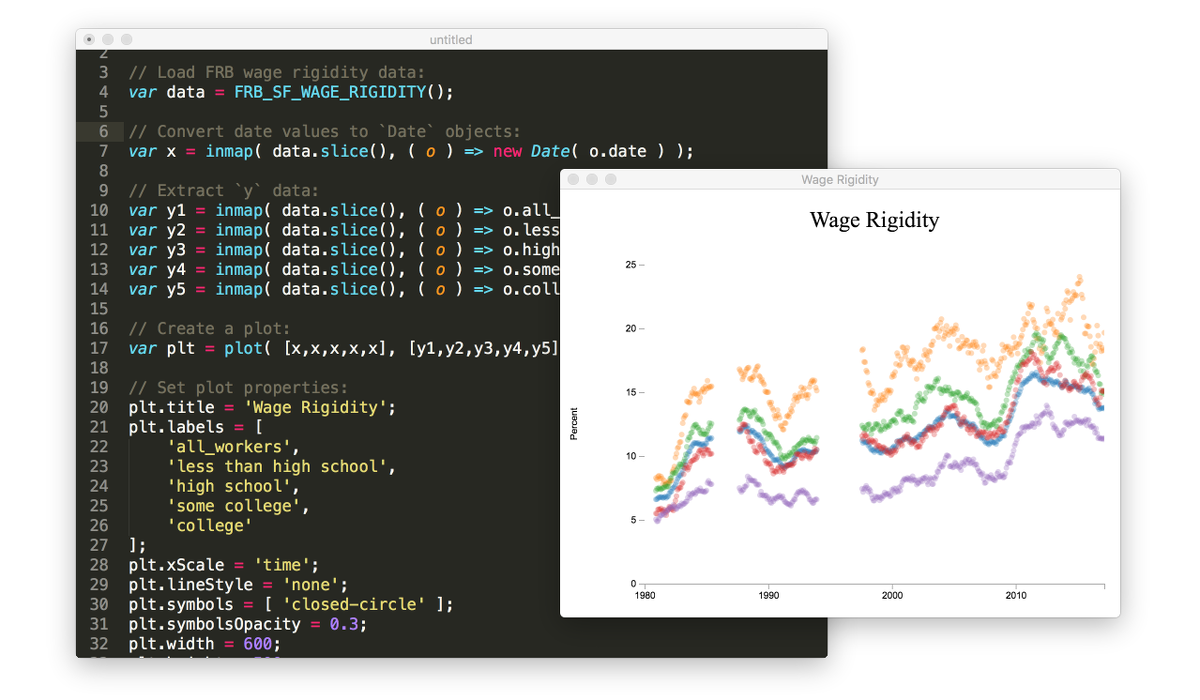
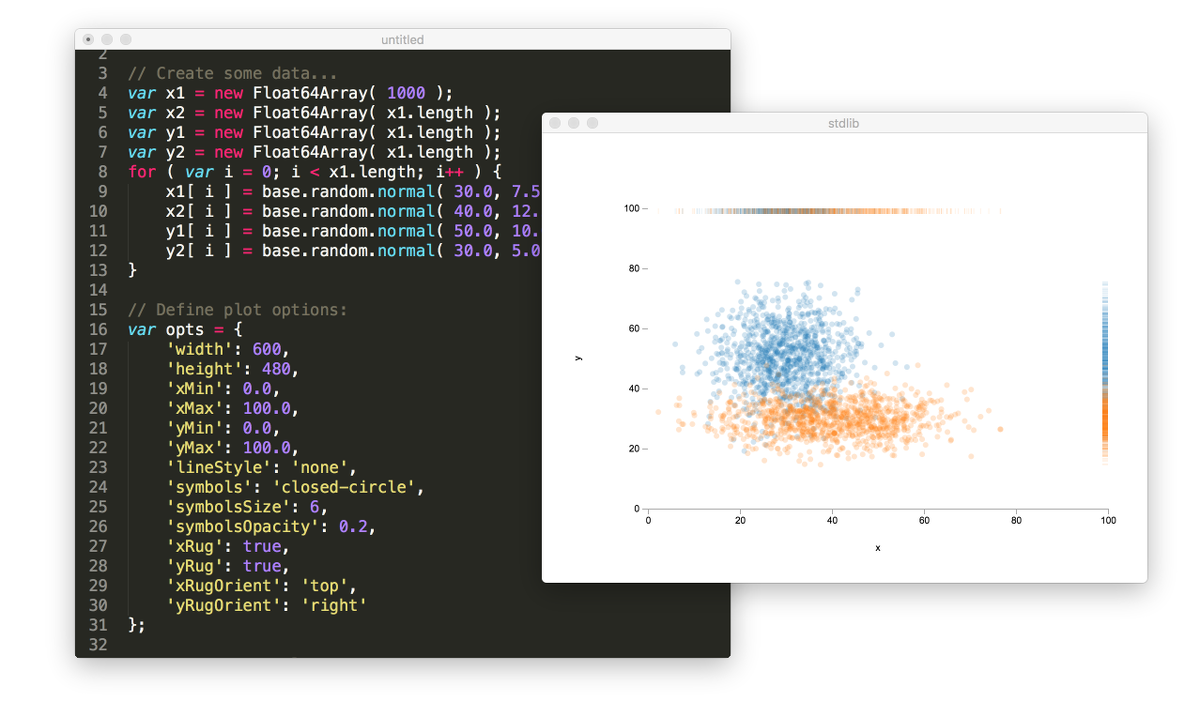
- A [plot API][@stdlib/plot/ctor] for data visualization and exploratory data analysis.
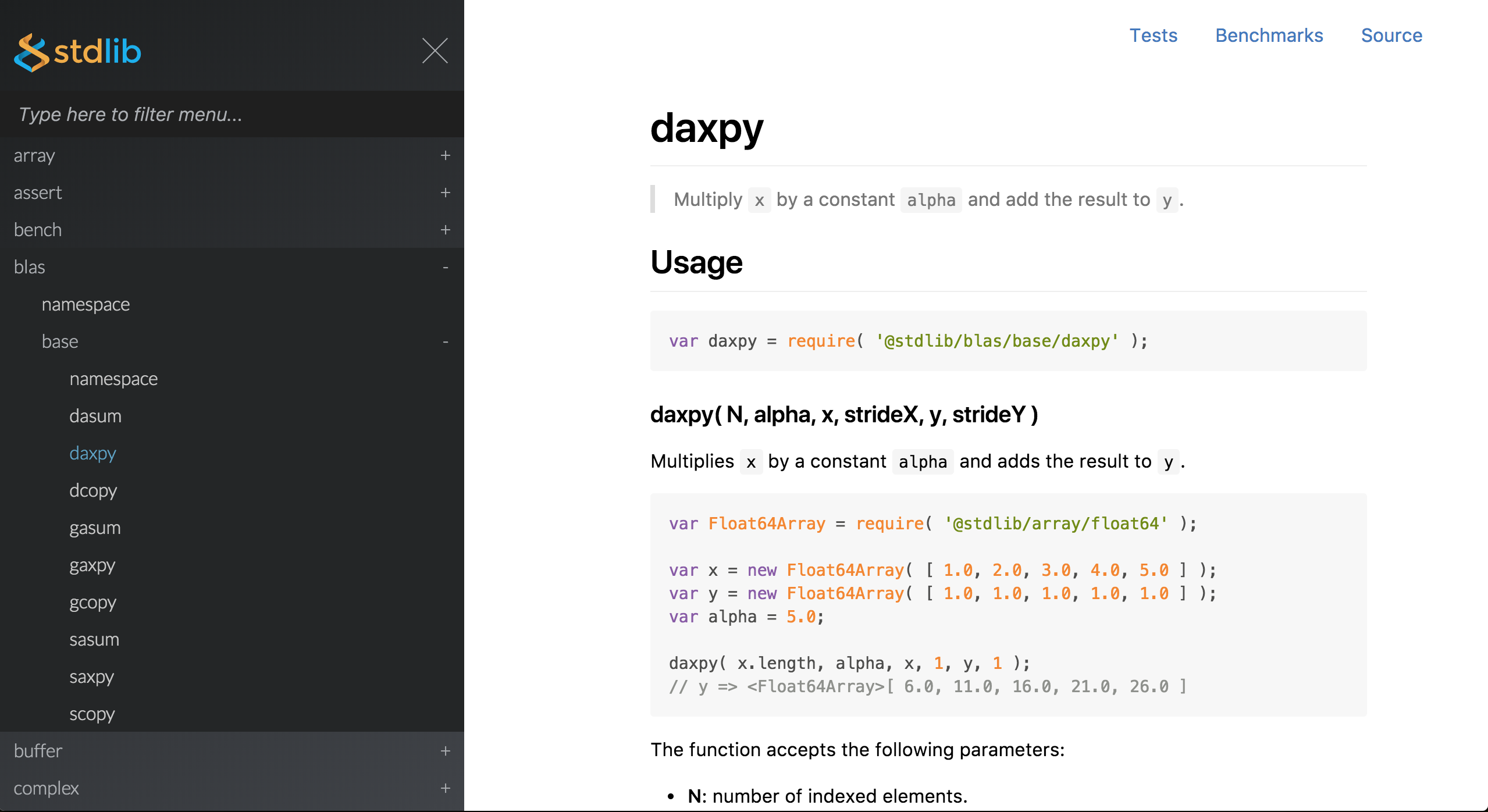
- Native add-ons for interfacing with BLAS libraries, with pure JavaScript fallbacks.
- A [benchmark framework][@stdlib/bench/harness] supporting TAP.
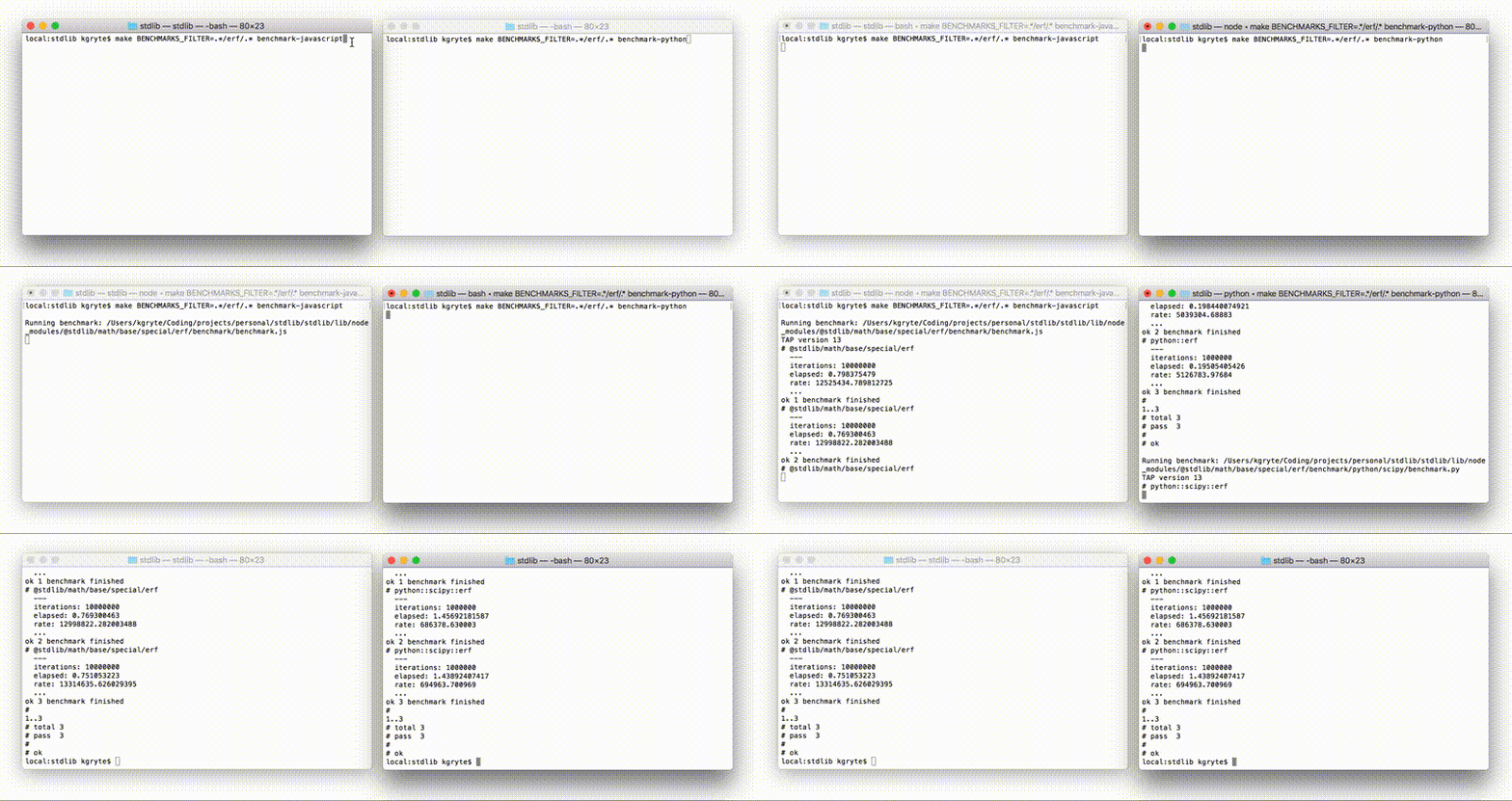
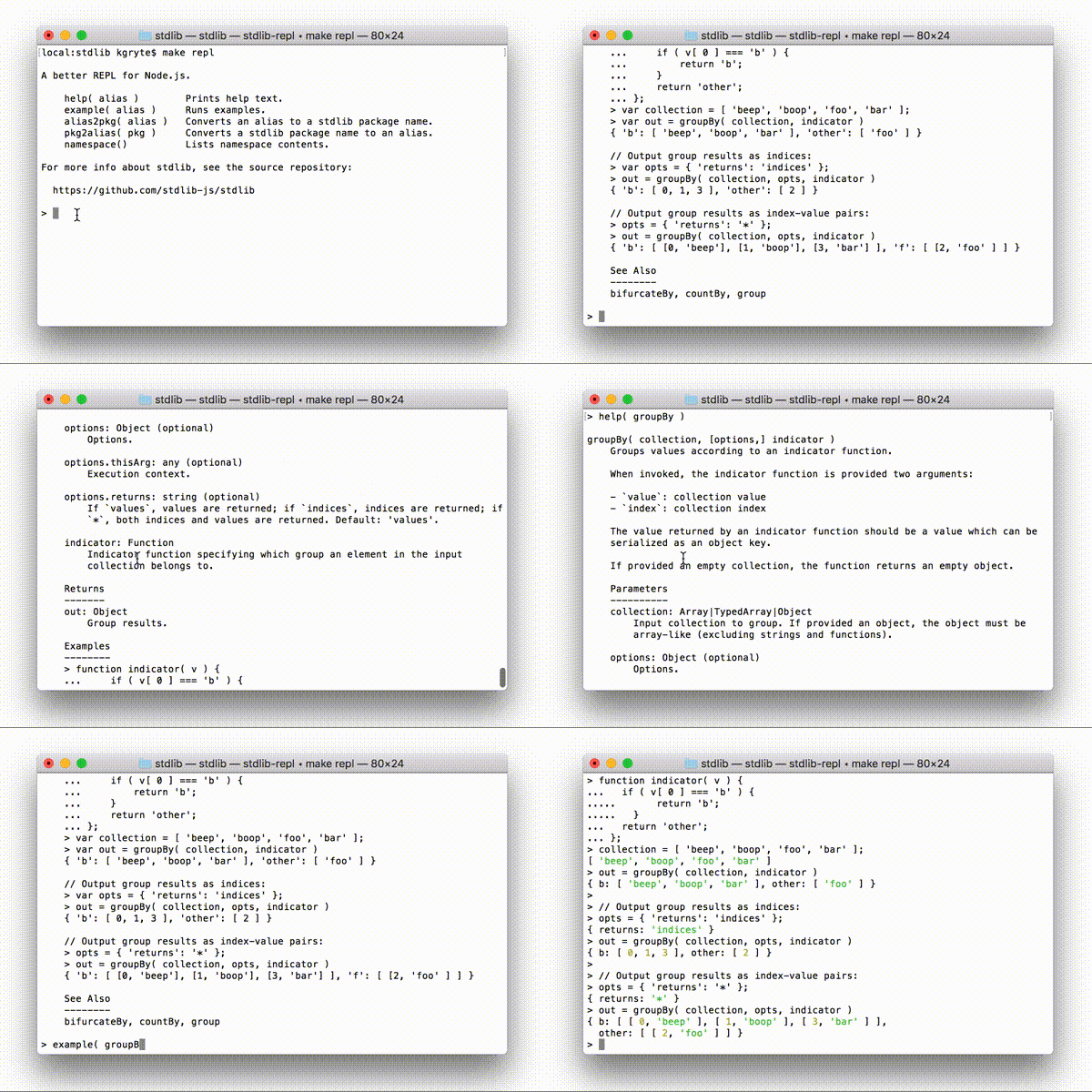
- REPL environment with integrated help and examples.
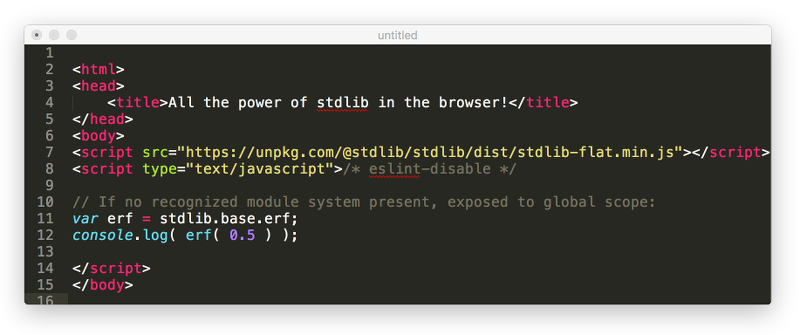
- Can be bundled using [Browserify][browserify], [Webpack][webpack], and other bundlers for use in web browsers.
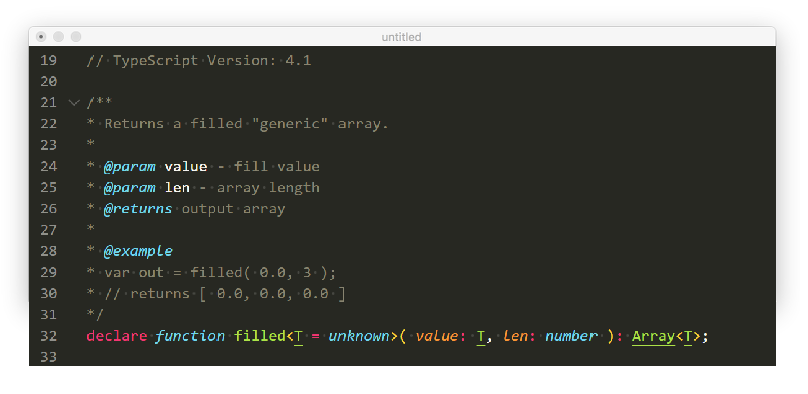
- Every function is accompanied by [TypeScript][typescript] declaration files, ensuring type safety and facilitating intelligent code completion in IDEs.
*
Installation
To accommodate various use cases, stdlib can be used in multiple ways. The preferred method of use depends on your individual use case. We've provided some user stories to help you identify the best approach. 😃
While this project's installation instructions defaults to using [npm][npm] for package management, installation via other package managers, such as [yarn][yarn], should be a matter of simply swapping out [npm][npm] commands with those of the relevant package manager.
$3
- I want to perform data analysis and data science tasks in JavaScript and Node.js, similar to how I might use Python, Julia, R, and MATLAB.
- Install the entire project as a command-line utility.
- I am building a web application.
- I plan on using [Browserify][browserify], [Webpack][webpack], and other bundlers for use in web browsers.
- Install individual packages. Installing the entire project is likely unnecessary and will lead to slower installation times.
- I would like to vendor a custom bundle containing various stdlib functionality.
- Follow the steps for creating custom bundles.
- I would like to include stdlib functionality by just using a script tag.
- I would like to use ES Modules.
- Use an individual package's ES Module build.
- I would like to use a pre-built bundle (possibly via a CDN, such as [unpkg][unpkg] or [jsDelivr][jsdelivr]).
- Install (or consume via a CDN) an individual package's pre-built UMD browser bundle.
- I am interested in using a substantial amount of functionality found in a top-level stdlib namespace and don't want to separately install hundreds of individual packages (e.g., if building an on-line calculator application and wanting all of stdlib's math functionality).
- Install one or more top-level namespaces. Installing the entire project is likely unnecessary and will lead to slower installation times. Installing a top-level namespace is likely to mean installing functionality which will never be used; however, installing a top-level namespace is likely to be easier and less time-consuming than installing many individual packages separately.
When bundling, installing a top-level namespace should not be a concern, as individual functionality can still be independently required/imported. Project installation times may, however, be somewhat slower.
- I am building a [Node.js][node-js] server application.
- I am interested in using various functionality found in stdlib.
- Install individual packages. Installing the entire project is likely unnecessary and will lead to slower installation times.
- I would like to vendor stdlib functionality and avoid dependency trees.
- Install individual package UMD bundles.
- I am interested in using a _substantial_ amount of functionality found in a top-level stdlib namespace and don't want to separately install hundreds of individual packages.
- Install one or more top-level namespaces. Installing the entire project is likely unnecessary and will lead to slower installation times. Installing a top-level namespace is likely to mean installing functionality which will never be used; however, installing a top-level namespace is likely to be easier and less time-consuming than installing many individual packages separately.
- I am using Deno.
- Import individual packages using pre-built Deno builds.
- I would like to use stdlib functionality in an [Observable][observable] notebook.
- Consume a pre-built browser bundles via a CDN, such as [unpkg][unpkg] or [jsDelivr][jsdelivr].
- I want to hack at stdlib, possibly even creating customized builds to link to platform-specific native libraries (such as Intel's MKL or some other numerical library).
- Install the project as a system library by cloning this repository and following the [installation][stdlib-development] instructions as described in the [development guide][stdlib-development].
$3
To install the entire project as a library or application dependency,
``bash`
$ npm install @stdlib/stdlib
Once installed, stdlib packages can be individually required/imported to minimize load times and decrease bundle sizes. For example, to use require
`javascript
var ndarray = require( '@stdlib/ndarray/array' );
var arr = ndarray( [ [ 1, 2 ], [ 3, 4 ] ] );
// returns
`
and to use import
`javascript
import ndarray from '@stdlib/ndarray/array';
var arr = ndarray( [ [ 1, 2 ], [ 3, 4 ] ] );
// returns
`
$3
stdlib is designed to allow decomposition of the main project into individual packages which can be independently consumed. Accordingly, users of the project can avoid installing all project functionality and only install the exact functionality they need.
To install individual packages, replace forward slashes / after @stdlib/ with hyphens -. For example,
`bash`
$ npm install @stdlib/ndarray-array
Once installed, individual packages can be required/imported. For example, to use require
`javascript
var ndarray = require( '@stdlib/ndarray-array' );
var arr = ndarray( [ [ 1, 2 ], [ 3, 4 ] ] );
// returns
`
and to use import
`javascript
import ndarray from '@stdlib/ndarray-array';
var arr = ndarray( [ [ 1, 2 ], [ 3, 4 ] ] );
// returns
`
$3
stdlib is comprised of various top-level namespaces (i.e., collections of related functionality united by common themes). For example, to install all math functionality found in the top-level math namespace,
`bash`
$ npm install @stdlib/math
Once installed, packages within a top-level namespace can be individually required/imported to minimize load times and decrease bundle sizes. For example, to use require
`javascript
var sin = require( '@stdlib/math/base/special/sin' );
var v = sin( 3.14 );
// returns
`
and to use import
`javascript
import sin from '@stdlib/math/base/special/sin';
var v = sin( 3.14 );
// returns
`
Note: installing nested namespaces found within top-level namespaces (e.g., math/base) is not supported. Consider installing individual packages or the relevant top-level namespace.
$3
To install globally for use as a command-line utility and/or use the [REPL][@stdlib/repl],
`bash`
$ npm install -g @stdlib/stdlib
which will expose the stdlib command. For example, to see available sub-commands
`bash`
$ stdlib help
and to run the [REPL][@stdlib/repl]
`bash`
$ stdlib repl
$3
#### ES Modules
To use ES Modules via a
`
#### Deno
To use individual packages in Deno, use Deno builds available in each package's repository via a dedicated deno branch (e.g., see the [deno][@stdlib/ndarray-array-deno] branch for [@stdlib/ndarray-array][@stdlib/ndarray-array-deno]). For example,
`javascript
import ndarray from 'https://cdn.jsdelivr.net/gh/stdlib-js/ndarray-array@deno/mod.js';
var arr = ndarray( [ [ 1, 2 ], [ 3, 4 ] ] );
// returns
``
#### jQuery-like Bundle
For those wanting a jQuery-like bundle, one can use pre-built distributable UMD bundles for use in browser environments or as shared ("vendored") libraries in server environments available in each package's repository via a dedicated umd branch. See sections UMD and Node.js for more details.
#### UMD
To use UMD bundles either via a
`
#### Node.js
To vendor stdlib functionality and avoid installing dependency trees, use UMD server builds available in each package's repository via a dedicated umd branch (e.g., see the [umd][@stdlib/math-base-special-erf-umd] branch for [@stdlib/math-base-special-erf][@stdlib/math-base-special-erf-umd]). For example,
`javascript
var linspace = require( '/path/to/vendor/umd/@stdlib/array-base-linspace' );
var erf = require( '/path/to/vendor/umd/@stdlib/math-base-special-erf' );
var x = linspace( -10.0, 10.0, 100 );
for ( var i = 0; i < x.length; i++ ) {
console.log( 'x: %d, erf(x): %d', x[ i ], erf( x[ i ] ) );
}
`
$3
To create a custom bundle based on project needs,
1. follow the [download][stdlib-development], [configuration][stdlib-development], and [installation][stdlib-development] instructions as described in the [development guide][stdlib-development].
2. navigate to the local installation directory.
3. run the following command to print help documentation for providing a list of stdlib package names to bundle
`bash`
$ NODE_PATH=./lib/node_modules node ./bin/cli bundle-pkg-list -- -h
4. modify and run the above command with the list of packages to bundle
`bash`
$ NODE_PATH=./lib/node_modules node ./bin/cli bundle-pkg-list --
Upon generating a bundle, the bundle can be loaded via a