@thi.ng/defmulti
v3.0.90TypeScript
Dynamic, extensible multiple dispatch via user supplied dispatch function.
0/weekUpdated 2 days agoApache-2.0Unpacked: 49.6 KB
Published by Karsten Schmidt
npm install @thi.ng/defmulti!@thi.ng/defmulti

!npm downloads

> [!NOTE]
> This is one of 214 standalone projects, maintained as part
> of the @thi.ng/umbrella monorepo
> and anti-framework.
>
> 🚀 Please help me to work full-time on these projects by sponsoring me on
> GitHub. Thank you! ❤️
- About
- Status
- Installation
- Dependencies
- Usage examples
- API
- defmulti()
- Dispatch value hierarchies
- implementations()
- defmultiN()
- Usage examples
- Dynamic dispatch: Simple S-expression interpreter
- True multiple arg dispatch
- Dispatch value graph visualization
- Authors
- License
About
Dynamically extensible multiple
dispatch via user
supplied dispatch function, with minimal overhead and support for
dispatch value inheritance hierarchies (more flexible and independent of
any actual JS type relationships).
Status
STABLE - used in production
Search or submit any issues for this package
Installation
``bash`
yarn add @thi.ng/defmulti
ESM import:
`ts`
import * as def from "@thi.ng/defmulti";
Browser ESM import:
`html`
For Node.js REPL:
`js`
const def = await import("@thi.ng/defmulti");
Package sizes (brotli'd, pre-treeshake): ESM: 805 bytes
Dependencies
- @thi.ng/api
- @thi.ng/errors
- @thi.ng/logger
Note: @thi.ng/api is in _most_ cases a type-only import (not used at runtime)
Usage examples
Three projects in this repo's
/examples
directory are using this package:
| Screenshot | Description | Live demo | Source |
|:---------------------------------------------------------------------------------------------------------------------------|:--------------------------------------------------------------------------------------------------------|:----------------------------------------------------------|:---------------------------------------------------------------------------------------|
|  | Mastodon API feed reader with support for different media types, fullscreen media modal, HTML rewriting | Demo | Source |
| 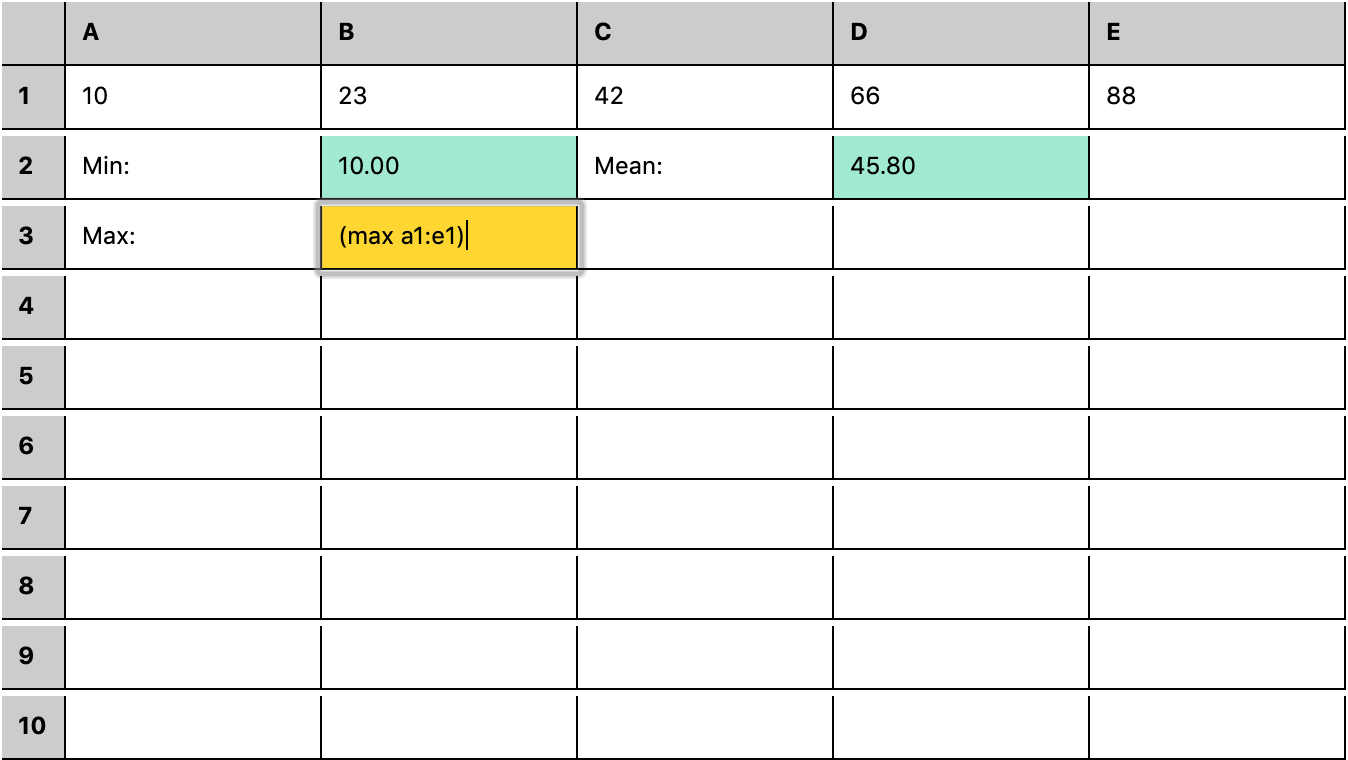 | rstream based spreadsheet w/ S-expression formula DSL | Demo | Source |
| 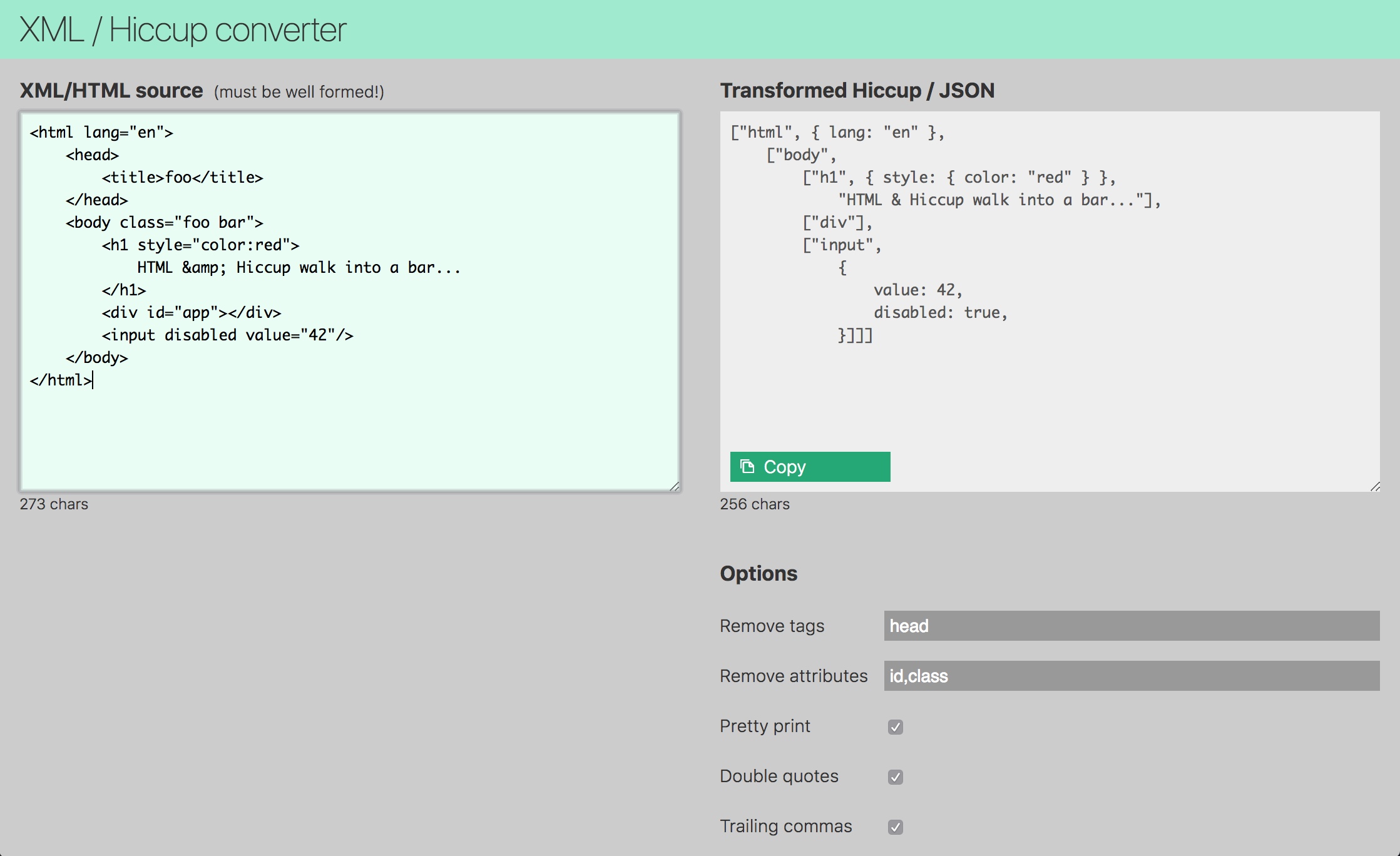 | XML/HTML/SVG to hiccup/JS conversion | Demo | Source |
API
$3
defmulti returns a new multi-dispatch function using the providedDEFAULT
dispatcher function. The dispatcher acts as a mapping function, can take
any number of arguments and must produce a dispatch value (string,
number or symbol) used to lookup an implementation. If found, the impl
is called with the same args. If no matching implementation is
available, attempts to dispatch to impl. If none is
registered, an error is thrown.
defmulti provides generics for type checking up to 8 args (plus thedefmulti
return type) and the generics will also apply to all implementations. If
more than 8 args are required, will fall back to an untyped
varargs solution.
The function returned by defmulti can be called like any other
function, but also exposes the following operations:
- .add(id, fn) - adds/overrides implementation for given dispatch.addAll(impls)
value
- - add/override multiple implementations (given as object,.remove(id)
with keys referring to dispatch values)
- - removes implementation for dispatch value.callable(...args)
- - takes same args as if calling the.isa(child, parent)
multi-function, but only checks if an implementation exists for the
given args. Returns boolean.
- - establish dispatch value relationship hierarchy.impls()
- - returns set of all dispatch values which have an implementation.rels()
- - return all dispatch value relationships.parents(id)
- - direct parents of dispatch value id
- - transitive parents of dispatch value id
- - returns iterator of all dispatch value relationship pairs
#### Dispatch value hierarchies
To avoid code duplication, dispatch values can be associated in
child-parent relationships and implementations only defined for some
ancestors. Iff no implementation exists for a concrete dispatch value,
defmulti first attempts to find an implementation for any ancestorDEFAULT
dispatch value before using the implementation.
These relationships can be defined via an additional (optional) object
arg to defmulti and/or dynamically extended via the .isa(child,
parent) call to the multi-function. Relationships can also be queried.parents(id)
via and .ancestors(id).
Note: If multiple direct parents are defined for a dispatch value, then
it's currently undefined which implementation will be picked. If this
causes issues to people, parents could be implemented as sorted list
(each parent with weight) instead of Sets, but this will have perf
impact... please open an issue if you run into problems!
`ts
import { defmulti } from "@thi.ng/defmulti";
const foo = defmulti((x) => x);
foo.isa(23, "odd");
foo.isa(42, "even");
foo.isa("odd", "number");
foo.isa("even", "number");
foo.parents(23); // Set { "odd" }
foo.ancestors(23); // Set { "odd", "number" }
foo.parents(1); // undefined
foo.ancestors(1); // Set { }
// add some implementations
foo.add("odd", (x) => ${x} is odd);${x} is a number
foo.add("number", (x) => );
// dispatch values w/ implementations
foo.impls();
// Set { "odd", "even", "number", "23", "42" }
foo(23); // "23 is odd"
foo(42); // "42 is a number"
foo(1); // error (missing impl & no default)
foo.callable(1) // false
`
Same example, but with relationships provided as argument to defmulti:
`ts
import { defmulti } from "@thi.ng/defmulti";
const foo = defmulti((x) => x, {
23: "odd",
42: "even",
"odd": "number",
"even": "number",
});
foo.rels();
// { "23": Set { "odd" },
// "42": Set { "even" },
// odd: Set { "number" },
// even: Set { "number" } }
`
$3
Syntax-sugar intended for sets of multi-methods sharing same dispatch
values / logic. Takes a dispatch value, an object of "is-a"
relationships and a number of multi-methods, each with an implementation
for the given dispatch value.
The relations object has dispatch values (parents) as keys and arrays of
multi-methods as their values. For each multi-method associates the
given type with the related parent dispatch value to delegate to its.isa()
implementation (see above).
The remaining implementations are associated with their related
multi-method and the given type dispatch value.
`ts
import { defmulti, implementations } from "@thi.ng/defmulti";
foo = defmulti((x) => x.id);
bar = defmulti((x) => x.id);
bax = defmulti((x) => x.id);
baz = defmulti((x) => x.id);
// define impls for dispatch value a
implementations(
  "a",
// delegate bax & baz impls to dispatch val b
  {
     b: [bax, baz]
  },
// concrete multi-fn impls
foo,
(x) => foo: ${x.val},bar: ${x.val.toUpperCase()}
bar,
(x) =>
);
// some parent impls for bax & baz
bax.add("b", (x) => bax: ${x.id});baz: ${x.id}
baz.add("c", (x) => );
// delegate to use "c" impl for "b"
baz.isa("b", "c");
foo({ id: "a", val: "alice" }); // "foo: alice"
bar({ id: "a", val: "alice" }); // "bar: ALICE"
bax({ id: "a", val: "alice" }); // "bax: a"
baz({ id: "a", val: "alice" }); // "baz: a"
baz.impls(); // Set { "c", "a", "b" }
`
Also see the WIP package
@thi.ng/geom
for a concreate realworld usage example.
$3
Returns a multi-dispatch function which delegates to one of the provided
implementations, based on the arity (number of args) when the function
is called. Internally uses defmulti, so new arities can be dynamicallyfallback
added (or removed) at a later time. If no is provided,defmultiN also registers a DEFAULT implementation which simplyIllegalArityError
throws an when invoked.
Note: Unlike defmulti no argument type checking is supported,
however you can specify the return type for the generated function.
`ts
import { defmultiN } from "@thi.ng/defmulti";
const foo = defmultiN
0: () => "zero",
1: (x) => one: ${x},three: ${x}, ${y}, ${z}
3: (x, y, z) =>
});
foo();
// zero
foo(23);
// one: 23
foo(1, 2, 3);
// three: 1, 2, 3
foo(1, 2);
// Error: illegal arity: 2
`
Usage examples
`ts
import { defmulti, DEFAULT } from "@thi.ng/defmulti";
const visit = defmulti
// register implementations for different dispatch types
// each dispatch value can only be registered once
visit.add("[object Array]", (x) => x.forEach(visit));
visit.add("[object Object]", (x) => { for(let k in x) visit([k, x[k]]); });
// ignore null values
visit.add("[object Null]", (x) => { });
// DEFAULT matches all other dispatch values
visit.add(DEFAULT, (x) => console.log("visit", x.toString()));
// call like normal fn
visit([{a: 1, b: ["foo", "bar", null, 42]}])
// a
// 1
// b
// foo
// bar
// 42
`
See
/test/index.ts
for a variation of this example.
#### Dynamic dispatch: Simple S-expression interpreter
`ts
import { defmulti, DEFAULT } from "@thi.ng/defmulti";
const exec = defmulti((x) => Array.isArray(x) ? x[0] : typeof x);
exec.add("+", ([_, ...args]) => args.reduce((acc, n) => acc + exec(n), 0));
exec.add("", ([_, ...args]) => args.reduce((acc, n) => acc exec(n), 1));
exec.add("number", (x) => x);
exec.add(DEFAULT, (x) => { throw new Error(invalid expr: ${x}); });
// 10 * (1 + 2 + 3) + 6
exec(["+", ["*", 10, ["+", 1, 2, 3]], 6]);
// 66
`
#### True multiple arg dispatch
`ts
import { defmulti, DEFAULT } from "@thi.ng/defmulti";
// interest rate calculator based on account type & balance thresholds
const apr = defmulti(
({type, balance}) =>
${type}-${balance < 1e4 ? "low" : balance < 5e4 ? "med" : "high"}
);
apr.add("current-low", ({ balance }) => balance * 0.005);
apr.add("current-med", ({ balance }) => balance * 0.01);
apr.add("current-high", ({ balance }) => balance * 0.01);
apr.add("savings-low", ({ balance }) => balance * 0.01);
apr.add("savings-med", ({ balance }) => balance * 0.025);
apr.add("savings-high", ({ balance }) => balance * 0.035);
apr.add(DEFAULT, (x) => { throw new Error(invalid account type: ${x.type})});
apr({type: "current", balance: 5000});
// 25
apr({type: "current", balance: 10000});
// 100
apr({type: "savings", balance: 10000});
// 250
apr({type: "isa", balance: 10000});
// Error: invalid account type: isa
`
#### Dispatch value graph visualization
To facilitate better introspection of dynamically constructed/added defmulti()
implementations (with possibly deep hierarchies of dispatch values), we can
utilize the method to extract all dispatch value relationships
and use these to build dependency
graph, which
then can also be visualized.
`ts
import { defmulti } from "@thi.ng/defmulti";
import { defDGraph } from "@thi.ng/dgraph";
import { toDot } from "@thi.ng/dgraph-dot";
const fn = defmulti((x) => x);
// dummy impls
fn.add("a", () => {});
fn.add("d", () => {});
// dispatch value relationships
fn.isa("b", "a");
fn.isa("c", "b");
fn.isa("e", "d");
// build dependency graph and export as Graphviz DOT format
console.log(toDot(defDGraph(fn.dependencies()), { id: (id) => id }));
// digraph g {
// "b"[label="b"];
// "c"[label="c"];
// "e"[label="e"];
// "a"[label="a"];
// "d"[label="d"];
// "b" -> "a";
// "c" -> "b";
// "e" -> "d";
// }
`
Authors
If this project contributes to an academic publication, please cite it as:
`bibtex``
@misc{thing-defmulti,
title = "@thi.ng/defmulti",
author = "Karsten Schmidt",
note = "https://thi.ng/defmulti",
year = 2018
}
License
© 2018 - 2026 Karsten Schmidt // Apache License 2.0