@thi.ng/interceptors
v3.2.116TypeScript
Interceptor based event bus, side effect & immutable state handling
0/weekUpdated yesterdayApache-2.0Unpacked: 75.3 KB
Published by Karsten Schmidt
npm install @thi.ng/interceptors!@thi.ng/interceptors

!npm downloads

> [!NOTE]
> This is one of 214 standalone projects, maintained as part
> of the @thi.ng/umbrella monorepo
> and anti-framework.
>
> 🚀 Please help me to work full-time on these projects by sponsoring me on
> GitHub. Thank you! ❤️
**Update 12/2022: This package is considered completed and no longer being
updated with new features. Please consider using
@thi.ng/rstream
instead...**
- About
- Event bus, interceptors, side effects
- Interceptors: Event and Effect primitives
- Event Handlers
- Events vs Effects:
- Great, but why?
- Status
- Related packages
- Installation
- Dependencies
- Usage examples
- API
- Authors
- License
About
Interceptor based event bus, side effect & immutable state handling.
Event bus, interceptors, side effects
$3
The idea of interceptors is quite similar to functional composition and
AOP (aspect oriented
programming).
You want to reuse some functionality across components within your app.
For example, if you have multiple actions which should be undoable, you
can compose your main event handlers with thesnapShot()
interceptor, which requires a
@thi.ng/atom/History-like
instance and records a snapshot of the current app state, but else is
completely invisible.
``
[UNDOABLE_EVENT]: [snapshot(), valueSetter("foo")]
$3
The idea of event handlers is being responsible to assign parameters
to side effects, rather than executing effects themselves, is again
mainly to do with the DRY-principle, instrumentation potential and
performance. Most composed event handler chains are setup so that your
"actual" main handler is last in line in the pre processing phase. If
e.g. your event handlers would directly update the state atom, then any
attached watches (derived views, cursors, other
subscriptions)
would be re-run each time. By assigning the updated state to, e.g., an
FX_STATE event, we can avoid these interim updates and only apply the
new state once all events in the current frame have been processed.
Furthermore, a post interceptor might cancel the event due to validation
errors etc.
#### Events vs Effects:
To briefly summarize the differences between event handlers & effects:
Event handlers are triggered by events, but each event handler is
technically a chain of interceptors (even though many are just a single
item). Even if you just specify a single function, it's internally
translated into an array of interceptor objects like:
`
valueSetter("route") -> [{ pre: (...) => {[FX_STATE]: ...}, post: undefined }]
When processing an event, these interceptors are then executed first in
ascending order for any pre functions and then backwards again for anypost functions (only if there are any in the chain). So if you had[{pre: f1, post: f2}, {pre: f3},
defined an handler with this chain:
{pre: f4, post: f5}], then the functions would be called in this order:pre
f1, f3, f4, f5, f2. The post phase is largely intended for state/effect
validation & logging post-update. I.e., interceptors commonly need
only.
Like with
trace() some
interceptors DO have side effects, but they're really the exception to the rule.
For example, snapshot() is idempotent since it only records a new snapshot iftrace()
it's different from the last and , but is typically used during
development only - its side effect is outside the scope of your app (i.e. the
console).
$3
In most apps there're far more event types/handlers than possible
actions any component can take. So assigning them to registered side
effects enables better code reuse. Another use-case is debugging. With a
break point set at the beginning of processEffects() (inevent-bus.ts)
you can see exactly which side effects have occurred at each frame. This
can be very helpful for debugging and avoid having to "keep everything
in your head" or - as Rich Hickey would say - make your app "Easier to
reason about".
More comprehensive description forthcoming. Please check the detailed
commented source code and examples for now:
Status
COMPLETED - no further development planned
Search or submit any issues for this package
Related packages
- @thi.ng/atom - Mutable wrappers for nested immutable values with optional undo/redo history and transaction support
- @thi.ng/hdom - Lightweight vanilla ES6 UI component trees with customizable branch-local behaviors
- @thi.ng/rdom - Lightweight, reactive, VDOM-less UI/DOM components with async lifecycle and @thi.ng/hiccup compatible
Installation
`bash`
yarn add @thi.ng/interceptors
ESM import:
`ts`
import * as iceps from "@thi.ng/interceptors";
Browser ESM import:
`html`
Package sizes (brotli'd, pre-treeshake): ESM: 2.13 KB
Dependencies
- @thi.ng/api
- @thi.ng/atom
- @thi.ng/checks
- @thi.ng/errors
- @thi.ng/logger
- @thi.ng/paths
Note: @thi.ng/api is in _most_ cases a type-only import (not used at runtime)
Usage examples
Eight projects in this repo's
/examples
directory are using this package:
| Screenshot | Description | Live demo | Source |
|:---------------------------------------------------------------------------------------------------------------------|:-----------------------------------------------------------------------|:----------------------------------------------------------|:---------------------------------------------------------------------------------------|
| | Minimal demo using interceptors with an async side effect | Demo | Source |
| | Custom dropdown UI component for hdom | Demo | Source |
| | Custom dropdown UI component w/ fuzzy search | Demo | Source |
| | Event handling w/ interceptors and side effects | Demo | Source |
| | Event handling w/ interceptors and side effects | Demo | Source |
| 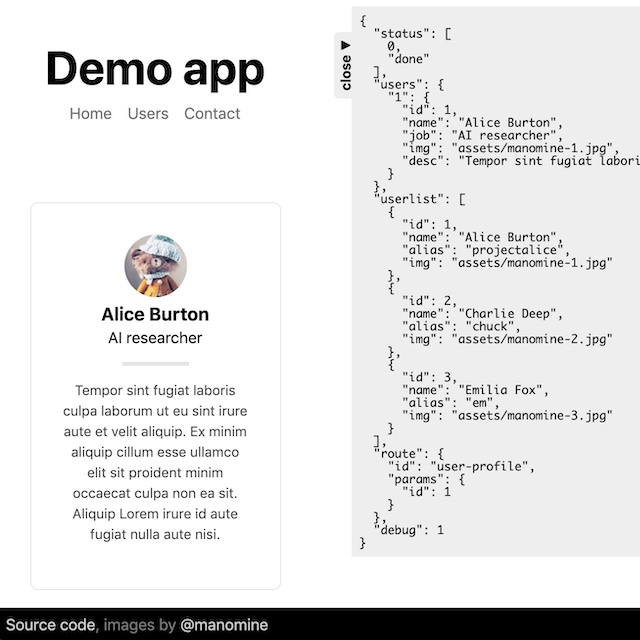 | Complete mini SPA app w/ router & async content loading | Demo | Source |
| 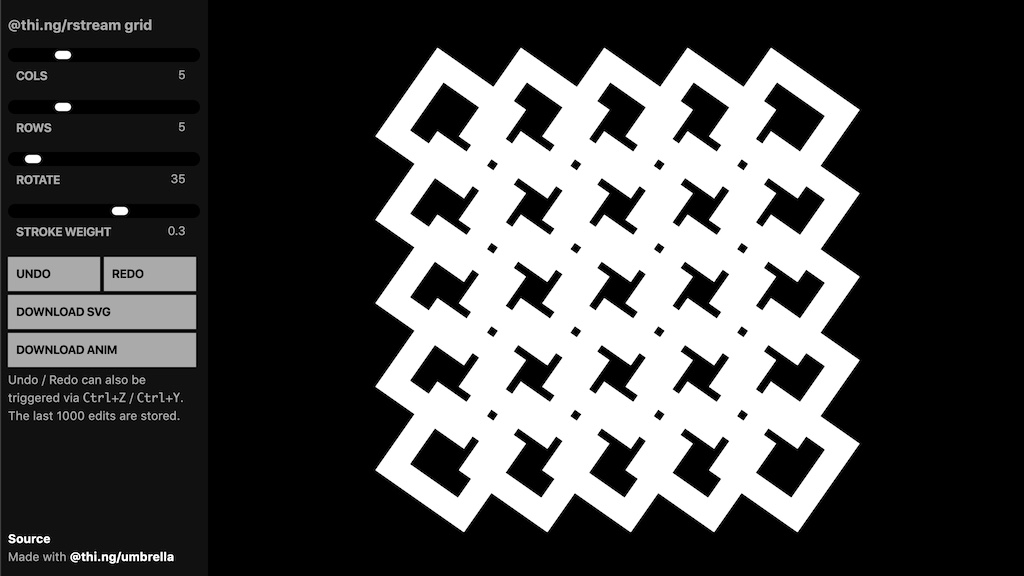 | Interactive grid generator, SVG generation & export, undo/redo support | Demo | Source |
| 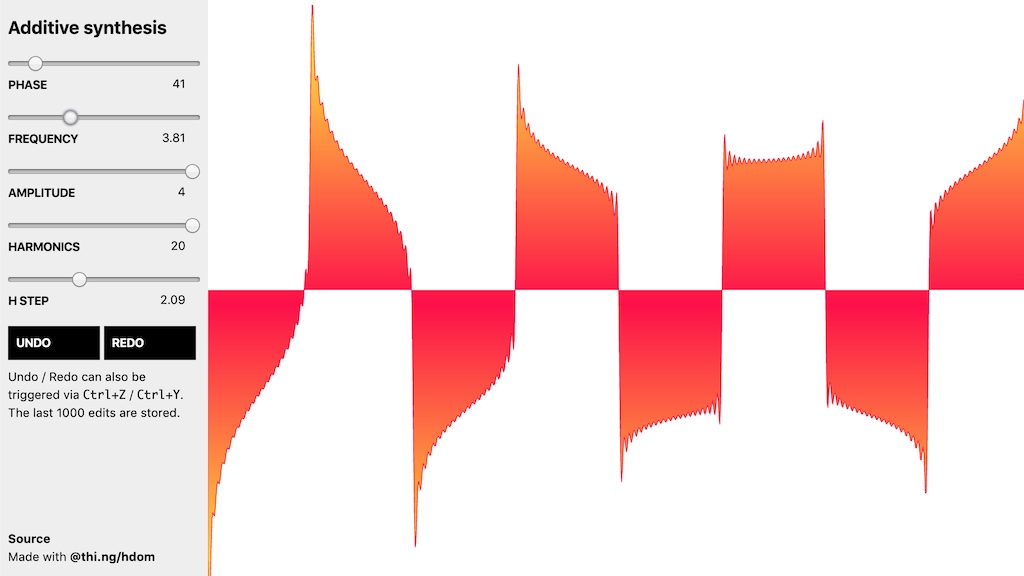 | Additive waveform synthesis & SVG visualization with undo/redo | Demo | Source |
API
TODO
Authors
- Karsten Schmidt (Main author)
- Logan Powell
If this project contributes to an academic publication, please cite it as:
`bibtex``
@misc{thing-interceptors,
title = "@thi.ng/interceptors",
author = "Karsten Schmidt and others",
note = "https://thi.ng/interceptors",
year = 2016
}
License
© 2016 - 2026 Karsten Schmidt // Apache License 2.0