npm install dbscanClustering - DBScan algorithm
==============================
A node module, that uses DBScan unsupervised clustering algorithm, to return centroids and their cluster
This algorithm doesn't handle well the following:
1. Large datasets [computational complexity]
2. Number of dimensions ( > 16) - more computaitons, "curse of dimensionality"
about (2), given a fixed amount of points, the density of the points decreases exponentially. Meaning you won't be able
to find cluster as you'll be wandering a lot.
About "the curse", it means that
Complexity: O(n^2) - space, O(n^2) - time
You'll find a pre-made 100 points 16-features vector sample file
Uses stream, readline node modules
using jSHint, matchdep , stream, grunt.js
Use this with my permission only
ToC
---------------------
1. Main app
Main app
---------------------
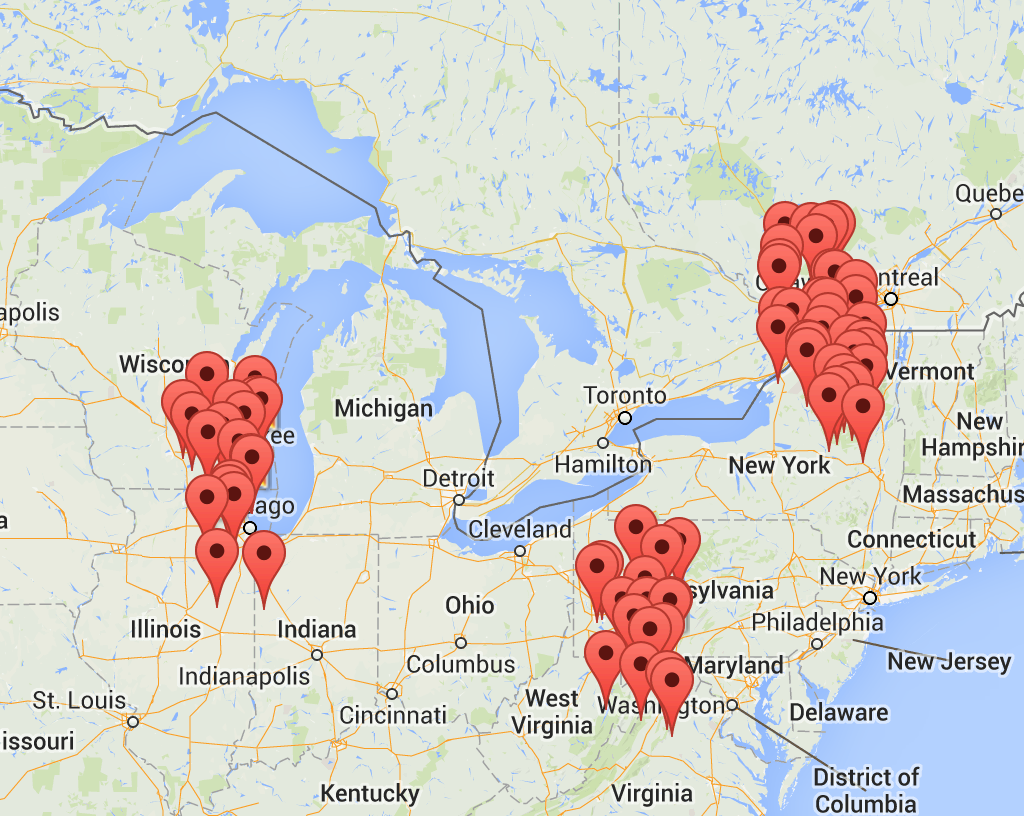
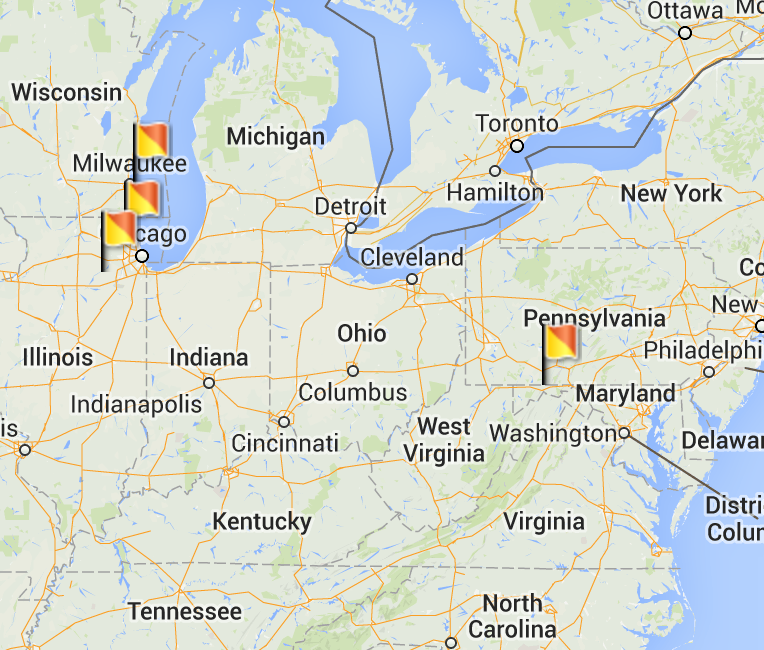
points over map:
Initialization
we need to initialize the distance object, you can add any distance metric you wish
to distance.js
``
var Distance 	 = require("./lib/distance"),
	distances    = new Distance(),
	// DBScan section
	DBScan       = require('./lib/dbscan.js'),
	dbscan       = new DBScan(distances)
after initialization, you need to create a multi-dimensional vector, an array of arrays:[[1,2],[1,4],[2,5],[5,9],...,[10,12]]`
in code we grab it via stream from a line-by-line [newline] structured flat file [so we won't have limit on memory space]
`var fs = require('fs'), // File section
readline = require('readline'), // using the UNSTABLE readline built-in node module
// Stream section
stream = require('stream'),
points = [],
rl, // read-line
in_stream;
in_stream = fs.createReadStream('./points.txt'),
rl = readline.createInterface({
input: in_stream,
terminal: false
})
rl.on('line', function(line) {
points.push(JSON.parse(line))
});
`
finally we run the clustering:
	var clustering_obj = dbscan.cluster(points,distanceFunction)
    console.log('FINISHED reading ' + points.length + ' and clustering them');