generator-express-no-stress
v11.0.1
Awesome APIs with ExpressJS and OpenAPI 3 (or Swagger 2): Features automatic request/resopnse validation, interactive api doc, and more.
0/weekUpdated 11 months agoMITUnpacked: 9.5 MB
Published by Carmine DiMascio
npm install generator-express-no-stress🚂 generator-express-no-stress
     
Create awesome Express.js applications with best of breed tech including ES.next via Babel.js, structured logging with Pino, API validation and interactive documentation using an OpenAPI 3 or Swagger 2 spec, environment based config with dotenv, and linting with ESLint.
 

generator-express-no-stress gets you up and running in seconds. It's ridiculously easy to configure. Heck, just take the defaults. Start it. Write code.
This generator scaffolds a fully functioning REST API server, complete with interactive documentation, API request and response validation, structured logging, environment driven config, and more. Simply run the generator and smile :-D
Install
_Requires Node 8 or greater_
``shell`
npm install -g yo@4.3.0 generator-express-no-stress
- See here for use with Yarn and/or Docker
- See here for Node 6 support
Scaffold
`shell`
yo express-no-stress myapp
cd myapp
Run
Run in _development mode_:
`shell`
npm run dev
Package and run in _production mode_
`shell`
npm start
Test
`shell`
npm test
Debug
Run one of the following, then attach your favorite inspector e.g. VSCode:
`shelldebug the server
npm run dev:debug
debug the tests
npm run test:debug
`
Try it!
- Interactive API doc at http://localhost:3000/api-explorer
- Landing page at http://localhost:3000
---
Usage: CLI
shell
yo express-no-stress [appname] [--yarn] [--docker]
`| Option | default | Description |
| ---------- | ------- | -------------------------------------------------------------------------- |
|
  | myapp   | The application folder                                                     |
|
--yarn | - | Use the yarn package manager, instead of npm |
| --docker | | Install Docker artifacts including a Dockerfile |Usage: Project
The sections below describe all usage options available once the project is generated/scaffolded.
$3
| Target | Description |
| -------------------- | ------------------------------------------------------------------------ |
|
npm run dev | Run in _development_ mode |
| npm run dev:debug | Debug in _development_ mode |
| npm run test | Run tests |
| npm run test:debug | Debug tests |
| npm run lint | View a listing of all errors discovered by the linter |
| npm run lint:fix | Fix all errors discovered by the linter |
| npm run compile | Transpile source code for production use |
| npm start | Run the in _production_ mode. \*Requires running npm run compile first |$3
Add these contents to your
.vscode/launch.json file$3
1. Start debug in _development_ mode via
npm run dev:debug
2. From the "Run" menu, select "Debug"
3. Select "Edit Configurations..."
4. From the list of Templates on the left side of the dialog, select "Attach to Node.js/Chrome"
5. Press the "Debug" button to attach the WebStorm debugger
$3
e.g. CloudFoundry
cf push myapp
$3
scaffold
yo express-no-stress myapp --yarn
cd myapprun in development mode
yarn run devrun in production mode
yarn run compile
yarn starttest
yarn test
---
What you get!
- Express.js - Fast, unopinionated
, minimalist web framework for Node.js
- Babel.js - Use new syntax, right now without waiting for support
- Pino - Extremely fast node.js logger, inspired by Bunyan. It also includes a shell utility to pretty-print its log files
- dotenv - Loads environment variables from .env for nodejs projects
- ESLint - a pluggable linting utility for JavaScript and JSX
Choose from the following ESLint lint rules:
- Airbnb - A mostly reasonable approach to JavaScript
- Prettier - Prettier is an opinionated code formatter
- Swagger - is a simple yet powerful representation of your RESTful API
- SwaggerUI - dynamically generate beautiful documentation and sandbox from a Swagger-compliant API
$3
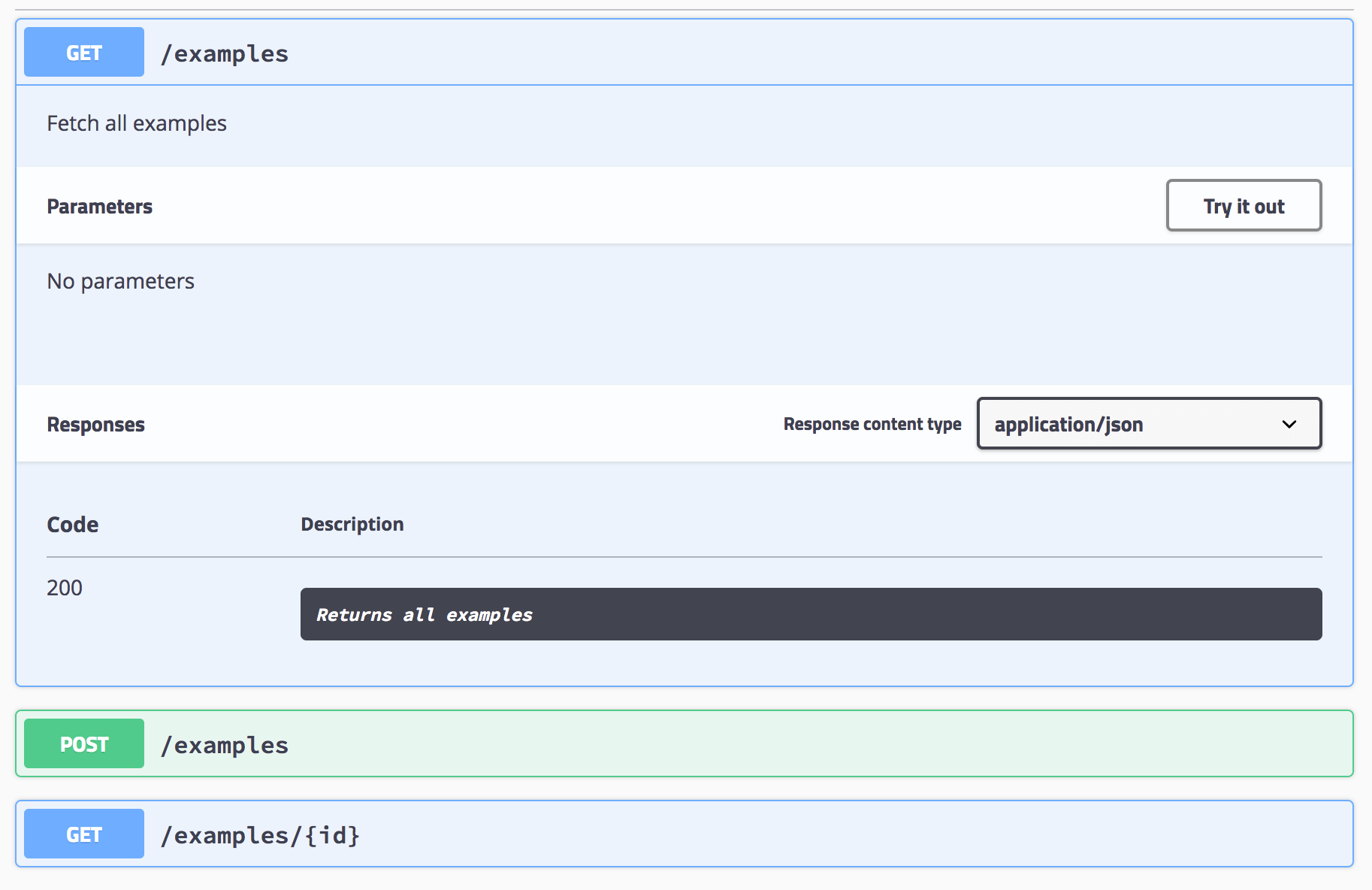
Simply describe your APIs with Swagger and automagically get for free:
- Interactive documentation
- API request validation
- API response validation (OpenAPI 3 only. Disabled by default)
- To enable set
in .env
#### Interactive API Doc
#### API Validation!
Oops! I the API caller forgot to pass a
field, no stress, we've got this!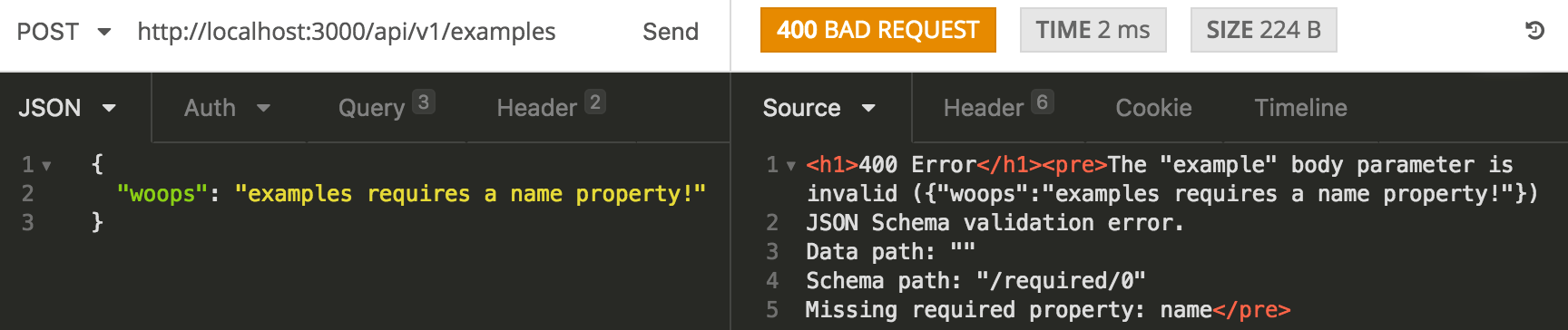
$3
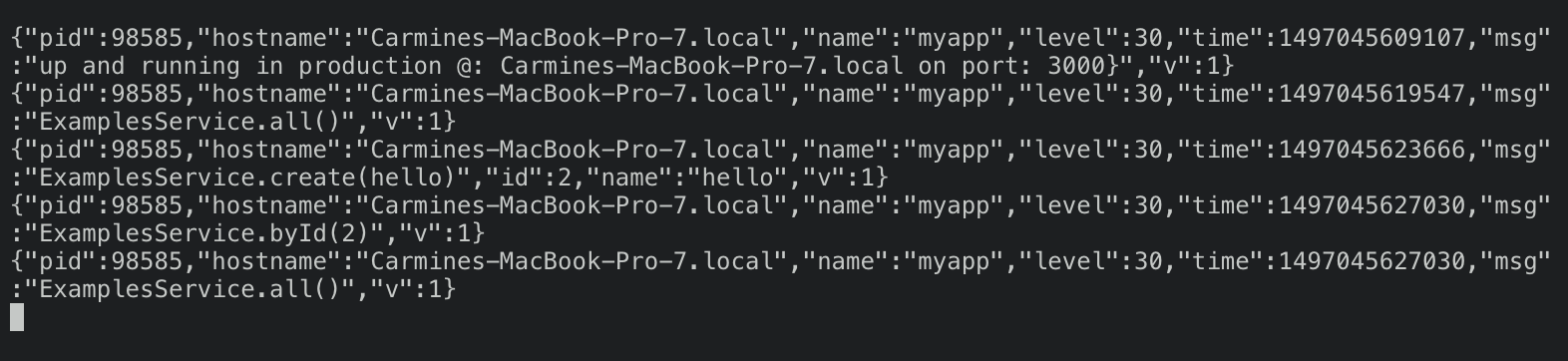
Structured logging out of the box!
#### raw
#### pretty
Structured logging pretty printed by default - great for dev!

$3
Simply describe your APIs with Swagger and automatically get:
- API request validation
- Interactive documentation
$3
#### Swagger API spec
`yaml
swagger: '2.0'
info:
version: 1.0.0
title: myapp
description: My cool app
basePath: /api/v1
tags:
- name: Examples
description: Simple example endpoints
- name: Specification
description: The swagger API specificationconsumes:
- application/json
produces:
- application/json
definitions:
ExampleBody:
type: object
title: example
required:
- name
properties:
name:
type: string
example: no_stress
paths:
/examples:
get:
tags:
- Examples
description: Fetch all examples
responses:
200:
description: Returns all examples
post:
tags:
- Examples
description: Create a new example
parameters:
- name: example
in: body
description: an example
required: true
schema:
$ref: '#/definitions/ExampleBody'
responses:
200:
description: Returns all examples
/examples/{id}:
get:
tags:
- Examples
parameters:
- name: id
in: path
required: true
description: The id of the example to retrieve
type: integer
responses:
200:
description: Return the example with the specified id
404:
description: Example not found
/spec:
get:
tags:
- Specification
responses:
200:
description: Return the API specification
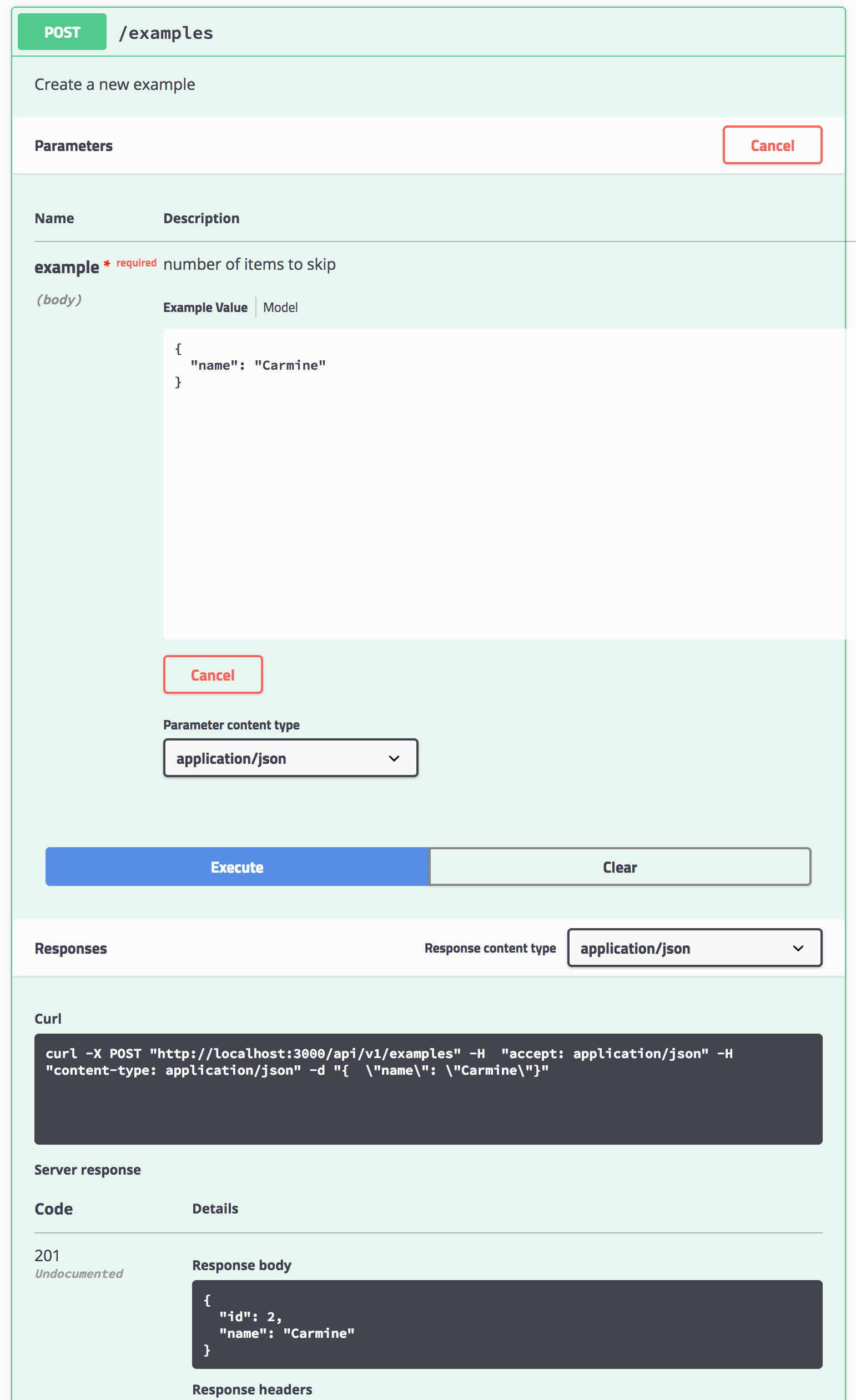
`#### Invoke a POST request via the Interactive doc
$3
express-no-stress uses ESLint and provides two choices, Airbnb or Prettier.
To add your own ESLint customizations, edit
.Note that the Airbnb variant provides a slightly modified Airbnb base configuration.
FAQ
Q: How do I modify the example API and make it my own?A: There are two key files that enable you to customize and describe your API:
1.
server/routes.js - This references the implementation of all of your routes. Add as many routes as you like and point each route your express handler functions.
2. server/common/api.yaml - This file contains your OpenAPI spec. Describe your API here. It's recommended that you to declare any and all validation logic in this YAML. express-no-stress-typescript uses express-openapi-validator to automatically handle all API validation based on what you've defined in the spec.Q: I previously generated an app, but I want to change the API root. How do I do this?
A: You need to make to small changes
1. Modify
server/routes.js
javascript
     // Change your original path e.g. /api/v1/examples, to:
     app.use('/api/v2/examples', examplesRouter);
` 2. Modify
and update the api root:
`yaml
# Change e.g. /api/v1 to /api/v2
servers:
- url: /api/v2
``License

Contributors ✨
Thanks goes to these wonderful people (emoji key):
 Jaime Leonardo Suncin Cruz 💻 |  Daniel Bornstrand 💻 |  Jason Corns 📖 |  Frank Calise 📖 |  Daisuke Tsuji 📖 |  Sangbeom Han 📖 |  Mike Lay 📖 |  jodejar214 💻 |
This project follows the all-contributors specification. Contributions of any kind welcome!