mrtc
v0.1.2
RTCPeerConnection Wrapper for purists. No dependencies (just ~1.5KB gzipped).
0/weekUpdated 3 years agoCC0-1.0
Published by Nihey Takizawa
npm install mrtcMinimal RTC Wrapper

RTCPeerConnection Wrapper for purists. No dependencies (just ~1.5KB gzipped).
``
$ npm install --save mrtc
Why Should I Use It?
There are a lot of RTCPeerConnection wrappers around there, but a lot of them
miss an important point: **Sometimes you don't need a lot of dependencies and
200+ commit repos to do your duty**.
RTCPeerConnection API is a bit complicated, but not that complicated, this
module wraps just what you need to do your signalling, establish a connection,
and send [MediaStream/DataChannel] data - it also exposes to you all the native
events of the RTCPeerConnection API.
What is RTC/WebRTC?
> WebRTC is a open source project aiming to enable the web with Real Time
> Communication (RTC) capabilities
Basically it allow you to make RTC between two browser peers (or a NodeJS peer,
if you're using node-wrtc). Data is
streamed between two peers without the need of a central server gateway.
How does WebRTC work?
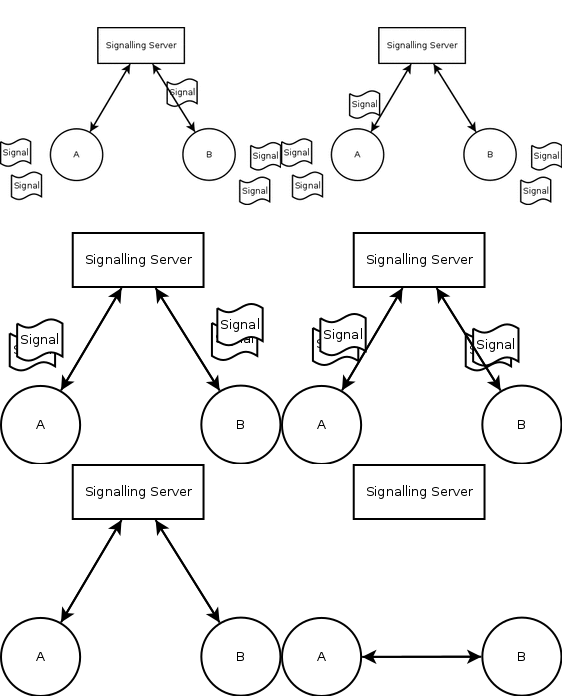
In a nutshell, considering two peers, A and B:
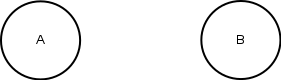
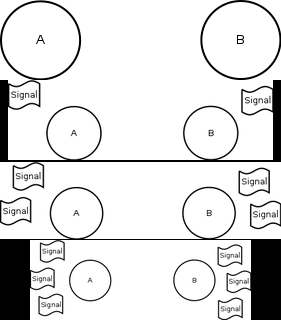
In order to connect to each other they need to exchange some data, this data
is called . Peer B needs signals to peer A to establish a connectionsignals
(peer A also needs from peer B).
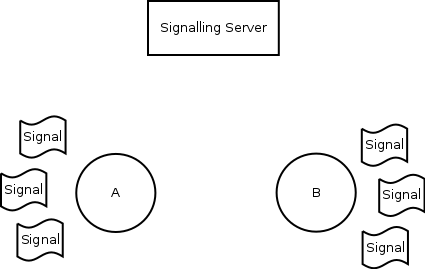
These signals have to be transported somehow from peer A to peer B, and forsignalling server
this you need a .
A signalling server can transport signals between peers by a series ofpolling
means, whether it will be ,long-polling
or, my personal favorite, .
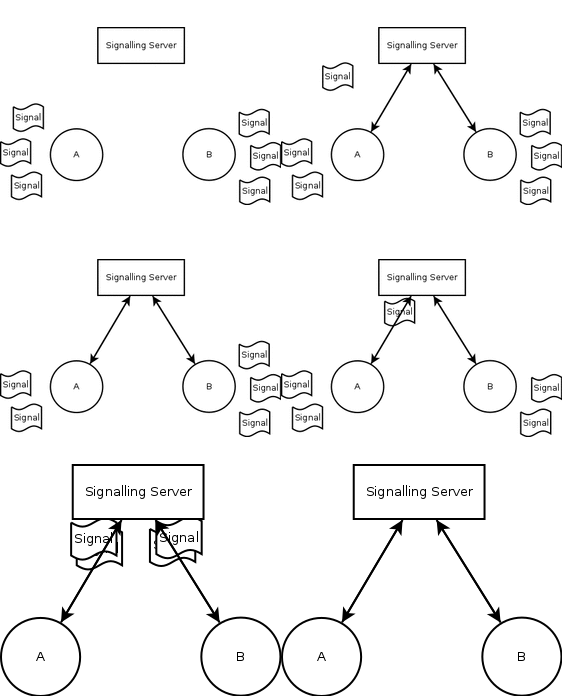
Once you found your way to transport these signals between them, peer A andsignalling server
peer B will be connected. That means you no longer need the ,
as data will be transported between these two peers directly.
How does MRTC Work?
First, you must define your peers:
`javascript
var MRTC = require('mrtc');
var peerA = new MRTC({dataChannel: true, offerer: true});
var peerB = new MRTC({dataChannel: true});
`
Then you must listen for signal events:
`javascriptsignal
peerA.on('signal', function(signal) {
// Send this somehow to peerB
});
peerB.on('signal', function(signal) {
// Send this signal somehow to peerA`
});
When you managed to find a way to send the signal between the peers:
`javascript
// A adds a signal from B
peerA.addSignal(signalB);
// The same for peerB
peerB.addSignal(signalA);
`
After trading all the signals, the peer connection will be established:
`javascript
peerA.on('channel-open', function() {
// Connected to B
peerA.channel.send('Hey!!')
});
peerB.on('channel-open', function() {
// Connected to A
peerB.channel.send('Hello there!');
});
`
Data can be received via the channel-message event, all channel-* events`
are received as the data channel event handling
api:javascript`
peerA.on('channel-message', function(event) {
console.log(event.data); // -> Hello there!
});
Streams are available via the add-stream event (but you must have initialized`
MRTC with a stream)javascript
// If you had initialized MRTC like:
//
// navigator.getUserMedia({audio: true, video: true}, function(stream) {
// var peerA = new MRTC({stream: stream});
// });
peerB.on('add-stream', function(stream) {
// Received the peerA's stream
});
`
To use MRTC in a Node environment, you should use wrtc:`javascript
var MRTC = require('mrtc');
var peerA = new MRTC({wrtc: require('wrtc'), dataChannel: true, offerer: true});
...
`
API
`javascript
/* Minimal RTC Wrapper
*
* @param {Object={}} options They can be:
* {Object|Boolean} dataChannel Does this peer have a DataChannel? If so,
* you can setup some custom config for it
* {MediaStream} stream The MediaStream object to be send to the other peer
* {Object={iceServers: []}} options RTCPeerConnection initialization options
*/
constructor(options={})
// new MRTC({dataChannel: {ordered: false}});
`
`javascript
/* Add a signal into the peer connection
*
* @param {RTCSessionDescription|RTCIceCandidate} The signalling data
*/
addSignal(signal)
// peer.addSignal(signal)
`javascript
/* Attach an event callback
*
* Event callbacks may be:
*
* signal -> A new signal is generated (may be either ice candidate or description)
*
* add-stream -> A new MediaSteam is received
*
* channel-open -> DataChannel connection is opened
* channel-message -> DataChannel is received
* channel-close -> DataChannel connection is closed
* channel-error -> DataChannel error ocurred
* channel-buffered-amount-low -> DataChannel bufferedAmount drops to less than
* or equal to bufferedAmountLowThreshold
*
* Multiple callbacks may be attached to a single event
*
* @param {String} action Which action will have a callback attached
* @param {Function} callback What will be executed when this event happen
*/
on(action, callback)
// peer.on('channel-message', function(event) {
// // Received something
// });
`javascript
/* Detach an event callback
*
* @param {String} action Which action will have event(s) detached
* @param {Function} callback Which function will be detached. If none is
* provided all callbacks are detached
*/
off(action, callback)
// peer.off('channel-message');
`javascript
/* Trigger an event
*
* @param {String} action Which event will be triggered
* @param {Array} args Which arguments will be provided to the callbacks
*/
trigger(action, args)
// peer.trigger('channel-message', [{data: 'Hello there'}]);
``
License
This code is released under
CC0 (Public Domain)