react-apexcharts
v1.9.0TypeScript
React.js wrapper for ApexCharts
704.6K/weekUpdated 2 months agoSEE LICENSE IN LICENSEUnpacked: 25.6 KB
Published by Juned Chhipa
npm install react-apexcharts


React.js wrapper for ApexCharts to build interactive visualizations in react.
Download and Installation
##### Installing via npm
``bash`
npm install react-apexcharts apexcharts
Usage
`js`
import Chart from 'react-apexcharts'
To create a basic bar chart with minimal configuration, write as follows:
`javascript
class App extends Component {
constructor(props) {
super(props);
this.state = {
options: {
chart: {
id: 'apexchart-example'
},
xaxis: {
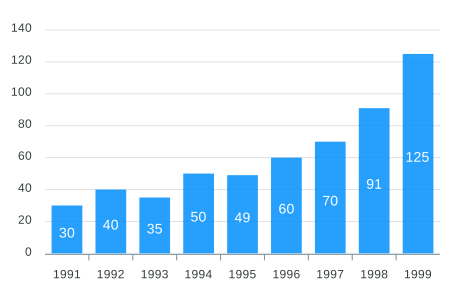
categories: [1991, 1992, 1993, 1994, 1995, 1996, 1997, 1998, 1999]
}
},
series: [{
name: 'series-1',
data: [30, 40, 35, 50, 49, 60, 70, 91, 125]
}]
}
}
render() {
return (
)
}
}
`
This will render the following chart
$3
Simple! Just change the series
or any option and it will automatically re-render the chart.
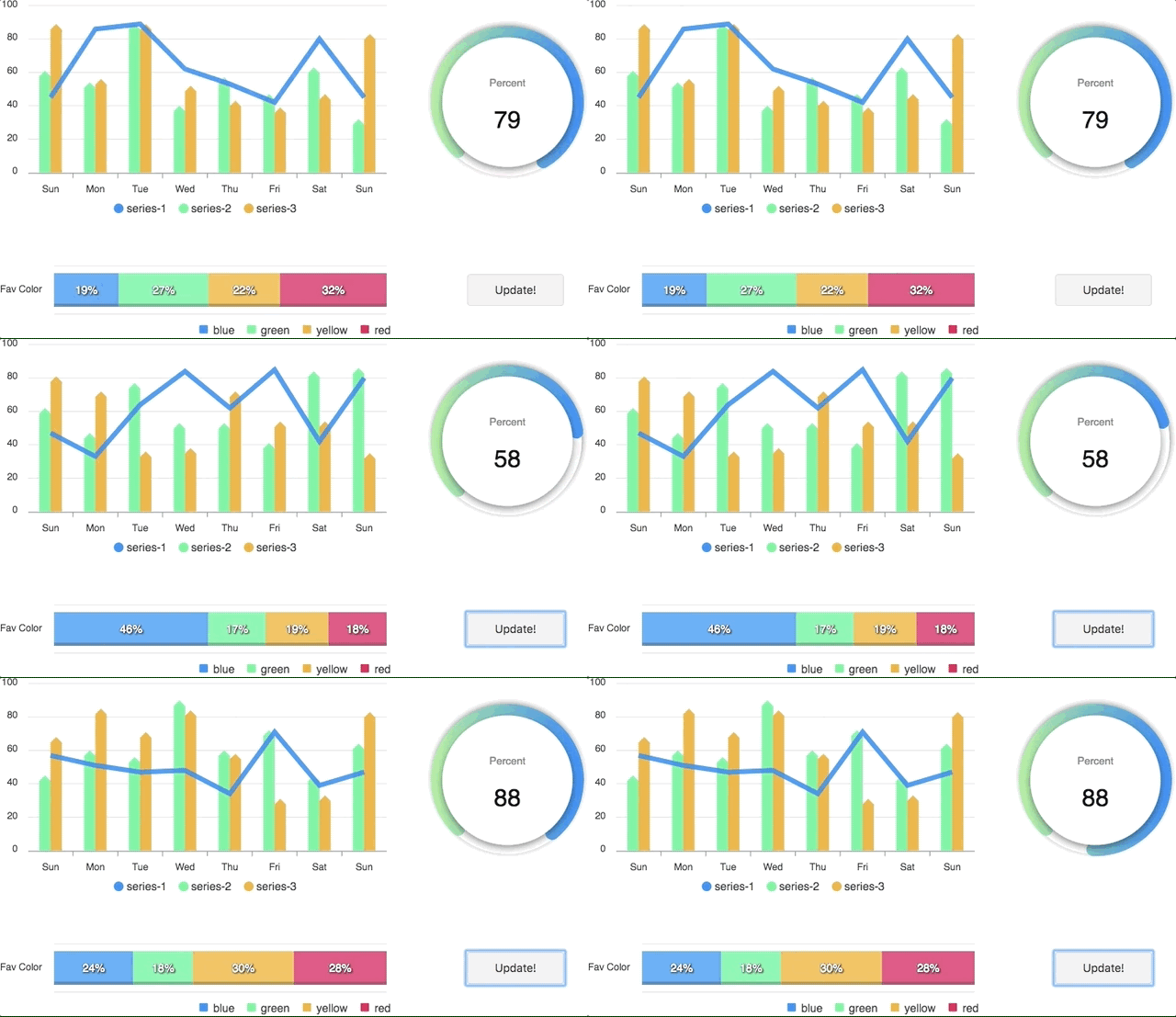
View this example on codesandbox
Important: While updating the options, make sure to update the outermost property even when you need to update the nested property.
✅ Do this
`javascript
this.setState({
options: {
...this.state.options,
xaxis: {
...this.state.options.xaxis,
categories: ['X1', 'X2', 'X3']
}
}
})
`❌ Not this
javascript
this.setState({
  options.xaxis.categories: ['X1', 'X2', 'X3']
})
`
Props
| Prop        | Type           | Description  |
| ------------- |-------------| -----|
| series |
 | The series is a set of data. To know more about the format of the data, checkout Series docs on the website. |
| type |
String | line, area, bar, pie, donut, scatter, bubble, heatmap, radialBar |
| width | Number or String | Possible values for width can be 100%, 400px or 400 (by default is 100%) |
| height | Number or String | Possible values for height can be 100%, 300px or 300 (by default is auto) |
| options | Object | The configuration object, see options on API (Reference) |How to call methods of ApexCharts programmatically?
Sometimes, you may want to call other methods of the core ApexCharts library, and you can do so on ApexCharts global variable directlyExample
`js
ApexCharts.exec('reactchart-example', 'updateSeries', [{
data: [40, 55, 65, 11, 23, 44, 54, 33]
}])
`
More info on the method can be found hereAll other methods of ApexCharts can be called this way
What's included
The repository includes the following files and directories.
`
react-apexcharts/
├── dist/
│   ├── react-apexcharts.min.js
│   └── react-apexcharts.js
└── example/
│   ├── src/
│   ├── public/
│   ├── package.json
│   └── README.md
└── src/
    └── react-apexcharts.jsx
Development
#### Install dependencies
bash
npm install
`Running the example
Basic example including update is included to show how to get started using ApexCharts with React easily.
To run the examples,
bash
cd example
npm install
npm run start
`#### Bundling
##### To build for Development
bash
npm run dev-build
`##### To build for Production
bash
npm run build
``License
ApexCharts is offered under a dual-license model to support individuals, startups, and commercial products of all sizes.
Read full license agreements here: https://apexcharts.com/license