react-native-stonk-charts
v4.0.4TypeScript
A beautiful, performant chart library for React Native. Fork of react-native-wagmi-charts with Reanimated v4 support.
0/weekUpdated 4 months agoMITUnpacked: 820.5 KB
Published by Dan Myles
npm install react-native-stonk-chartsreact-native-stonk-charts 💸
> Note: This library is a fork of react-native-wagmi-charts, updated to support React Native Reanimated v4 and the latest React Native ecosystem.
A sweet & simple chart library for React Native with beautiful animations and interactions
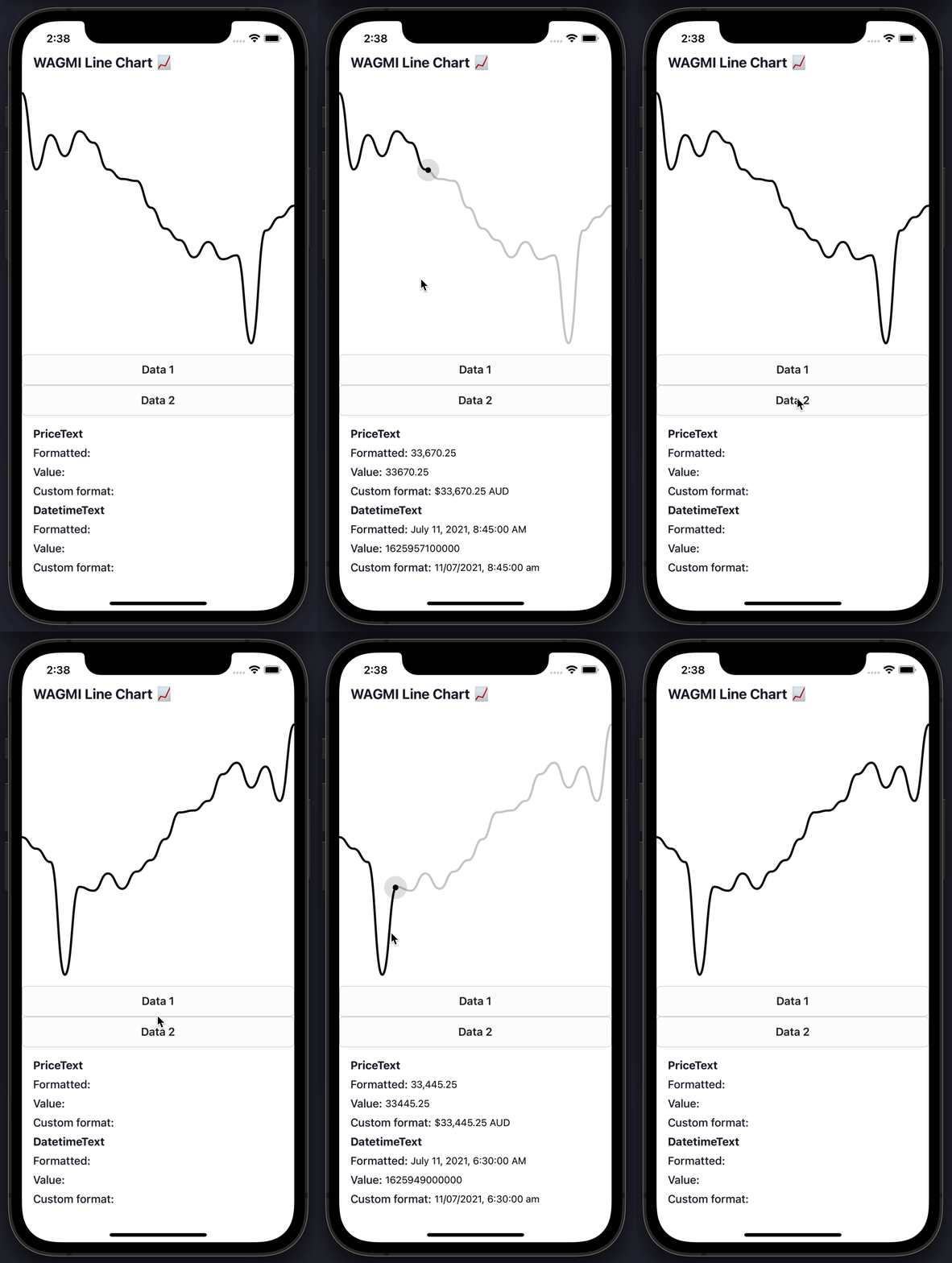
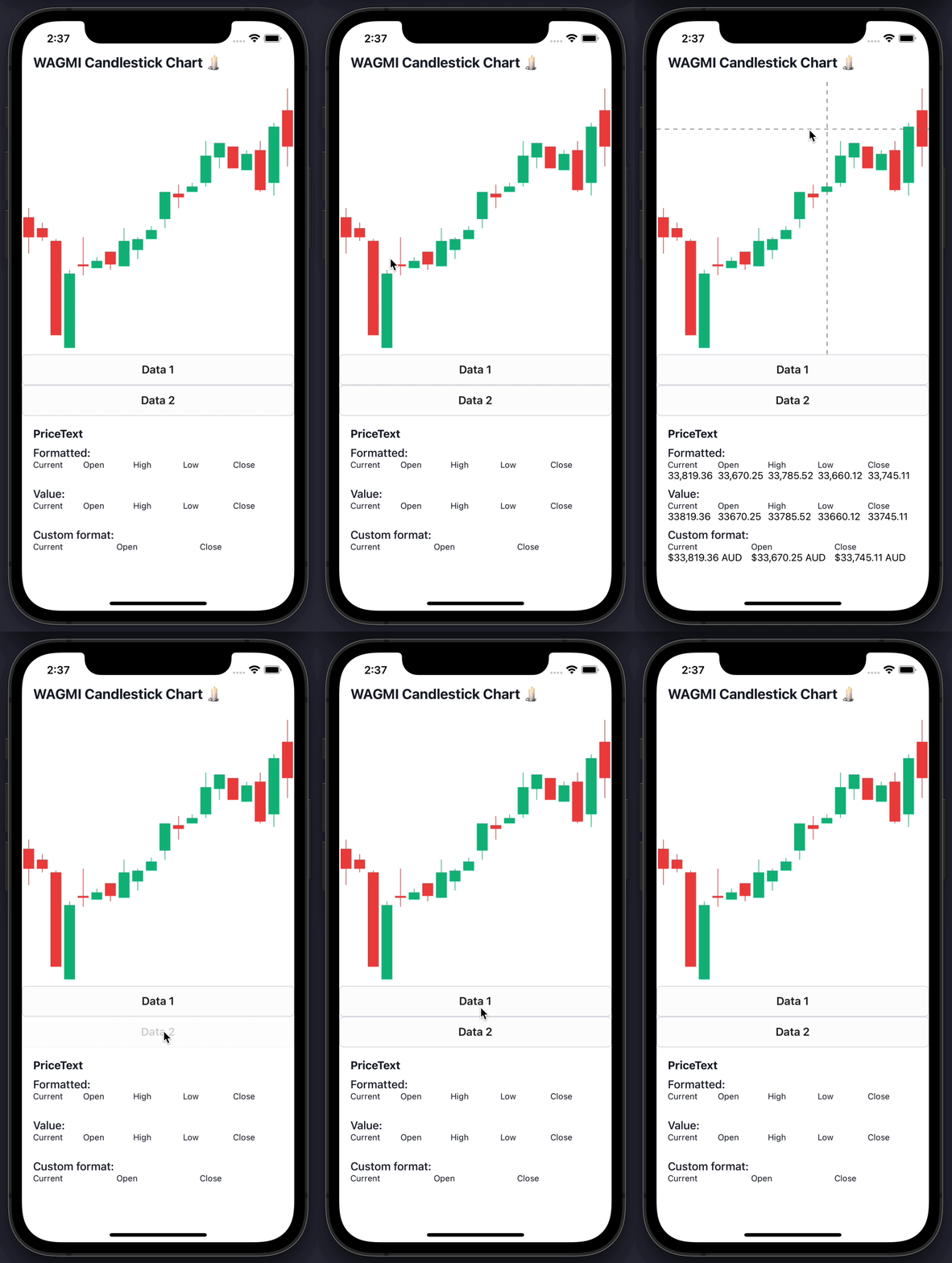
Features
📈 Line charts & candlestick charts (more to come 🔜)
🏷 Interactive price & date/time label components
🧱 Built with composability in mind
🛠 Highly customizable APIs
✨ Uses React Native Reanimated under-the-hood
🧈 Slick data transition animations
💬 Interactive tooltips
Table of Contents
- Features
- Table of Contents
- Install
- Basic Usage
- Line chart
- Candlestick chart
- Line Chart Guides
- Interactive cursors
- Interactive labels
- Interactive tooltips
- Tooltips / labels
- Haptic feedback
- Colors
- Gradients
- Dots
- Horizontal lines
- Customizing size
- Customizing labels
- Customizing tooltips
- Axis
- Candlestick Chart Guides
- Interactive cursors
- Interactive labels
- Interactive tooltips
- Haptic feedback
- Colors
- Customizing labels
- Component APIs
- LineChart.Provider
- LineChart
- LineChart.Path
- LineChart.CursorCrosshair
- LineChart.CursorLine
- LineChart.Dot
- LineChart.Highlight
- LineChart.HorizontalLine
- LineChart.Gradient
- LineChart.Tooltip
- LineChart.PriceText
- LineChart.DatetimeText
- CandlestickChart.Provider
- CandlestickChart
- CandlestickChart.Candles
- CandlestickChart.Crosshair
- CandlestickChart.Tooltip
- CandlestickChart.PriceText
- CandlestickChart.DatetimeText
- Hooks
- LineChart.useChart
- LineChart.useDatetime
- LineChart.usePrice
- CandlestickChart.useChart
- CandlestickChart.useCandleData
- CandlestickChart.useDatetime
- CandlestickChart.usePrice
- What's Different from wagmi-charts?
- Migration from wagmi-charts
- Credits
Install
``bash`
npm install react-native-stonk-charts
or with bun:
`bash`
bun add react-native-stonk-charts
$3
This library depends on the following packages, which you'll need to install if you don't already have them:
`bash`
npm install react-native-reanimated react-native-gesture-handler react-native-svg react-native-redash react-native-haptic-feedback
`bash`
bun add react-native-reanimated react-native-gesture-handler react-native-svg react-native-redash react-native-haptic-feedback
Important: Make sure you have the Reanimated Babel plugin configured in your babel.config.js:
`javascript`
module.exports = {
presets: [
// ... your other presets
],
plugins: [
// ... your other plugins
'react-native-worklets/plugin',
],
};
Basic Usage
The library currently comes with 2 types of charts: Line & Candlestick. Below are the most basic usages of them.
$3
To render a simple line chart, you will need to use the LineChart.Provider, LineChart & LineChart.Path components.
The LineChart.Provider component sets up the context of your chart, LineChart composes the chart elements, and the LineChart.Path component renders your data in the form of a line path.
> Note: This chart does not include an interactive cursor like in the animated example above. If you want one, check out the "Interactive Cursors" guide
`jsx
import { LineChart } from 'react-native-stonk-charts';
const data = [
{
timestamp: 1625945400000,
value: 33575.25,
},
{
timestamp: 1625946300000,
value: 33545.25,
},
{
timestamp: 1625947200000,
value: 33510.25,
},
{
timestamp: 1625948100000,
value: 33215.25,
},
];
function Example() {
return (
);
}
`
$3
To render a simple candlestick chart, you will need to use the CandlestickChart & CandlestickChart.Candles components.
The CandlestickChart.Provider component sets up the context of your chart, CandlestickChart composes the chart elements, and the CandlestickChart.Candles component renders your data in the form of a line path.
> Note: This chart does not include an interactive cursor like in the animated example above. If you want one, check out the "Interactive Cursors" guide
`jsx
import { CandlestickChart } from 'react-native-stonk-charts';
const data = [
{
timestamp: 1625945400000,
open: 33575.25,
high: 33600.52,
low: 33475.12,
close: 33520.11,
},
{
timestamp: 1625946300000,
open: 33545.25,
high: 33560.52,
low: 33510.12,
close: 33520.11,
},
{
timestamp: 1625947200000,
open: 33510.25,
high: 33515.52,
low: 33250.12,
close: 33250.11,
},
{
timestamp: 1625948100000,
open: 33215.25,
high: 33430.52,
low: 33215.12,
close: 33420.11,
},
];
function Example() {
return (
);
}
`
Line Chart Guides
Below are some line chart guides to help you make your charts suit your brand. Hopefully a combination of the below will enable you to make a great chart! :-)
$3
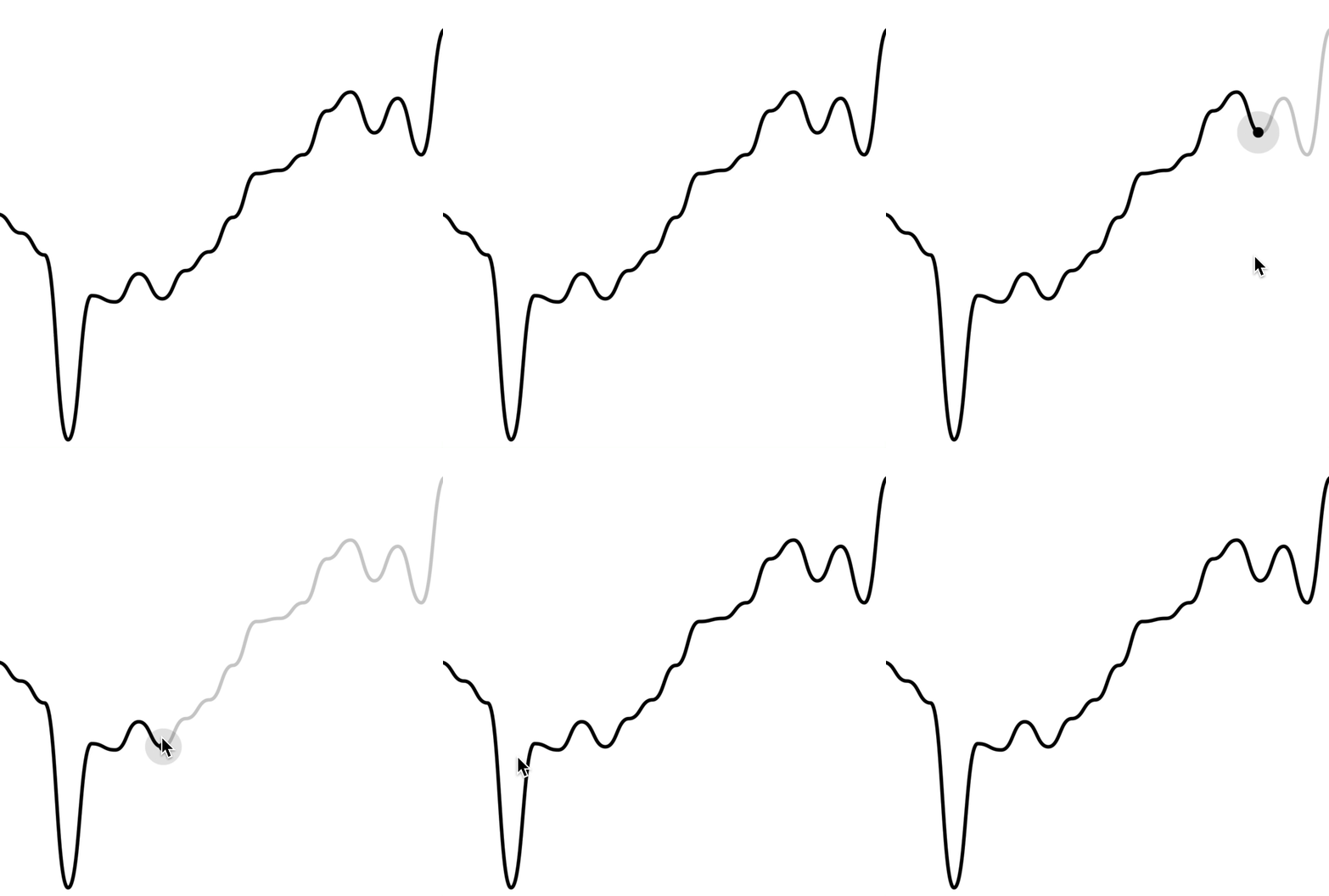
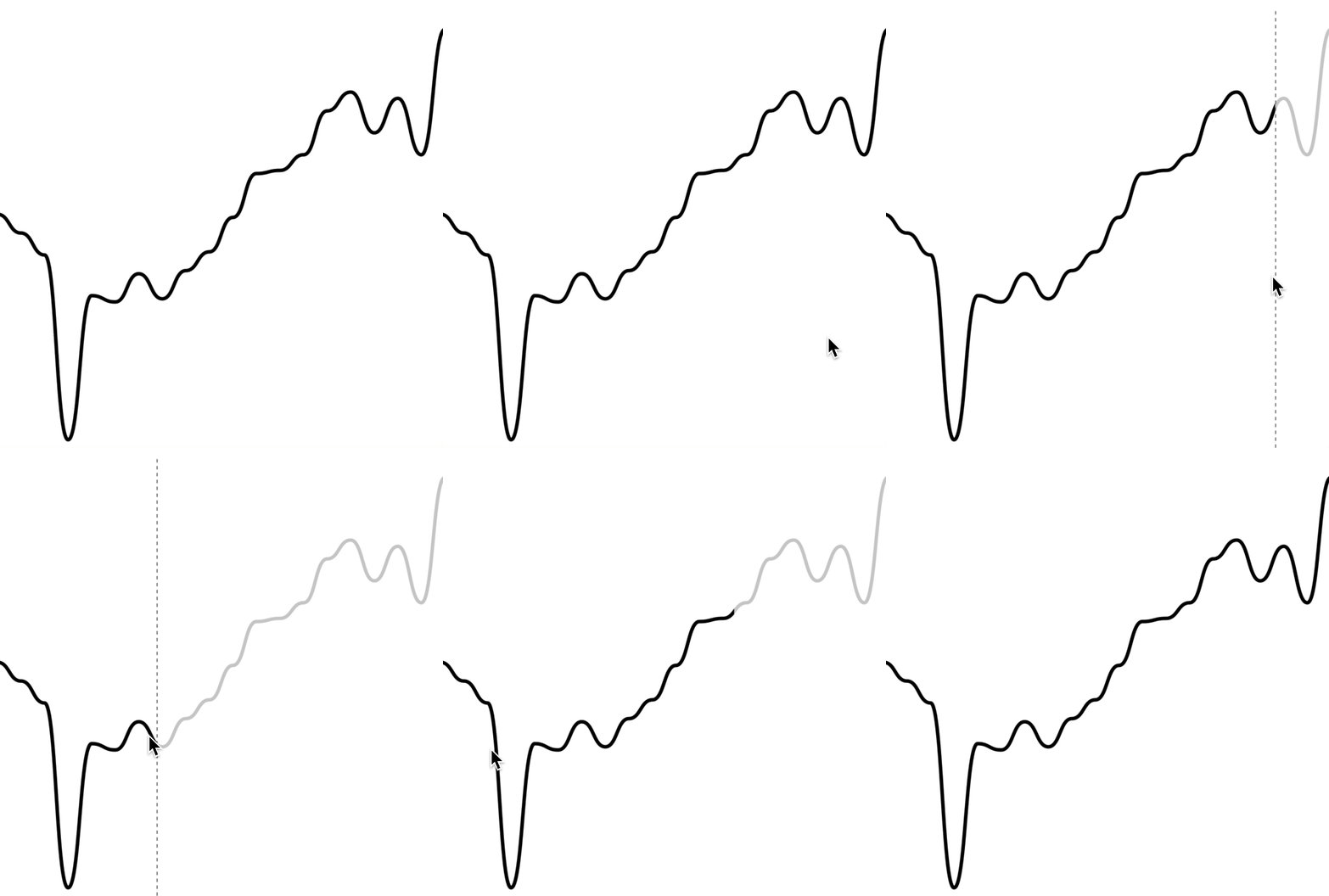
To render an interactive cursor on your line chart, you can include either the LineChart.CursorCrosshair or LineChart.CursorLine components:
##### LineChart.CursorCrosshair
`jsx`
##### LineChart.CursorLine
`jsx`
$3
To render an interactive label on your line chart as your cursor moves along the graph, you can use the PriceText or DatetimeText components:
> Note: These components must be within the LineChart.Provider component.
`jsx`
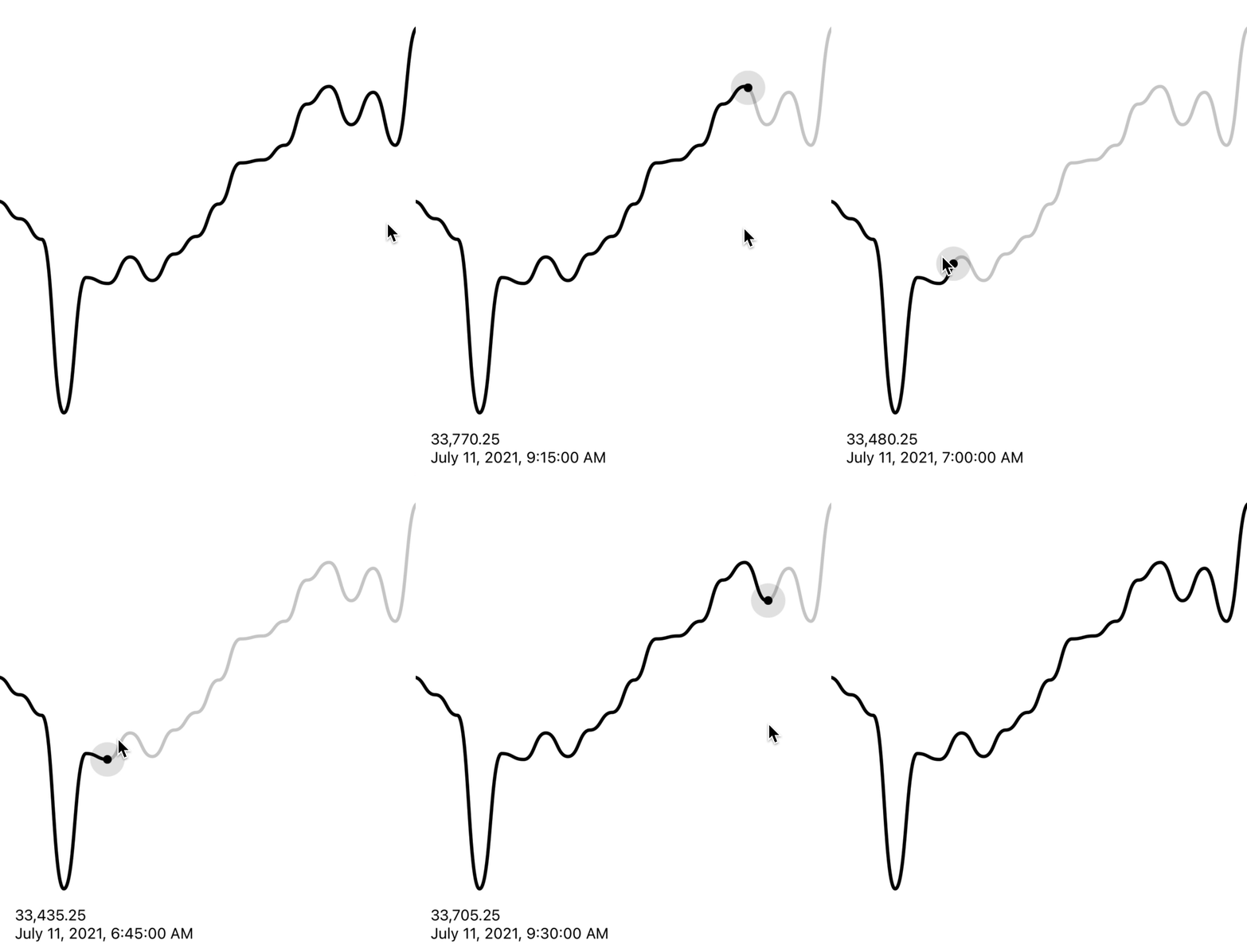
$3
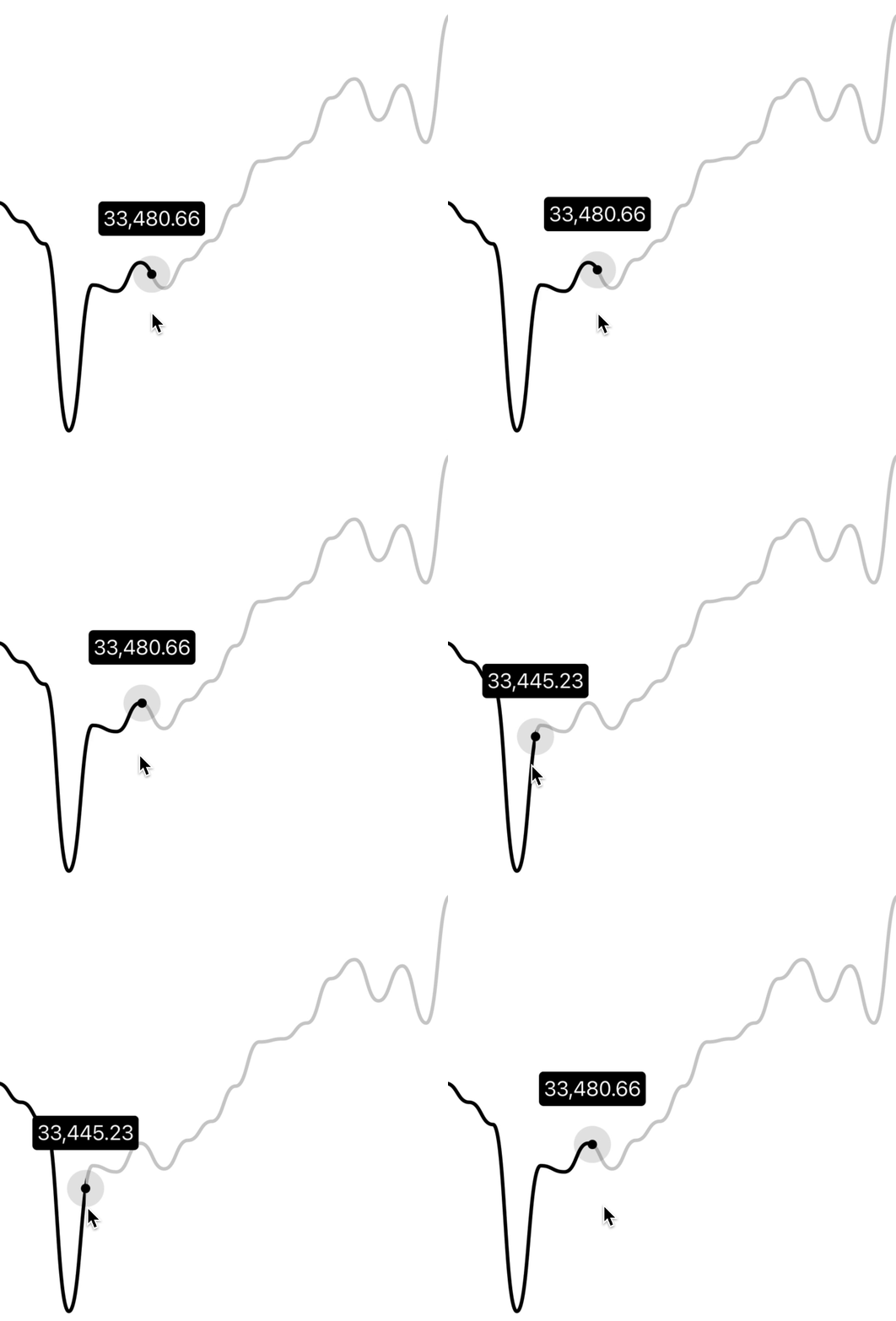
To render an interactive tooltip that follows your cursor, you can use the Tooltip component.
`jsx`
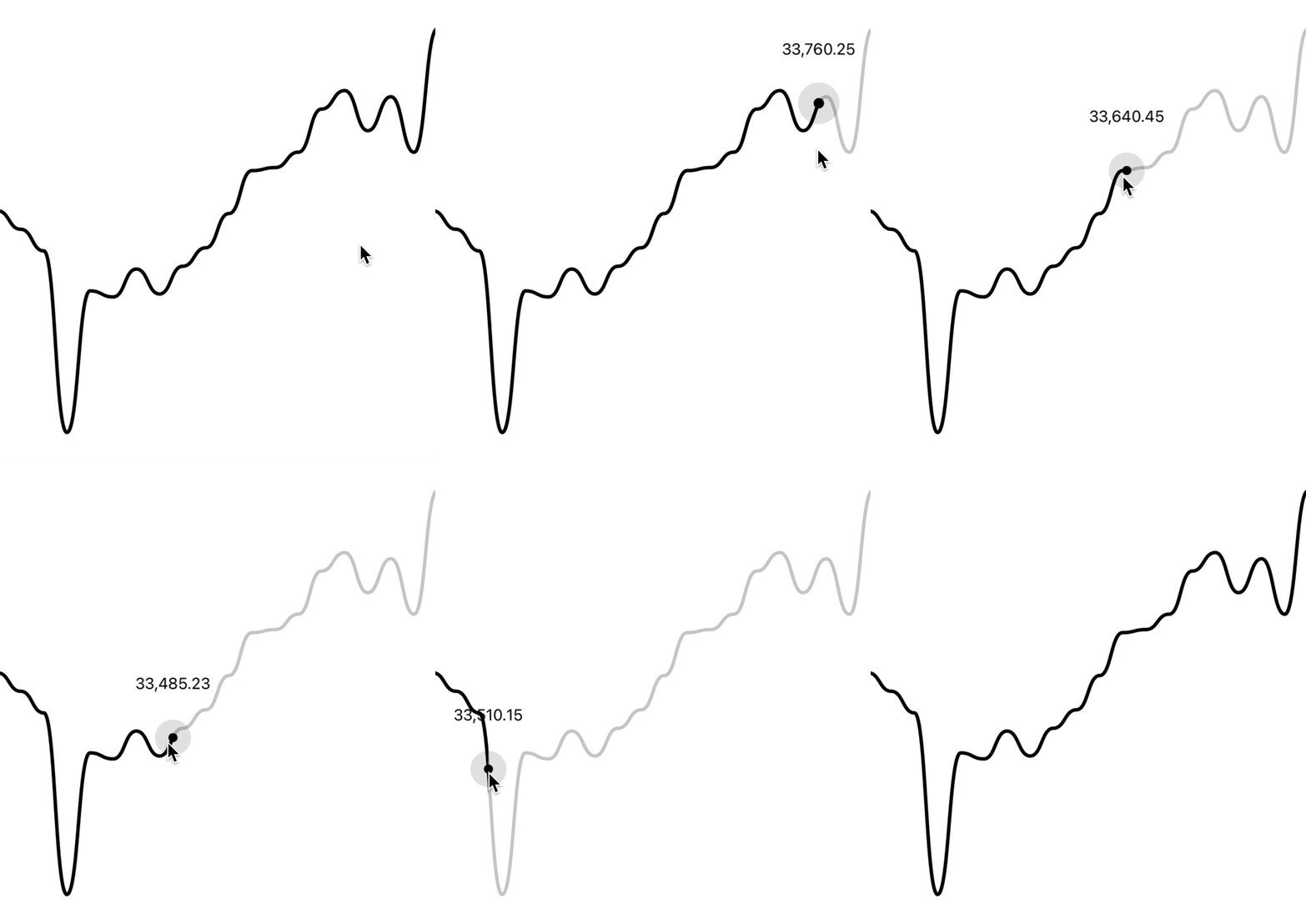
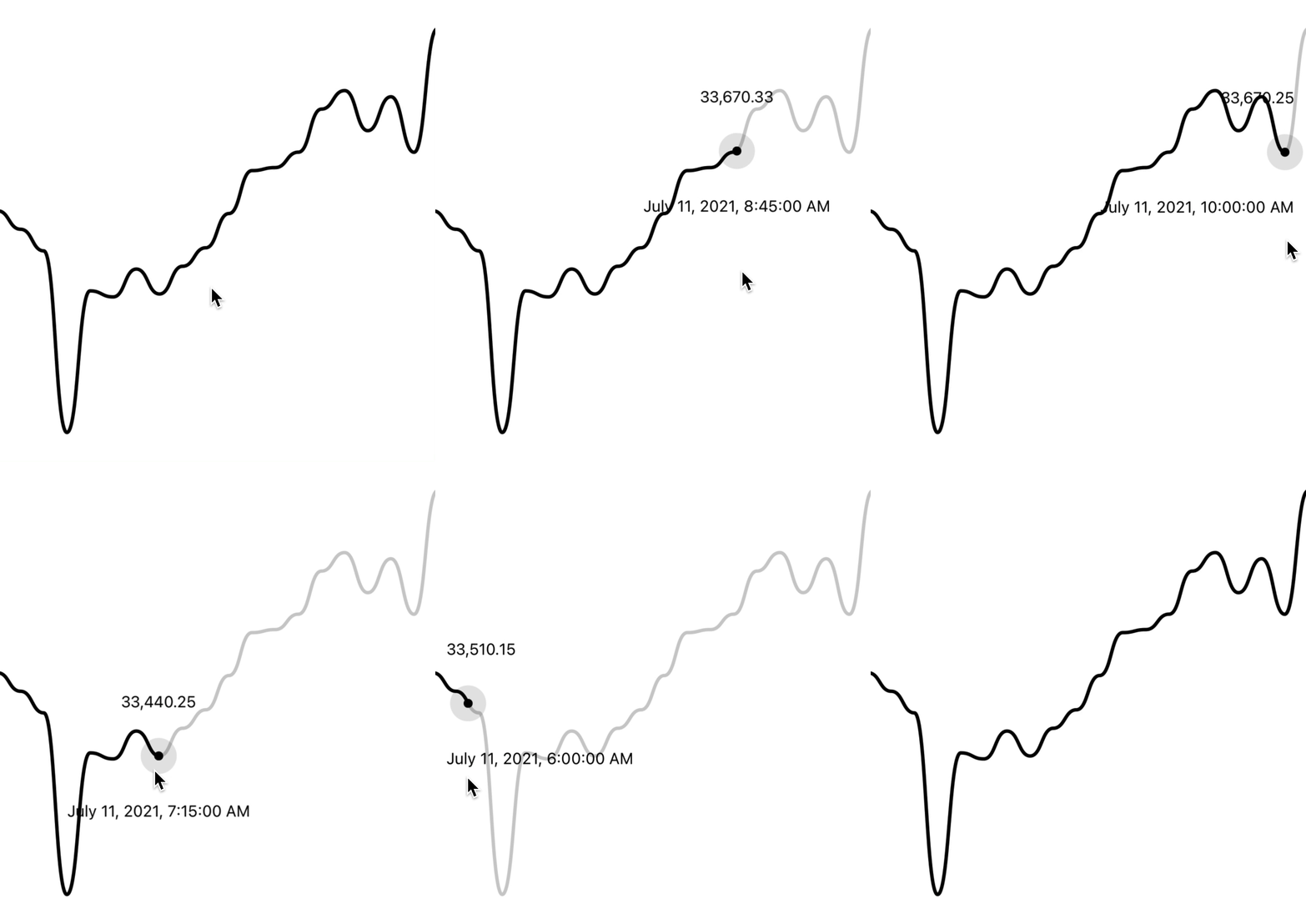
You can even add another tooltip to show something like date/time:
`jsx`
$3
You can also use the Tooltip component to render a "static" tooltip at a given index, by specifying the at prop (similar to Dots).
Note that the tooltip will disappear when there is interaction with a cursor on the chart.
`jsx`

$3
By making use of the chart event handlers, you are able to integrate haptic feedback into your charts.
We can utilise the onActivated and onEnded events to create haptic feedback
on our line chart. This will cause a vibration on touch down/up.
`jsx
import * as haptics from 'expo-haptics';
const data = [...];
function invokeHaptic() {
haptics.impactAsync(haptics.ImpactFeedbackStyle.Light);
}
function Example() {
return (
)
}
`
We can also use the onCurrentIndexChange callback, passed toLineChart.Provider. This differs to the above method as it will cause a
vibration on touch down/up and also when the selected value changes.
`tsx
import * as haptics from 'expo-haptics';
const data = [...];
function invokeHaptic() {
haptics.impactAsync(haptics.ImpactFeedbackStyle.Light);
}
function Example() {
return (
)
}
`
If you want to synchronize two graphs, or even initialize a new graph with a cursor position, you can use the at prop:
`tsx`
$3
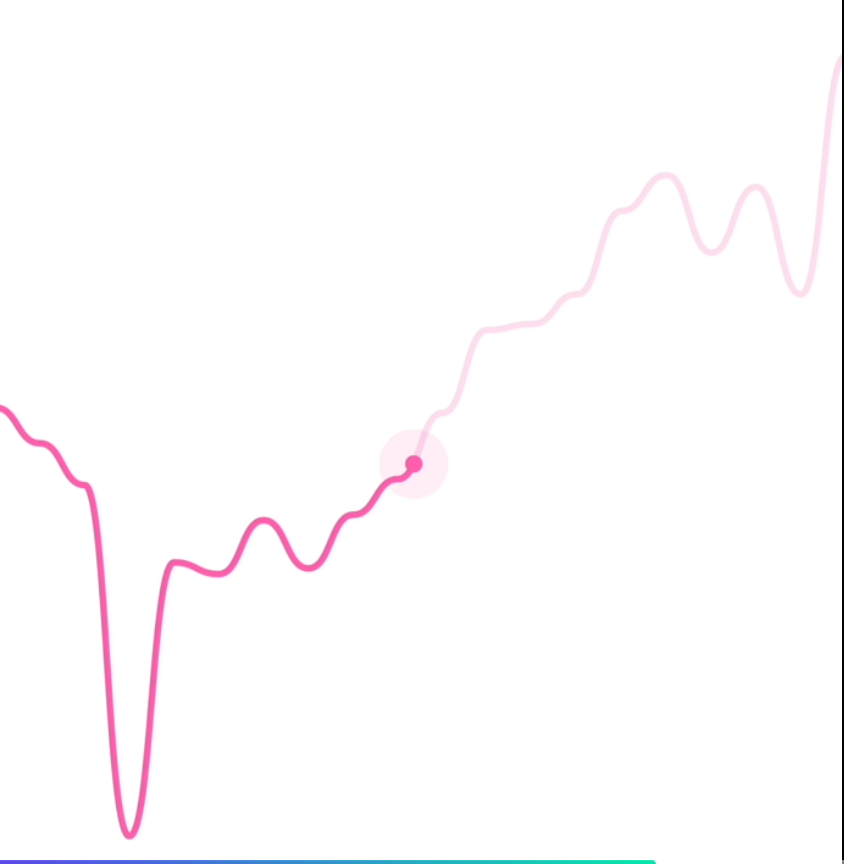
By default, the charts come with default colors out-of-the-box... But you probably will want to change these to suit your brand.
#### Coloring the path
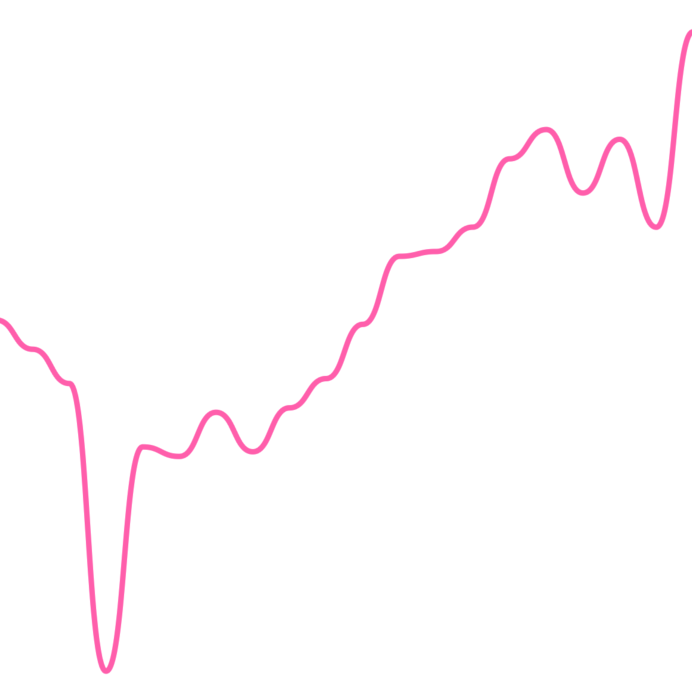
To customise the color of the line chart path, supply a color prop to LineChart.Path. This can be any valid React Native StyleSheet compatible color.
`jsx`
#### Coloring the cursor
To customise the color of the line chart cursor, supply a color prop to LineChart.CursorCrosshair. This can be any valid React Native StyleSheet compatible color.
> Note: This also works for LineChart.CursorLine
`jsx`
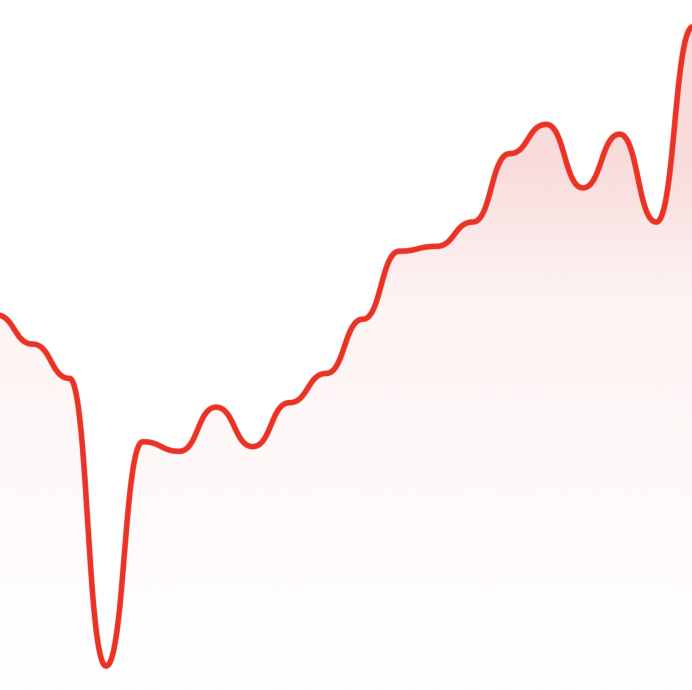
$3
By using the LineChart.Gradient component, you can apply a gradient to the area underneath your path.
`jsx`
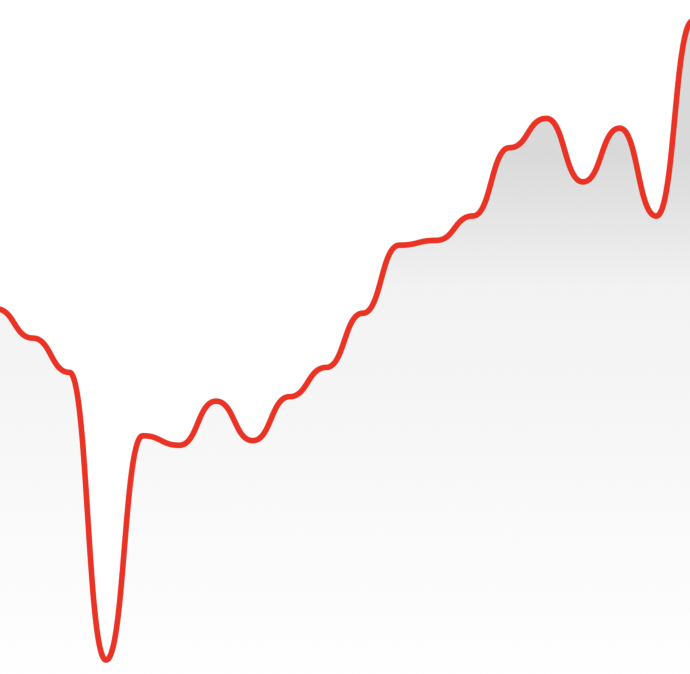
The gradient will inherit your path's color by default, however, you can provide a color prop to LineChart.Gradient:
`jsx`
$3
You can render dots on your line chart with LineChart.Dot.
`jsx`
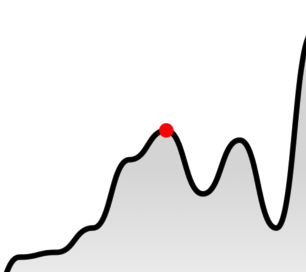
Your dot can also have an animated pulse by passing the hasPulse prop.
`jsx`
!Kapture 2021-11-23 at 11 50 54
$3
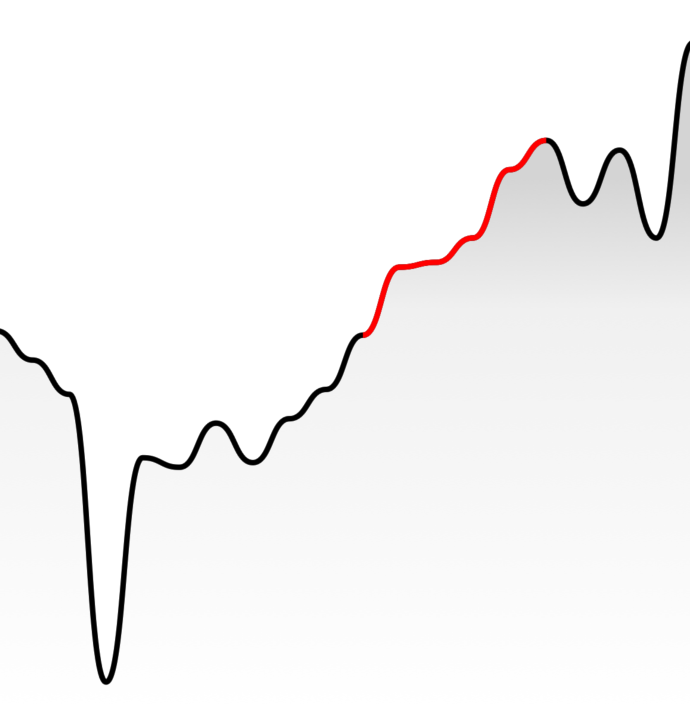
You can highlight a section of your path with LineChart.Highlight.
`jsx`
$3
You can render a static horizontal line on your line chart which moves whenever your data change. It's located on height of point which is on at position of provided data.
`jsx`
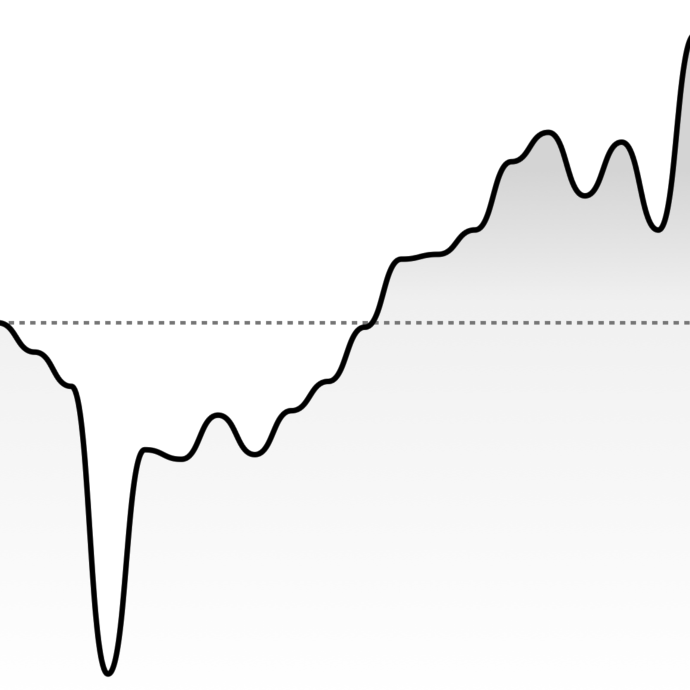
You can also pass a (y) value to HorizontalLine with the value attribute:
`jsx`
$3
You can modify the width & height of the charts by providing width and height props to LineChart or CandlestickChart. Your chart should adapt to it's size.
`jsx`
$3
#### Price labels
##### Precision
By default, the price labels have a precision of 2, meaning that the prices will always be to 2 decimal places. However, you can customize this with the precision prop:
`jsx`
##### Custom formatting
To customize the formatting of the price text, you can supply a format function in the form of a reanimated worklet:
> Note: due to the nature of reanimated worklets, you cannot define functions that run on the React Native JS thread. Read more here
`jsx$${formattedPrice} AUD
'worklet';
const formattedPrice = yourOwnFormatValueFn(value);
return ;`
}}
/>
#### Datetime labels
##### Date/time options
Internally, WAGMI charts uses Date.prototype.toLocaleString() to generate the date/time label. You can customise it's options like so:
`jsx`
options={{
year: 'numeric',
month: 'numeric',
day: 'numeric',
hour: 'numeric',
minute: 'numeric',
second: 'numeric',
}}
/>
##### Custom formatting
To customize the formatting of the date/time text, you can supply a format function in the form of a reanimated worklet:
> Note: due to the nature of reanimated worklets, you cannot define functions that run on the React Native JS thread. Read more here
`jsx`
'worklet';
const formattedDate = yourOwnFormatValueFn(value);
return formattedDate;
}}
/>
$3
#### Style
You can customize the style of the tooltip by providing the textStyle prop:
`jsx`
backgroundColor: 'black',
borderRadius: 4,
color: 'white',
fontSize: 18,
padding: 4,
}}
/>
#### Gutter
You can customize the gutters of the tooltip by providing cursorGutter, xGutter or yGutter.
cursorGutter is the gutter between the cursor and the tooltip.
xGutter and yGutter is the gutter on the x & y axis of the chart (the tooltip can't pass the gutter).
`jsx`
$3
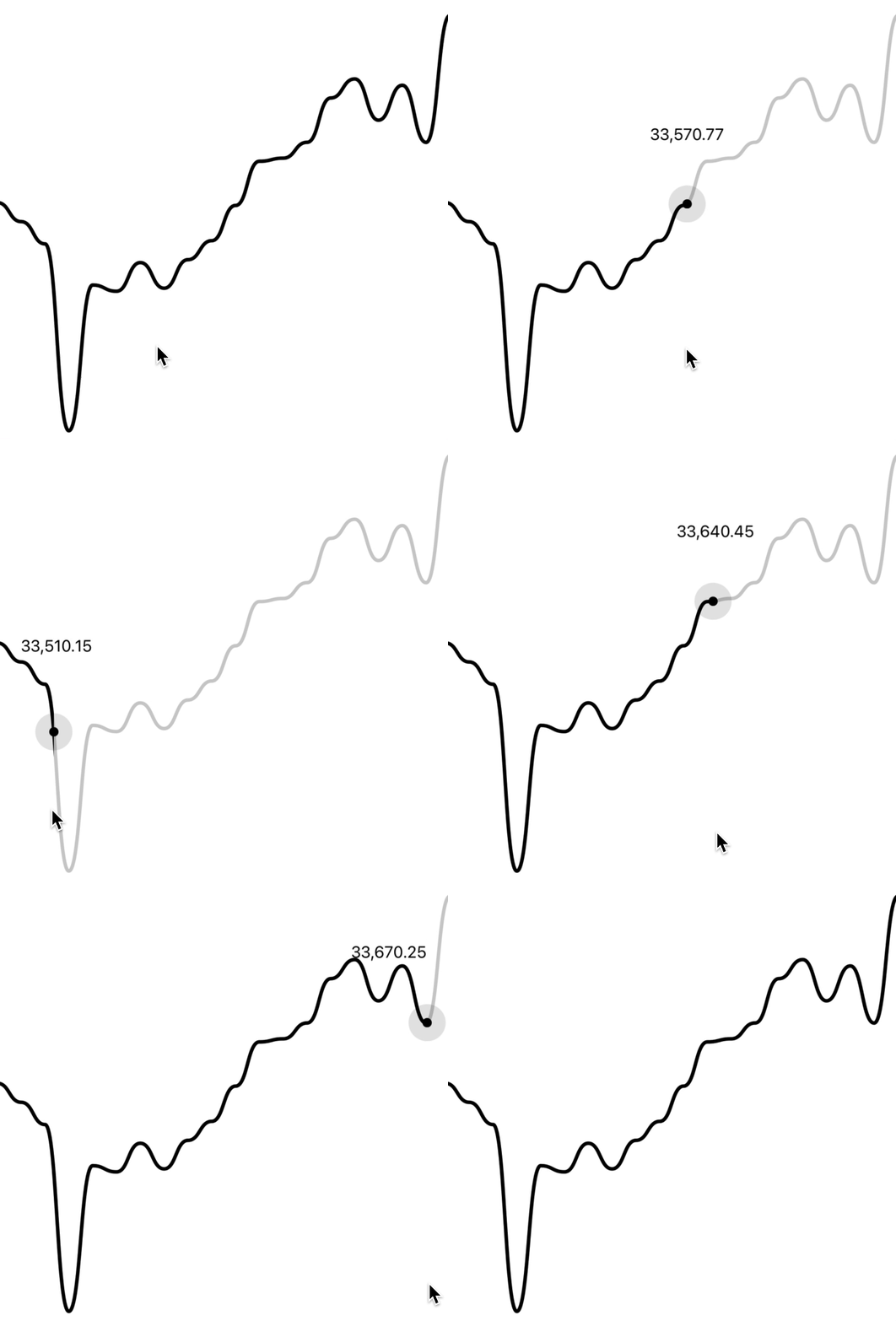
You can render an axis on your line chart with LineChart.Axis.
`jsx`
Candlestick Chart Guides
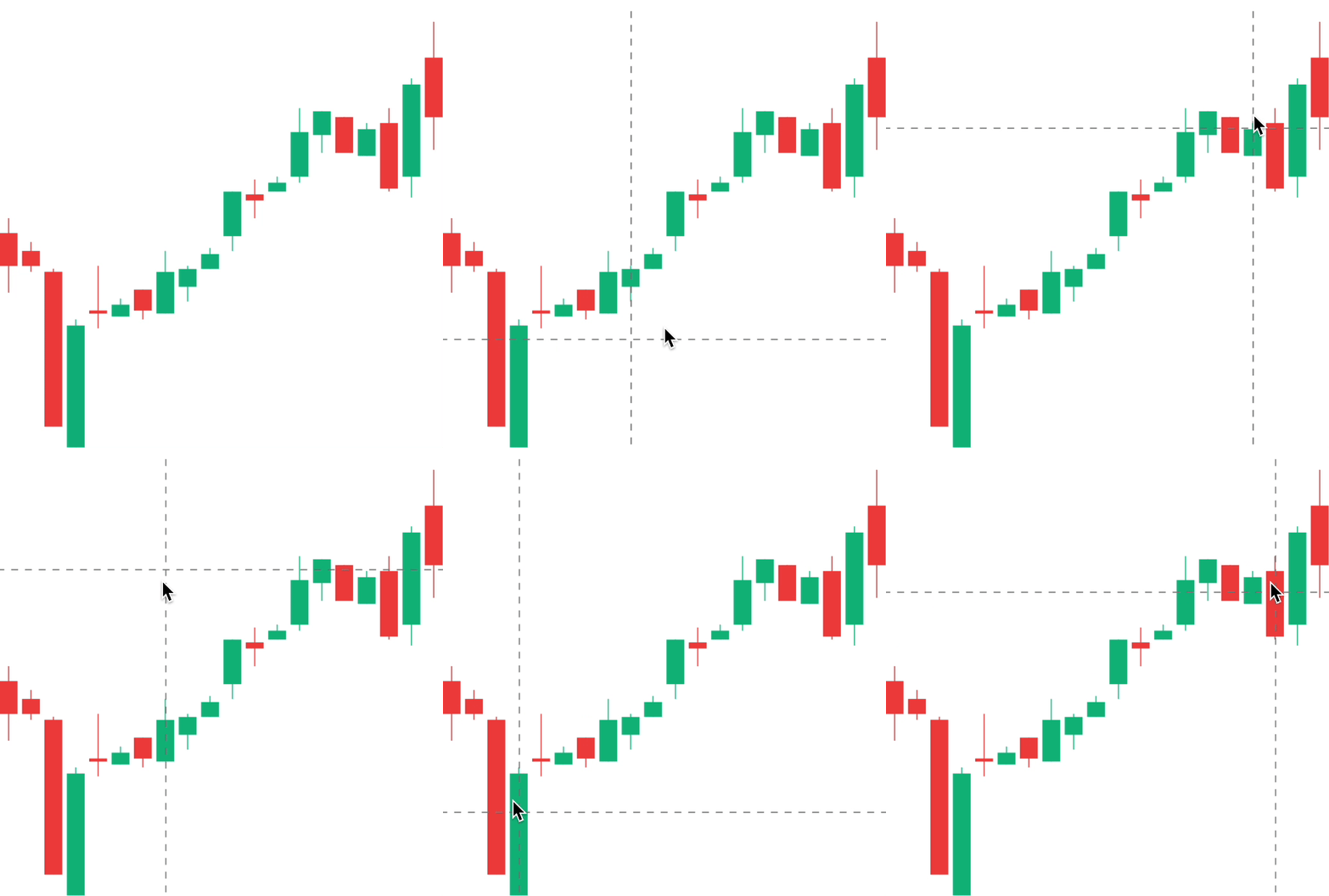
$3
To render an interactive cursor on your candlestick chart, you can include the CandlestickChart.Crosshair component:
`jsx`
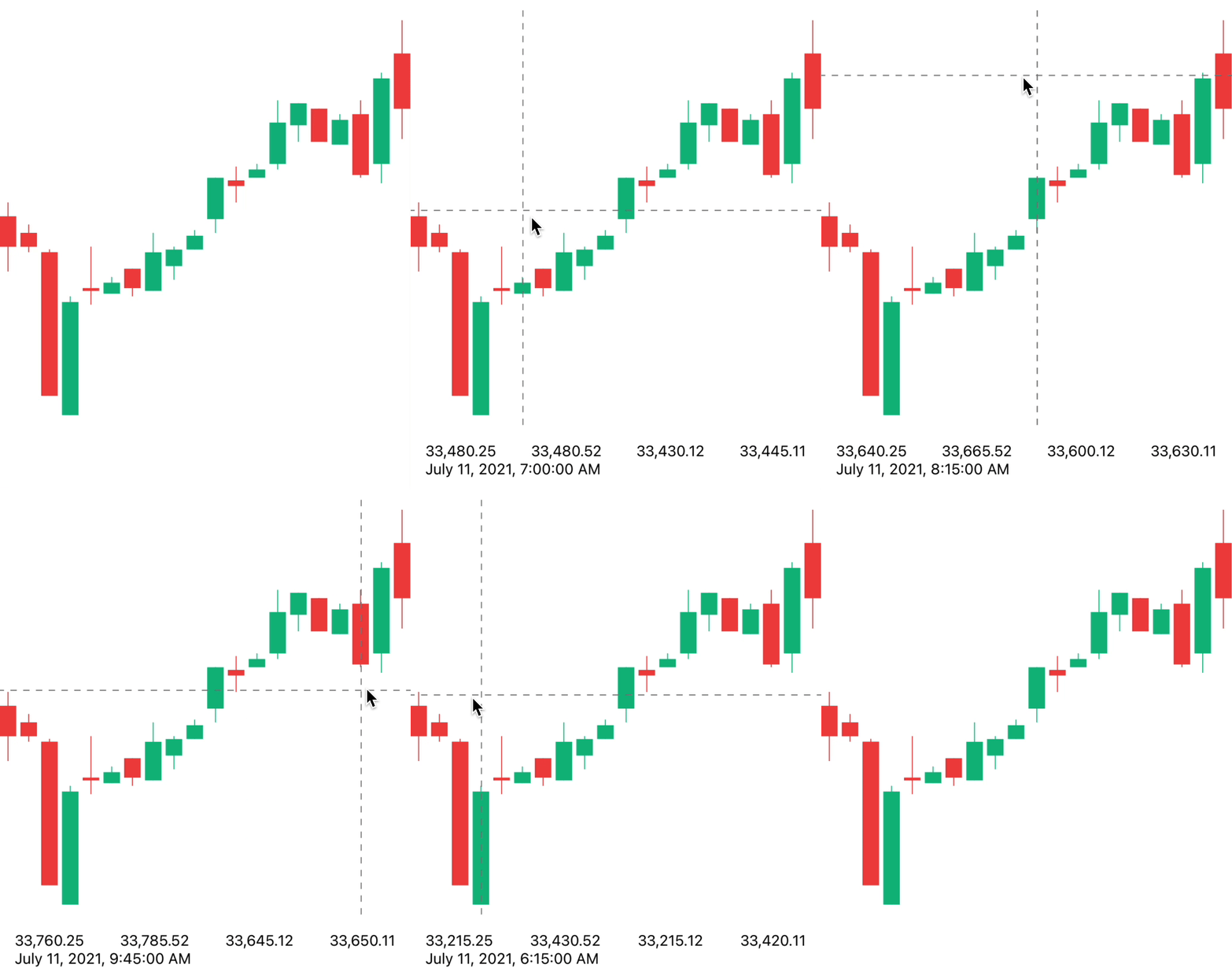
$3
To render an interactive label on your candlestick chart, you can use the PriceText or DatetimeText components:
> Note: These components must be within the CandlestickChart.Provider component.
`jsx`
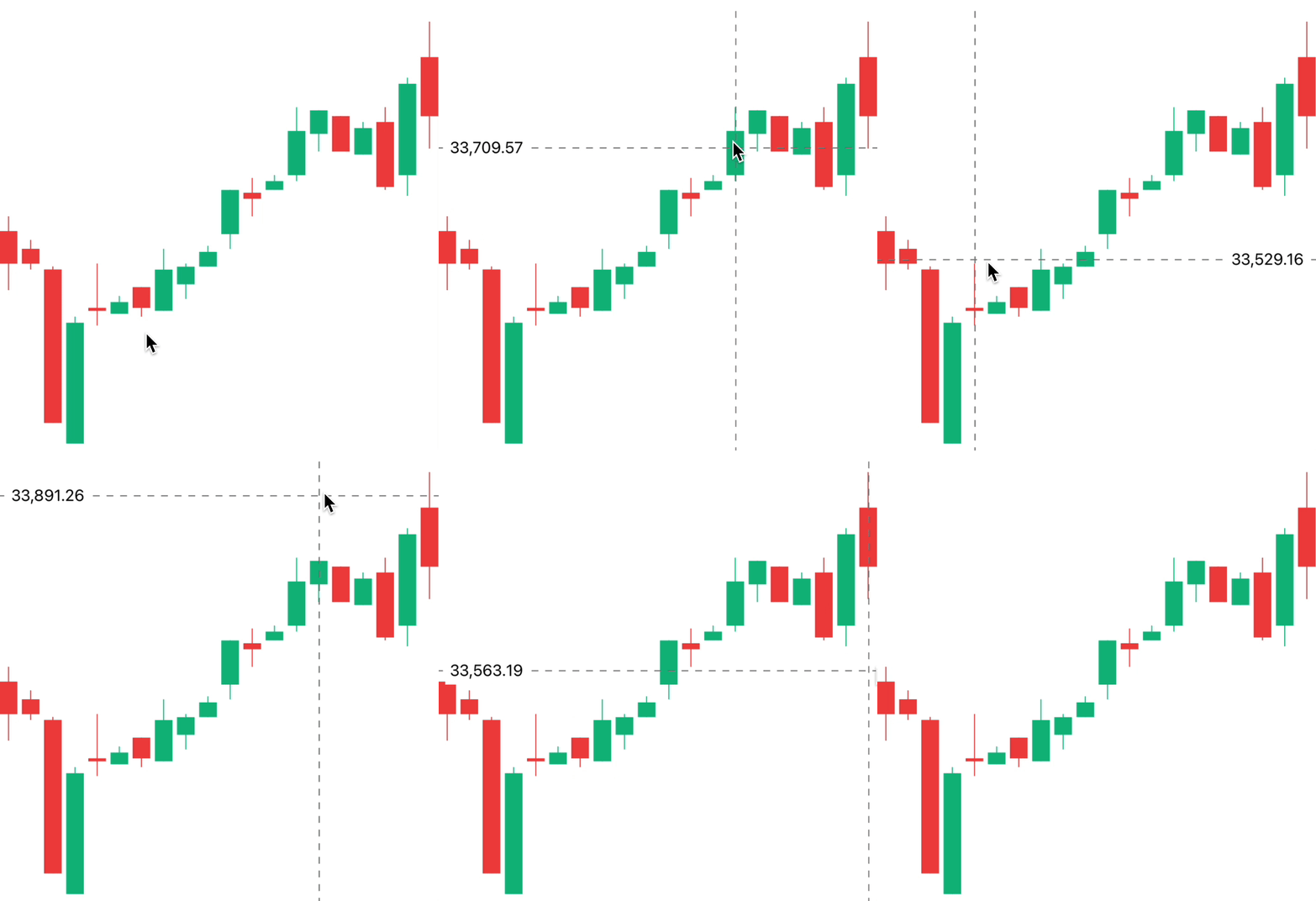
$3
To render an interactive tooltip that follows your crosshair, you can use the Tooltip component.
`jsx`
$3
By making use of the chart event handlers, you are able to integrate haptic feedback into your charts.
We can utilise the onCurrentXChange event to create haptic feedback on our candlestick chart.
`jsx
import * as haptics from 'expo-haptics';
const data = [...];
function invokeHaptic() {
haptics.impactAsync(haptics.ImpactFeedbackStyle.Light);
}
function Example() {
return (
)
}
`
$3
By default, the charts come with default colors out-of-the-box... But you probably will want to change these to suit your brand.
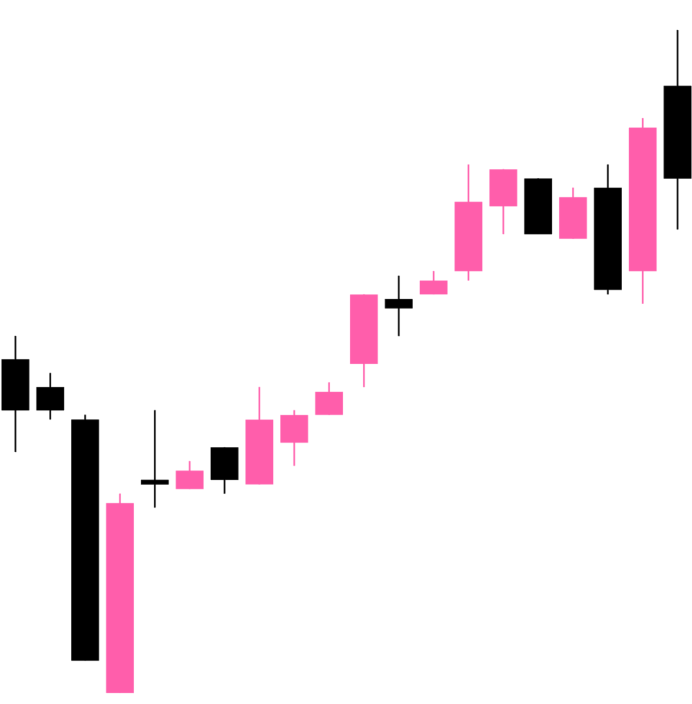
#### Coloring the candles
To customise the color of the candlestick chart candles, supply a negativeColor and a positiveColor to CandlestickChart.Candles. This can be any valid React Native StyleSheet compatible color.
`jsx`
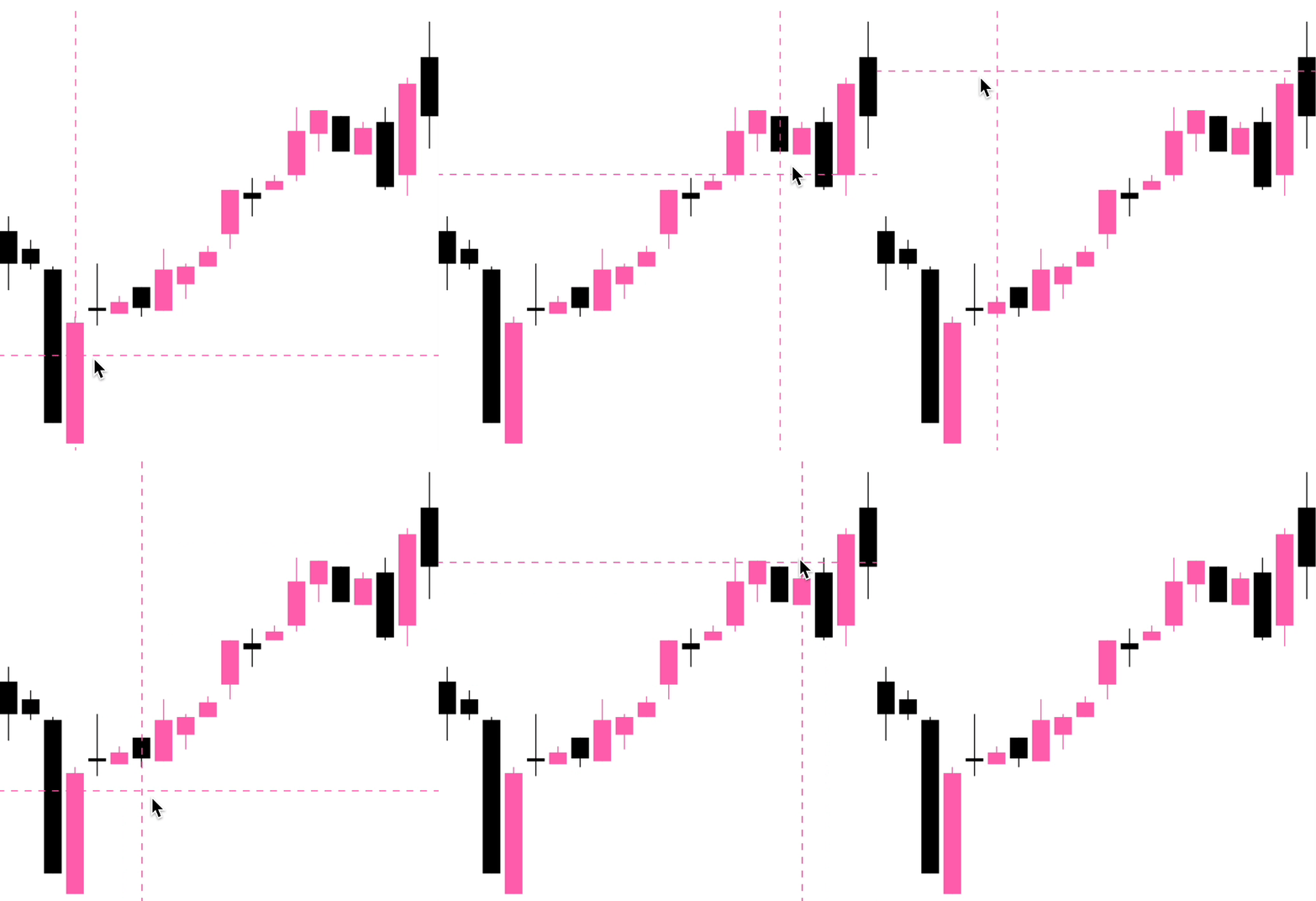
#### Coloring the crosshair
To customise the color of the line chart cursor, supply a color prop to CandlestickChart.Crosshair. This can be any valid React Native StyleSheet compatible color.
`jsx`
$3
#### Price labels
##### Precision
By default, the price labels have a precision of 2, meaning that the prices will always be to 2 decimal places. However, you can customize this with the precision prop:
`jsx`
##### Custom formatting
To customize the formatting of the price text, you can supply a format function in the form of a reanimated worklet:
> Note: due to the nature of reanimated worklets, you cannot define functions that run on the React Native JS thread. Read more here
`jsx$${formattedPrice} AUD
'worklet';
const formattedPrice = yourOwnFormatValueFn(value);
return ;`
}}
/>
#### Datetime labels
##### Date/time options
Internally, WAGMI charts uses Date.prototype.toLocaleString() to generate the date/time label. You can customise it's options like so:
`jsx`
options={{
year: 'numeric',
month: 'numeric',
day: 'numeric',
hour: 'numeric',
minute: 'numeric',
second: 'numeric',
}}
/>
##### Custom formatting
To customize the formatting of the date/time text, you can supply a format function in the form of a reanimated worklet:
> Note: due to the nature of reanimated worklets, you cannot define functions that run on the React Native JS thread. Read more here
`jsx`
'worklet';
const formattedDate = yourOwnFormatValueFn(value);
return formattedDate;
}}
/>
Component APIs
$3
| Prop | Type | Default | Description |
| --------- | --------------------------------------------- | ------- | ---------------------------------------------------------------------------------------------------------------------------------------------------------------------------------------------------------------------------------------------------------------------- |
| data | Array<{ timestamp: number, value: number }> | | The line chart data as an array of timestamps & values (prices). |yRange
| | { min?: number; max?: number } | | Set a custom range for the y values of your chart. See #20 for a use-case. |xDomain
| | [ min: number; max: number ] | | Scale x values proportionate to their time scale. Distance between points will be relative to each other instead of same spacing between in point. See #140 for a use-case. |
$3
| Prop | Type | Default | Description |
| ---------- | ----------- | ----------------------- | -------------------------------------------------------------------------------------------------------------------------- |
| width | number | Width of device screen | The width of the chart |height
| | number | Height of device screen | The height of the chart |yGutter
| | number | 16 | The gutter of the chart on the Y axis (the chart data will not exceed it's gutter) |shape
| | function | shape.curveBumpX | The shape type/curve of the graph. Accepts a curve function from d3-shape |...props
| | ViewProps | | This component also inherits React Native's View props. |
$3
| Prop | Type | Default | Description |
| ----------- | ----------- | --------- | -------------------------------- |
| color | string | "black" | Color of the line path |width
| | number | 3 | Width of the line path |pathProps
| | PathProps | {} | React Native SVG's Path props. |
$3
| Prop | Type | Default | Description |
| ----------------------- | ------------------------------ | --------- | --------------------------------------------------------------------- |
| color | string | "black" | Color of the crosshair dot |size
| | number | 8 | Size of the crosshair dot |outerSize
| | number | 32 | Size of the outer crosshair dot (faded dot) |crosshairWrapperProps
| | ViewProps | | Props of the wrapper component of the crosshair |crosshairProps
| | ViewProps | | Props of the crosshair dot |crosshairOuterProps
| | ViewProps | | Props of the crosshair outer dot |snapToPoint
| | boolean | false | REACT NATIVE ONLY Snap cursor to X position of nearest data point |at
| | number | | Index of followed data item. |...props
| | LongPressGestureHandlerProps | | |
$3
| Prop | Type | Default | Description |
| ----------- | ----------- | -------- | ---------------------------------------------------------------- |
| color | string | "gray" | Color of the cursor line |lineProps
| | LineProps | | Props of the cursor line. Takes React Native SVG's Line props. |at
| | number | | Index of followed data item. |
$3
| Prop | Type | Default | Description |
| ------------------- | -------------------------------- | ------------------ | ---------------------------------------------------------------------------------------------------------------------------------------------------------------------------------------- |
| at | number | | Index of followed data item. |color
| | string | "black" | Color of the dot |size
| | number | 4 | Size of the dot. |inactiveColor
| | string | | Color of the dot when the chart is inactive. |showInactiveColor
| | boolean | true | Whether or not to show the inactive dot when the chart is inactive. |hasOuterDot
| | boolean | false | Whether or not the dot has an outer circle. |hasPulse
| | boolean | false | Whether or not the dot has an animated pulse. |outerSize
| | number | 16 | Size of the outer dot. |pulseBehaviour
| | "while-inactive" or "always" | "while-inactive" | Behaviour of the pulse. If always, the outer dot will still animate when interaction is active. If while-inactive, the outer dot will animate only when the interaction is inactive. |pulseDurationMs
| | number | 800 | Duration in ms of the pulse animation. |dotProps
| | CircleProps | | Props of the dot (accepts React Native SVG's Circle props). |outerDotProps
| | CircleProps | | Props of the outer dot (accepts React Native SVG's Circle props). |
$3
| Prop | Type | Default | Description |
| ------------------- | --------- | --------- | ------------------------------------------------------------------------- |
| from | number | | Data index of where to start the highlight. |to
| | number | | Data index of where to end the highlight. |color
| | string | "black" | Color of the highlighted path. |inactiveColor
| | string | | Color of the highlight when the chart is inactive. |showInactiveColor
| | boolean | true | Whether or not to show the inactive highlight when the chart is inactive. |width
| | number | 3 | Width of the highlight stroke. |
$3
| Prop | Type | Default | Description |
| ----------- | ------------------------------------------------------ | -------- | ---------------------------------------------------------------------------------------------------------- |
| color | string | "gray" | Color of the cursor line |lineProps
| | LineProps | | Props of the cursor line. Takes React Native SVG's Line props. |at
| | number or { index: number } or { value: number } | 0 | Index of followed data item. You can alternatively pass { value: number }, corresponding to a y value. |
$3
| Prop | Type | Default | Description |
| ---------- | ----------- | ------- | --------------------- |
| color | string | | Color of the gradient |...props
| | PathProps | | |
$3
| Prop | Type | Default | Description |
| ------------------------ | ---------------------------------------------- | ------- | ------------------------------------------------------------------------------------------------------------------------------ |
| xGutter | number | 8 | X axis gutter in which the tooltip will not pass. |yGutter
| | number | 8 | Y axis gutter in which the tooltip will not pass. |cursorGutter
| | number | 48 | Gutter (spacing) between the cursor and the tooltip. |position
| | "top" or "bottom" or "left" or "right" | "top" | Position of the tooltip relative to the cursor. |withHorizontalFloating
| | boolean | false | If set to true, the position will changes between left and right on if tooltip reaches the X axis gutters. |textStyle
| | {} | | Style of the tooltip text |at
| | number | | Make the tooltip static at the given data index (which shows the tooltip always, unless there is interaction with the chart) |
$3
| Prop | Type | Default | Description |
| ----------- | ---------------------------------- | ------------- | ------------------------------------------ |
| format | ({ value, formatted }) => string | | Custom format function of the price. |precision
| | number | 2 | Default precision of the price. |variant
| | "formatted" or "value" | "formatted" | Default representation of the price value. |...props
| | TextProps | | Inherits React Native's Text props |
$3
| Prop | Type | Default | Description |
| --------- | ---------------------------------- | ------------- | ------------------------------------------------------------------------------------------------------------------------------------------------------------------------- |
| format | ({ value, formatted }) => string | | Custom format function of the timestamp. |locale
| | string | "en-US" | Locale of the timestamp. |options
| | {} | | Options to pass to toLocaleString(). Available options are here |style
| | {} | | Style of the price text |variant
| | "formatted" or "value" | "formatted" | Default representation of the timestamp value. |
$3
| Prop | Type | Default | Description |
| :------------------ | :---------------------------------------------- | :--------- | :--------------------------------------------------------------- |
| position | string | | Position of the axis. Can be left, right, top or bottom. |orientation
| | string | | Orientation of the axis. Can be vertical or horizontal. |color
| | string | #666 | Color of the axis line and ticks. |strokeWidth
| | number | | Width of the axis line and ticks. |tickCount
| | number | 5 | Number of ticks to display on the axis. |domain
| | [number, number] | [0, 100] | Domain of the axis. |hideOnInteraction
| | boolean | false | Whether to hide the axis when the user interacts with the chart. |format
| | (value: number or string) => string or number | | Function to format the tick labels. |textStyle
| | StyleProp | | Style of the tick labels. |
$3
| Prop | Type | Default | Description |
| ------ | -------------------------------------------------------------------------------------- | ------- | ----------------------------------------------------------------------- |
| data | Array<{ timestamp: number, open: number, high: number, low: number, close: number }> | | The candlestick chart data as an array of timestamps & values (prices). |
$3
| Prop | Type | Default | Description |
| ---------- | ----------- | ----------------------- | --------------------------------------------------------- |
| width | number | Width of device screen | The width of the chart |height
| | number | Height of device screen | The height of the chart |...props
| | ViewProps | | This component also inherits React Native's View props. |
$3
| Prop | Type | Default | Description |
| --------------- | ------------------------------------------------------------------------------------------------------------------------------- | --------- | ------------------------------------------------------------------ |
| positiveColor | string | #10b981 | Color of the positive candles |negativeColor
| | string | #ef4444 | Color of the negative candles |rectProps
| | RectProps | | Props of the SVG Rectangle. Takes React Native's SVG Rect props. |lineProps
| | LineProps | | Props of the SVG Line. Takes React Native's SVG Line props. |renderRect
| | ({ x: number, y: number, width: number, height: number, fill: string, candle: TCandle }) => React.ReactNode | | Renders a custom rect component |renderLine
| | ({ x1: number, x2: number, y1: number, y2: number, stroke: string, strokeWidth: number, candle: TCandle }) => React.ReactNode | | Renders a custom line component |...props
| | SvgProps | | This component also inherits React Native SVG's Svg props. |
$3
| Prop | Type | Default | Description |
| ------------------ | ------------------------------ | --------- | ------------------------------------------------ |
| color | string | "black" | Color of the crosshair |onCurrentXChange
| | (xValue: number) => void | | Callback to invoke when the x coordinate changes |...props
| | LongPressGestureHandlerProps | | |
$3
| Prop | Type | Default | Description |
| ------------------ | ---------------- | ------- | ------------------------------------------------- |
| xGutter | number | 8 | X axis gutter in which the tooltip will not pass. |yGutter
| | number | 8 | Y axis gutter in which the tooltip will not pass. |tooltipTextProps
| | PriceTextProps | | Props of the tooltip (price) text. |textStyle
| | {} | | Style of the tooltip text |
$3
| Prop | Type | Default | Description |
| ----------- | ---------------------------------- | ------------- | ------------------------------------------ |
| format | ({ value, formatted }) => string | | Custom format function of the price. |precision
| | number | 2 | Default precision of the price. |variant
| | "formatted" or "value" | "formatted" | Default representation of the price value. |...props
| | TextProps | | Inherits React Native's Text props |
$3
| Prop | Type | Default | Description |
| --------- | ---------------------------------- | ------------- | ------------------------------------------------------------------------------------------------------------------------------------------------------------------------- |
| format | ({ value, formatted }) => string | | Custom format function of the timestamp. |locale
| | string | "en-US" | Locale of the timestamp. |options
| | {} | | Options to pass to toLocaleString(). Available options are here |style
| | {} | | Style of the price text |variant
| | "formatted" or "value" | "formatted" | Default representation of the timestamp value. |
Hooks
The following hooks are only accessible inside the LineChart.Provider or CandlestickChart.Provider.
$3
The LineChart.useChart hook returns the current state of the chart.
`jsx`
const { currentX, currentY, currentIndex, data, domain, isActive } =
LineChart.useChart();
#### Reference
Returns
| Variable | Type | Default | Description |
| -------------- | --------------------------------------------- | ------- | ------------------------------- |
| currentX | SharedValue | | Current x position |currentY
| | SharedValue | | Current y position |currentIndex
| | SharedValue | | Current index of the data |data
| | Array<{ timestamp: number, value: number }> | | Data of the chart |domain
| | [number, number] | | Y domain of the chart |isActive
| | SharedValue | | Is the chart active by gesture? |
$3
`jsx`
const { value, formatted } = LineChart.useDatetime({
format,
locale,
options,
});
#### Reference
Arguments
| Variable | Type | Default | Description |
| --------- | ---------------------------------- | --------- | ------------------------------------------------------------------------------------------------------------------------------------------------------------------------- |
| format | ({ value, formatted }) => string | | Custom format function of the timestamp. |locale
| | string | "en-US" | Locale of the timestamp. |options
| | {} | | Options to pass to toLocaleString(). Available options are here |
Returns
| Variable | Type | Default | Description |
| ----------- | -------- | ------- | ------------------------- |
| value | string | | Timestamp value in ms. |formatted
| | string | | Formatted timestamp value |
$3
`jsx`
const { value, formatted } = LineChart.usePrice({
format,
precision,
});
Arguments
| Variable | Type | Default | Description |
| ----------- | ---------------------------------- | ------- | ------------------------------------ |
| format | ({ value, formatted }) => string | | Custom format function of the price. |precision
| | number | 2 | Precision of the price value. |index
| | number | | Get the price for a specific index |
Returns
| Variable | Type | Default | Description |
| ----------- | -------- | ------- | --------------------- |
| value | string | | Price value |formatted
| | string | | Formatted price value |
$3
`jsx`
const { currentX, currentY, data, domain, step } = CandlestickChart.useChart();
#### Reference
Returns
| Variable | Type | Default | Description |
| ---------- | -------------------------------------------------------------------------------------- | ------- | ------------------------- |
| currentX | SharedValue | | Current x position |currentY
| | SharedValue | | Current y position |data
| | Array<{ timestamp: number, open: number, high: number, low: number, close: number }> | | Data of the chart |domain
| | [number, number] | | Y domain of the chart |step
| | number | | Current index of the data |
$3
The useCandleData hook returns the current candle data.
`jsx`
const { timestamp, open, high, low, close } = CandlestickChart.useCandleData();
#### Reference
Returns
| Variable | Type | Default | Description |
| ----------- | -------- | ------- | ----------- |
| timestamp | number | | |open
| | number | | |high
| | number | | |low
| | number | | |close
| | number | | |
$3
`jsx`
const { value, formatted } = CandlestickChart.useDatetime({
format,
locale,
options,
});
#### Reference
Arguments
| Variable | Type | Default | Description |
| --------- | ---------------------------------- | --------- | ------------------------------------------------------------------------------------------------------------------------------------------------------------------------- |
| format | ({ value, formatted }) => string | | Custom format function of the timestamp. |locale
| | string | "en-US" | Locale of the timestamp. |options
| | {} | | Options to pass to toLocaleString(). Available options are here |
Returns
| Variable | Type | Default | Description |
| ----------- | -------- | ------- | ------------------------- |
| value | string | | Timestamp value in ms. |formatted
| | string | | Formatted timestamp value |
$3
`jsx`
const { value, formatted } = CandlestickChart.usePrice({
format,
precision,
});
Arguments
| Variable | Type | Default | Description |
| ----------- | ---------------------------------- | ------- | ------------------------------------ |
| format | ({ value, formatted }) => string | | Custom format function of the price. |precision
| | number | 2 | Precision of the price value. |
Returns
| Variable | Type | Default | Description |
| ----------- | -------- | ------- | --------------------- |
| value | string | | Price value |formatted
| | string | | Formatted price value |
What's Different from wagmi-charts?
This fork includes several improvements over the original react-native-wagmi-charts:
- ✅ Updated to React Native Reanimated v4 - Full support for the latest Reanimated API
- ✅ Updated to React Native Gesture Handler v2 - Uses the modern Gesture API
- ✅ Removed web support - Focused exclusively on native iOS and Android for better performance
- ✅ Modern API - Uses addWhitelistedUIProps instead of deprecated addWhitelistedNativeProps
- ✅ Simplified architecture - Removed web-specific workarounds and code paths
- ✅ Better TypeScript support - Fixed type definitions and improved type safety
Migration from wagmi-charts
If you're migrating from react-native-wagmi-charts, the API is 100% compatible! Simply:
1. Update your import statements from react-native-wagmi-charts to react-native-stonk-charts
2. Make sure you have React Native Reanimated v4 installed
3. Update your babel config to use instead of react-native-reanimated/plugin`
That's it! Everything else works exactly the same.
Credits
This library is a fork of react-native-wagmi-charts by CoinJar.
The original library wouldn't be possible if it weren't for:
- Rainbow's Animated Charts
- @wcandillon and his Can It Be Done In React Native series 💪😍