bundlesize
v1.0.0-beta.2
Keep your library size in check
0/weekUpdated 1 years agoMITUnpacked: 28.8 KB
Published by siddharthkp
npm install bundlesize

Keep your bundle size in check


#### Setup
``sh
npm install bundlesize --save-dev
or
yarn add bundlesize --dev
`
#### Usage
Add it to your scripts in package.json
`json`
"scripts": {
"test": "bundlesize"
}
Or you can use it with npx from NPM 5.2+.
`sh`
npx bundlesize
#### Configuration
bundlesize accepts an array of files to check.
`json`
[
{
"path": "./build/vendor.js",
"maxSize": "30 kB"
},
{
"path": "./build/chunk-*.js",
"maxSize": "10 kB"
}
]
You can keep this array either in
1. package.json
`json`
{
"name": "your cool library",
"version": "1.1.2",
"bundlesize": [
{
"path": "./build/vendor.js",
"maxSize": "3 kB"
}
]
}
or in a separate file
2. bundlesize.config.json
Format:
`json`
{
"files": [
{
"path": "./dist.js",
"maxSize": "3 kB"
}
]
}
You can give a different file by using the --config flag:
`
bundlesize --config configs/bundlesize.json
#### Customisation
1. Fuzzy matching
If the names of your build files are not predictable, you can use the glob pattern to specify files.
This is common if you append a hash to the name or use a tool like create-react-app/nextjs.
`json`
{
"files": [
{
"path": "build/*/main-.js",
"maxSize": "5 kB"
},
{
"path": "build/*/.chunk.js",
"maxSize": "50 kB"
}
]
}
It will match multiple files if necessary and create a new row for each file.
2. Compression options
By default, bundlesize gzips your build files before comparing.
If you are using brotli instead of gzip, you can specify that with each file:
`json`
{
"files": [
{
"path": "./build/vendor.js",
"maxSize": "5 kB",
"compression": "brotli"
}
]
}
If you do not use any compression before sending your files to the client, you can switch compression off:
`json`
{
"files": [
{
"path": "./build/vendor.js",
"maxSize": "5 kB",
"compression": "none"
}
]
}
#### Build status for GitHub
If your repository is hosted on GitHub, you can set bundlesize up to create a "check" on every pull request.
Currently works with Travis CI, CircleCI, Wercker, and Drone.
- Authorize bundlesize for status access, copy the token provided.
- Add this token as BUNDLESIZE_GITHUB_TOKEN as environment parameter in your CIs project settings.
#### Using a different CI?
You will need to supply an additional 5 environment variables.
- CI_REPO_OWNER given the repo https://github.com/myusername/myrepo would be myusername
- given the repo https://github.com/myusername/myrepo would be myrepo
- the commit messageCI_COMMIT_SHA
- the SHA of the CI commit, in Jenkins you would use ${env.GIT_COMMIT}
- usually set automatically in CI environments
(Ask me for help if you're stuck)
#### Usage with CLI
bundlesize can also be used without creating a configuration file. We do not recommend this approach and it might be deprecated in a future version.
`sh`
bundlesize -f "dist/*.js" -s 20kB
For more granular configuration, we recommend configuring it in the package.json` (documented above).
#### Like it?
:star: this repo
#### How to contribute?
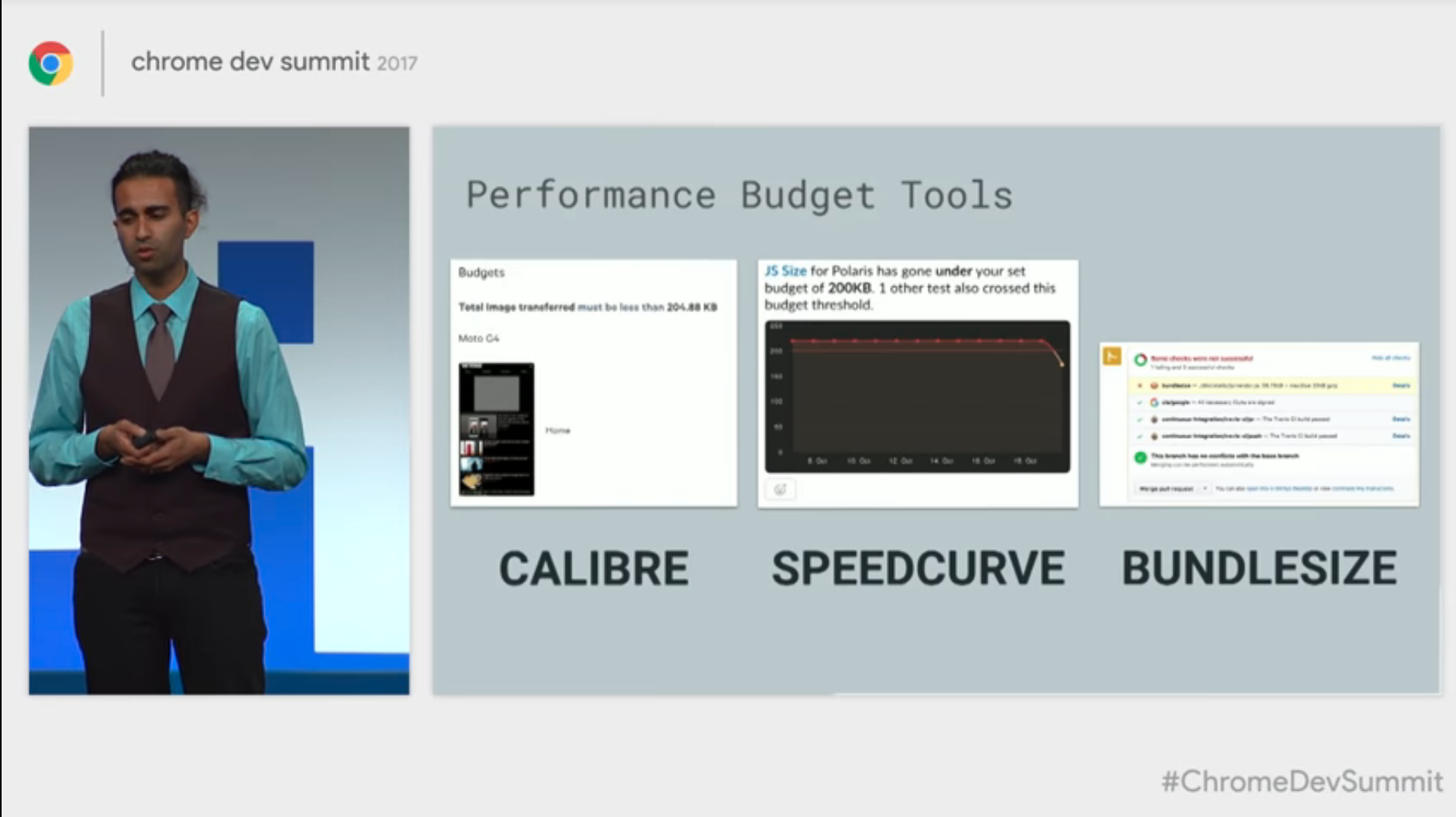
#### Featured on Totally tooling tips and Chrome Dev Summit!!

#### who uses bundlesize?
- bootstrap
- lighthouse
- styled-components
- emotion
- glamorous
- Popper.js
- react-apollo
- hyperapp
- css-constructor
- redux-saga
- micromodal
- unistore
- ngxs
#### TODO
- Work with other CI tools
- AppVeyor (#234)
- Automate setup (setting env_var)
#### similar projects
- BuildSize - GitHub App, no manual configuration required
- travis-weigh-in - Uses Python rather than Node.js
- size-limit - Uses webpack, builds your files for you.
Contributors
This project exists thanks to all the people who contribute. [[Contribute]](CONTRIBUTING.md).
#### license
MIT © siddharthkp